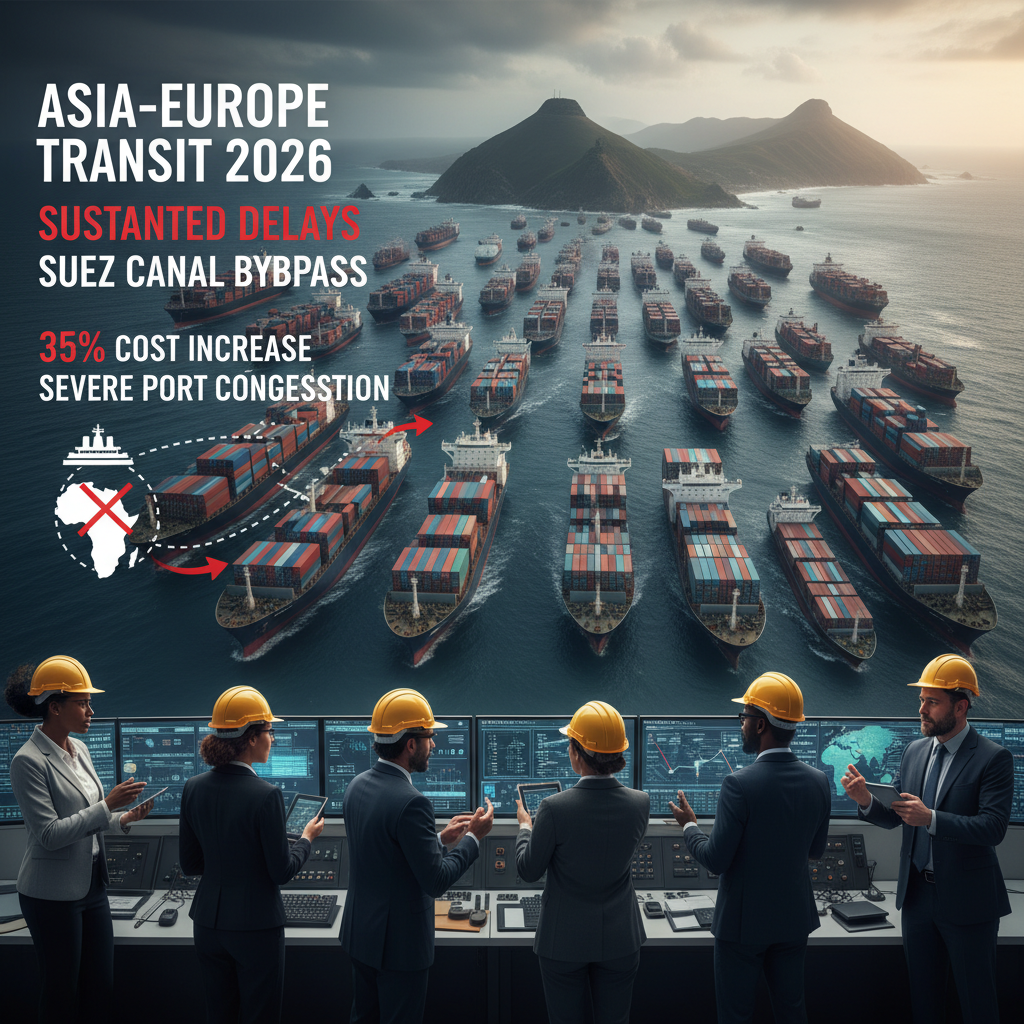
The persistence of the Red Sea shipping crisis into 2026 has fundamentally altered global trade routes. As security threats remain unresolved, over 90% of container ships continue to bypass the Suez Canal. This widespread rerouting via the Cape of Good Hope has cemented Asia-Europe transit delays as the new normal for the global logistics industry.
These Asia-Europe transit delays have severely impacted both operational schedules and bottom-line costs. Diverting vessels around South Africa adds approximately 3,500 nautical miles and 10 to 14 days to standard voyage durations. Consequently, freight costs on these vital lanes have stabilized at 25% to 35% above pre-crisis benchmarks. Furthermore, war risk insurance premiums for any Red Sea transits have surged to as high as 1.0% of hull and machinery value.
The prolonged disruptions are creating cascading effects across major port infrastructure. Shippers must navigate increased operational friction alongside standard Asia-Europe transit delays. Primary challenges facing logistics experts include:
- Elevated fuel consumption requiring up to 1,000 additional tons per voyage.
- Severe port congestion at critical hubs like Singapore and Rotterdam.
- Equipment shortages driven by extended capital and inventory tie-ups.
With an estimated 19.6 million TEUs expected to move between Asia and Europe this year, adapting to these constraints is crucial. Industry analysts forecast no immediate recovery for traditional routing, forcing companies to absorb these Asia-Europe transit delays indefinitely. Logistics professionals must prioritize robust inventory planning and flexible routing strategies to mitigate ongoing market volatility.
References
DocShipper (2026). Red Sea Crisis Update.
Röhlig Logistics (2025). Red sea shipping crisis escalates.
Asia-Europe Trade Lane Guide (2026).
FreightAmigo (2026). Red Sea Shipping Crisis: 2025 Updates.