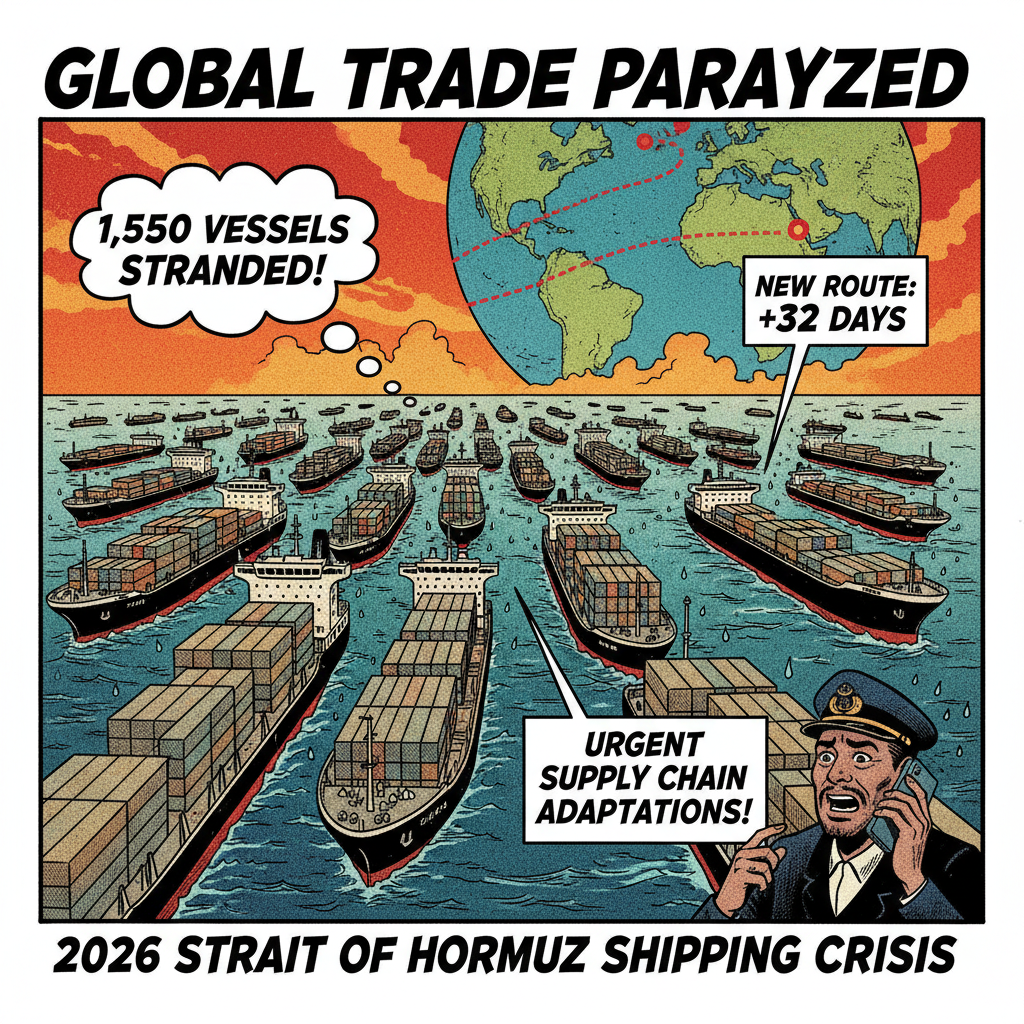
The global logistics network is facing unprecedented pressure as the 2026 Strait of Hormuz shipping crisis effectively closes one of the world’s most critical maritime corridors. Following severe geopolitical escalations in early March 2026, commercial transits through the strait have plummeted to near zero. Major carriers, including Maersk and MSC, have suspended operations due to physical security risks and the widespread cancellation of maritime war-risk insurance coverage.
For supply chain professionals, the operational fallout is immediate and highly costly. Rerouting Aframax tankers and container ships around the Cape of Good Hope adds 16 to 32 days of transit time and nearly $1 million in extra fuel costs per voyage. Furthermore, as of May 2026, the blockade has stranded over 1,550 commercial vessels and 22,500 mariners in the immediate region.
- Energy markets face massive volatility, with 20% of global daily oil supply and 20% of liquefied natural gas (LNG) obstructed.
- Maritime insurers have broadly withdrawn coverage for Gulf entries, paralyzing regional freight operations.
- Asia-to-Europe container rates are surging as the Red Sea corridor also remains highly restricted.
Industry leaders forecast that normalizing shipping operations will take four to six months even after a diplomatic resolution is achieved. Logistics managers must immediately pivot toward alternative air-sea multimodal solutions and audit their carrier exposure. Reliance on real-time supply chain visibility software is now mandatory to mitigate the cascading delays.
References
https://mypatriotsupply.com
https://wikipedia.org