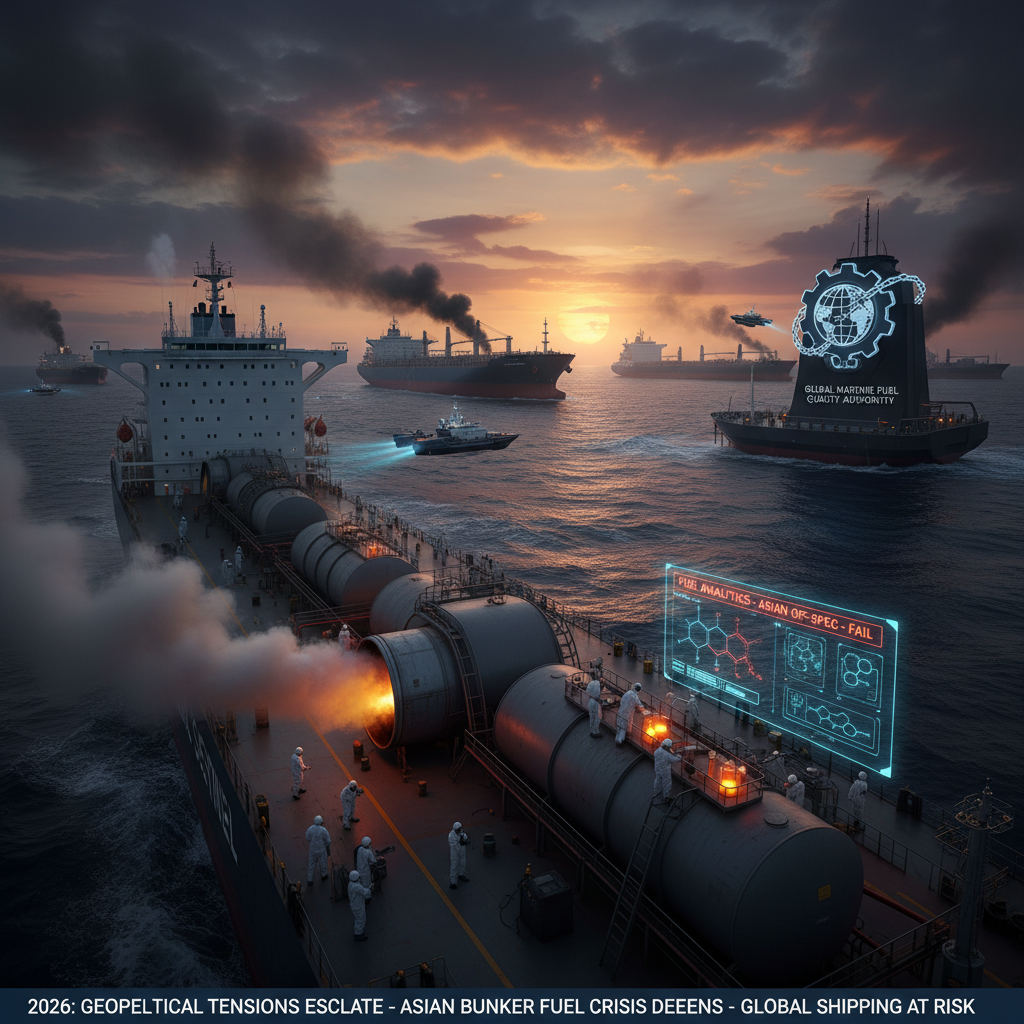
The maritime logistics sector is currently grappling with unprecedented Asian tainted bunker fuel challenges as off-specification incidents continue to rise across major bunkering hubs. According to recent 2026 data from Veritas Petroleum Services (VPS), Singapore’s off-specification rate climbed to 7.6% in 2025, up from 5.9% in the previous year. This upward trajectory in contaminated fuel cases poses a severe operational threat to global fleets, elevating the risks of mechanical breakdowns and costly voyage delays.
Industry analysts attribute this sharp decline in fuel quality to recent geopolitical tensions and shifting supply chains. With strict US sanctions on Russian oil disrupting traditional high-sulfur fuel oil (HSFO) flows, suppliers have increasingly turned to alternative, metal-rich barrels from the Middle East. Consequently, testing agencies reported a 37% year-over-year increase in global bunker alerts during 2025. The integration of cheaper, lower-quality blend stocks has introduced harmful contaminants into the supply chain, exacerbating the risks for vessel operators.
The operational consequences of these contaminants are significant. In March 2026, the Singapore-based Maritec-Naias laboratory issued an alert after finding high levels of chemical compounds, such as alkylresorcinols and phenolics, in regional bunker samples. These acidic deposits reduce fuel stability and have been directly linked to excessive sludge formation, fuel pump wear, and critical piston ring breakage. To combat these issues, shipping experts strongly recommend rigorous onboard fuel system checks, advanced chemical screening prior to utilization, and heightened vigilance when sourcing fuel in high-risk regional ports. Implementing proactive testing protocols is now essential for maintaining fleet efficiency in an increasingly volatile energy market.
References
Sources include industry reports from Riviera Maritime Media, VPS Veritas, and Seatrade Maritime.