
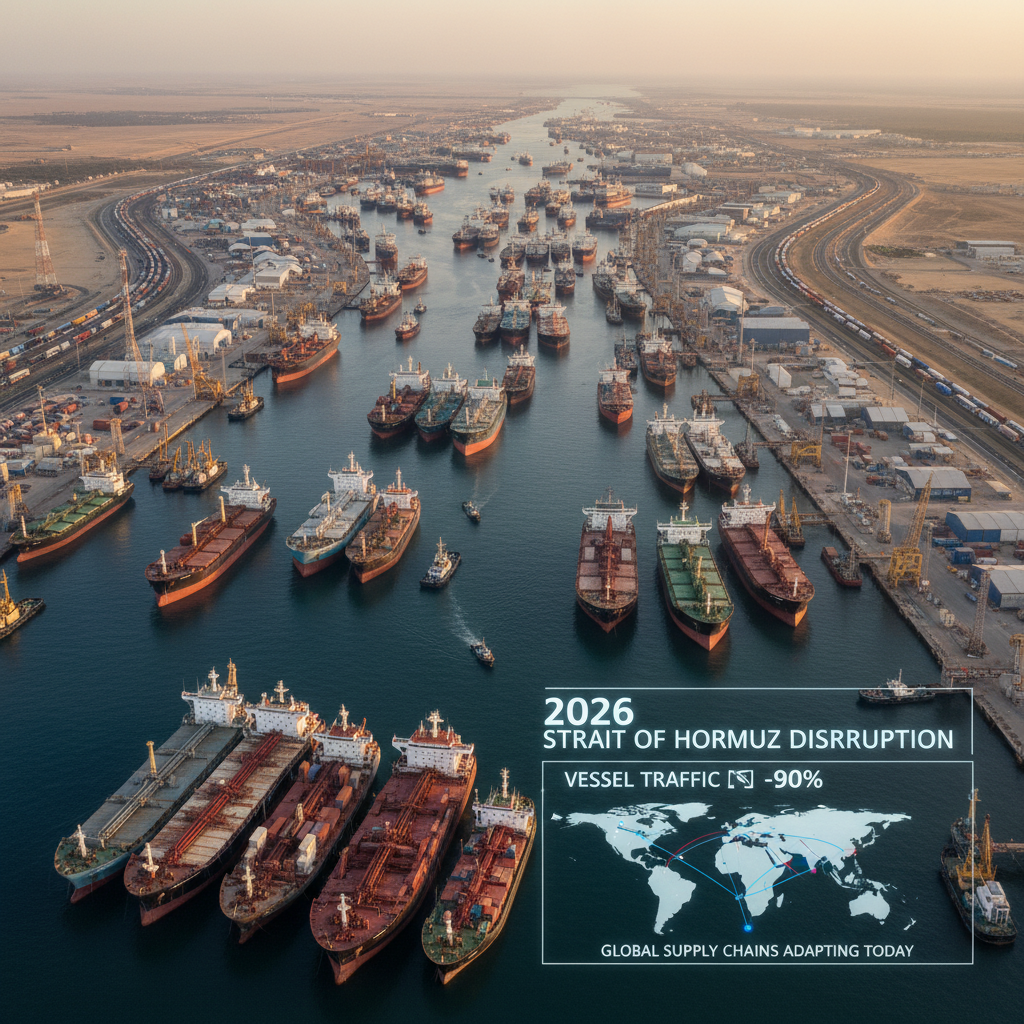
The global maritime industry is facing a severe structural test. Following escalating regional conflicts in early 2026, the Strait of Hormuz shipping disruption has reduced vessel traffic by an unprecedented 90%. For logistics experts managing international freight, this chokepoint closure represents a massive threat to both energy supply and containerized cargo networks.
The disruption has essentially halted normal operations through a corridor that typically handles 20% of global petroleum liquids and a third of seaborne fertilizer trade. With fewer than 10 vessels passing daily, the logistical fallout is compounding rapidly. Commercial operators are grappling with severe capacity constraints and skyrocketing operational expenses.
- Stranded Assets: Current maritime security assessments indicate that over 850 large merchant vessels remain trapped or delayed in the Gulf region.
- Cost Escalation: War-risk insurance premiums have surged, while carriers are implementing emergency surcharges reaching $1,500 per TEU for Gulf-bound cargo.
- Rerouting Delays: Major shipping lines are diverting assets around the Cape of Good Hope, adding 10 to 14 days to standard transit times and severely stressing container availability.
Logistics operators are rapidly moving from emergency workarounds to structured multimodal alternatives to mitigate the Strait of Hormuz shipping disruption. Cargo flows are shifting to ports outside the immediate chokepoint, such as Fujairah and Sohar, utilizing overland routes. However, inland transport networks are heavily strained, with approximately 0.5 million containers stranded across Gulf logistics networks. Forwarders must adapt by pricing in these new operational realities and designing flexible routing options.
References
weforum.org – Gulf cargo flows adjust
etnownews.com – Shipping traffic declined 90%
openthemagazine.com – Hormuz Shipping Collapse
gulfnews.com – Gulf trade faces new shock
rithum.com – Hormuz disruption impact
tritonmaritime.com – Middle East Shipping Crisis 2026