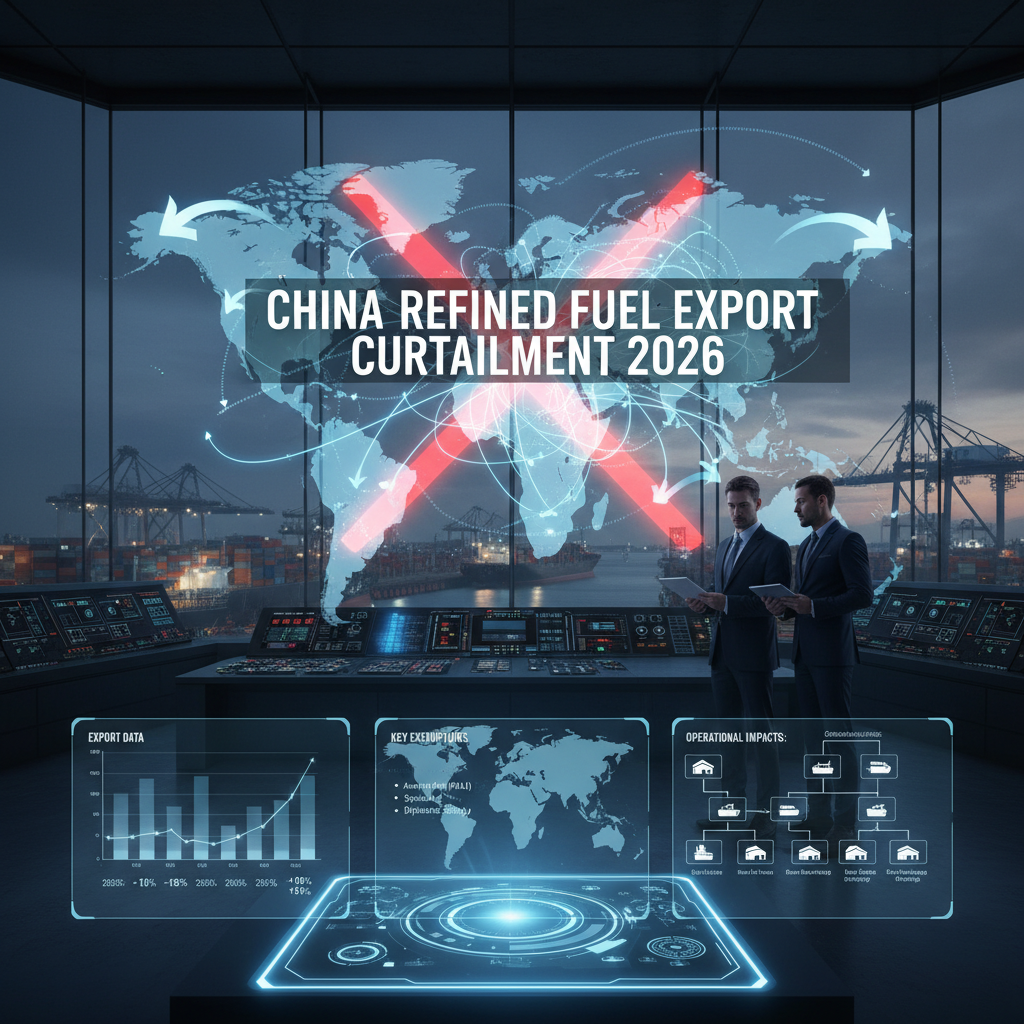
The recent China refined fuel export curtailment has introduced unprecedented volatility into international shipping markets in 2026. Stemming from crude supply concerns linked to Middle Eastern conflicts, Beijing shifted its strategy from standard quotas to severely restricting outbound shipments. For logistics experts, navigating these tightened supply chains is a critical priority.
Rather than an outright ban, recent shipping data reveals a calculated curtailment strategy. According to April 2026 data, shipments of diesel, jet fuel, and gasoline to destinations outside Hong Kong fell to 320,000 metric tons in the first half of the month. This represents a staggering drop to merely one-sixth of the export levels seen during the same period last year. Customs data further highlighted that March exports of gasoline tumbled by nearly 68 percent.
Despite the stringent reductions, strategic exemptions provide some relief for regional logistics operators. The policy selectively allows vital fuel flows to continue to specific areas.
- Bonded marine bunkering and jet fuel for international flights remain exempt.
- Shipments to Hong Kong and Macau have been prioritized to maintain stability.
- Minor supply volumes continue to reach neighboring nations like Malaysia, Vietnam, and Australia.
For the maritime logistics sector, this reduction means tightening fuel availability across Asia. Shippers must urgently optimize their fuel procurement strategies as traditional East-of-Suez trade routes face severe disruptions. As the curtailment persists, proactive alternative sourcing will be essential.
References
- Vortexa: Shift in transport fuel flows amid lower exports in the East (April 2026).
- MarketScreener: China’s March refined oil shipments fall after export ban (April 2026).
- Hydrocarbon Processing: China curtailing, not banning fuel exports (April 2026).
- S&P Global: China slashes oil product exports to ensure domestic supply (March 2026).