
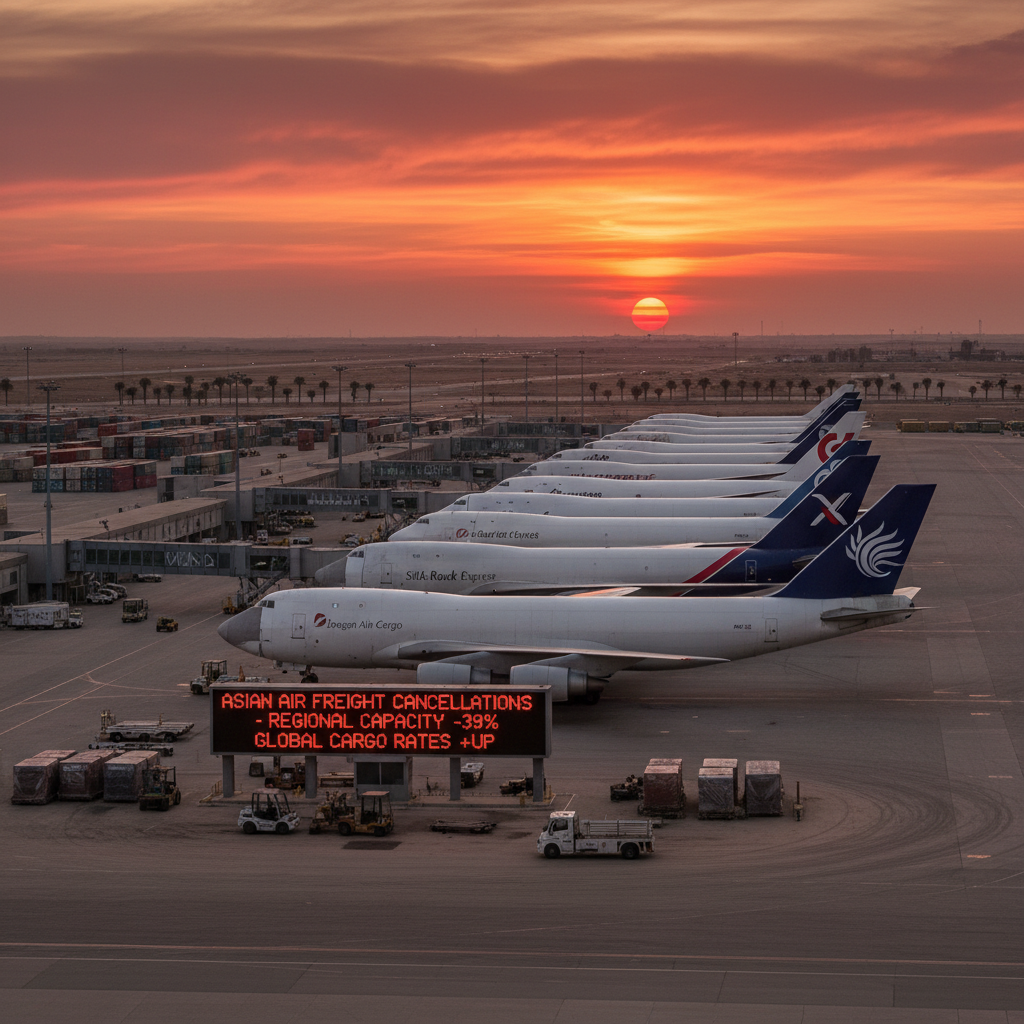
The global logistics industry is currently facing unprecedented disruptions, with Asian Air Freight Cancellations becoming a focal point of supply chain bottlenecks in early 2026. Escalating geopolitical tensions in the Middle East have forced extensive airspace closures, leading to the cancellation of flights that serve as critical connectors for Asian trade routes. According to recent aviation analytics, the Asia-Pacific to Middle East and Europe corridors have witnessed a staggering 39% reduction in international air cargo capacity.
Because Middle Eastern carriers normally account for approximately 13.6% of global air freight capacity, the grounding of these fleets has severely constricted the market. The immediate operational impacts include:
- A 39% capacity drop along key Asia-Middle East trade corridors.
- Nearly 20% of global belly-hold and charter capacity removed from the market.
- Massive cargo backlogs gridlocking major Asian transit airports.
This sharp decline in available space has left freight forwarders scrambling to secure alternatives, causing major delays for time-sensitive manufacturing and e-commerce shipments.
As capacity tightens, the financial impact on shippers has been immediate and severe. Spot rates from South Asia to North America have surged by approximately 75%, driven by rerouting complexities and doubled jet fuel costs. Furthermore, rates from Southeast Asia to Europe have climbed over 20% to surpass $4.00 per kilogram. Industry experts warn that until airspace normalizes, Asian Air Freight Cancellations will continue to enforce a high-rate environment, demanding agile supply chain strategies from global businesses.
References
- CAASint: Air cargo rates surge as Middle East conflict disrupts supply chains
- Flexport: Middle East Escalation Disrupts Global Ocean and Air Freight Networks
- Star Concord: Five signals the Middle East conflict is reshaping air cargo
- Xeneta: Supply will recover, but air freight resilience will be tested
- Journal of Commerce: Air freight backlog set to gridlock Asia airports