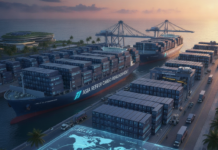


The landscape of global automotive shipping is undergoing a massive transformation in 2026. Facing volatile trade policies, manufacturers are executing a strategic Chinese EV Export Rerouting to bypass stringent North American barriers and secure new growth markets. With Chinese automakers surpassing Japan in 2025 by selling a projected 27 million vehicles globally, logistics professionals must adapt to rapidly shifting supply chain corridors.
Recent policy adjustments have catalyzed this logistical shift. While the US and Canada previously erected a tariff fortress with 100% duties on Chinese EVs, early 2026 developments show Canada replacing punitive tariffs with an annual import quota of 49,000 units. Concurrently, the EU replaced tariffs of up to 35.3% with price undertaking agreements, facilitating higher profit margins and easing regional entry. Consequently, exports to ASEAN countries surged by 20.8%, fundamentally altering established shipping routes.
To further mitigate geopolitical risks, top EV manufacturers are localizing production. For instance, BYD initiated trial production at its new Hungarian facility in early 2026, embedding itself deeply within European supply chains. For shipping experts, this signals a transition from finished vehicle logistics to an increased demand for components and manufacturing equipment transport.
- Expect diminished roll-on/roll-off (RoRo) constraints to North America, offset by traffic toward Southeast Asia.
- Prepare for increased demand in shipping manufacturing equipment as Chinese firms establish European footprints.
- Monitor policy-driven quotas, such as Canada’s 49,000-unit cap, which will dictate supply chain volume planning.