

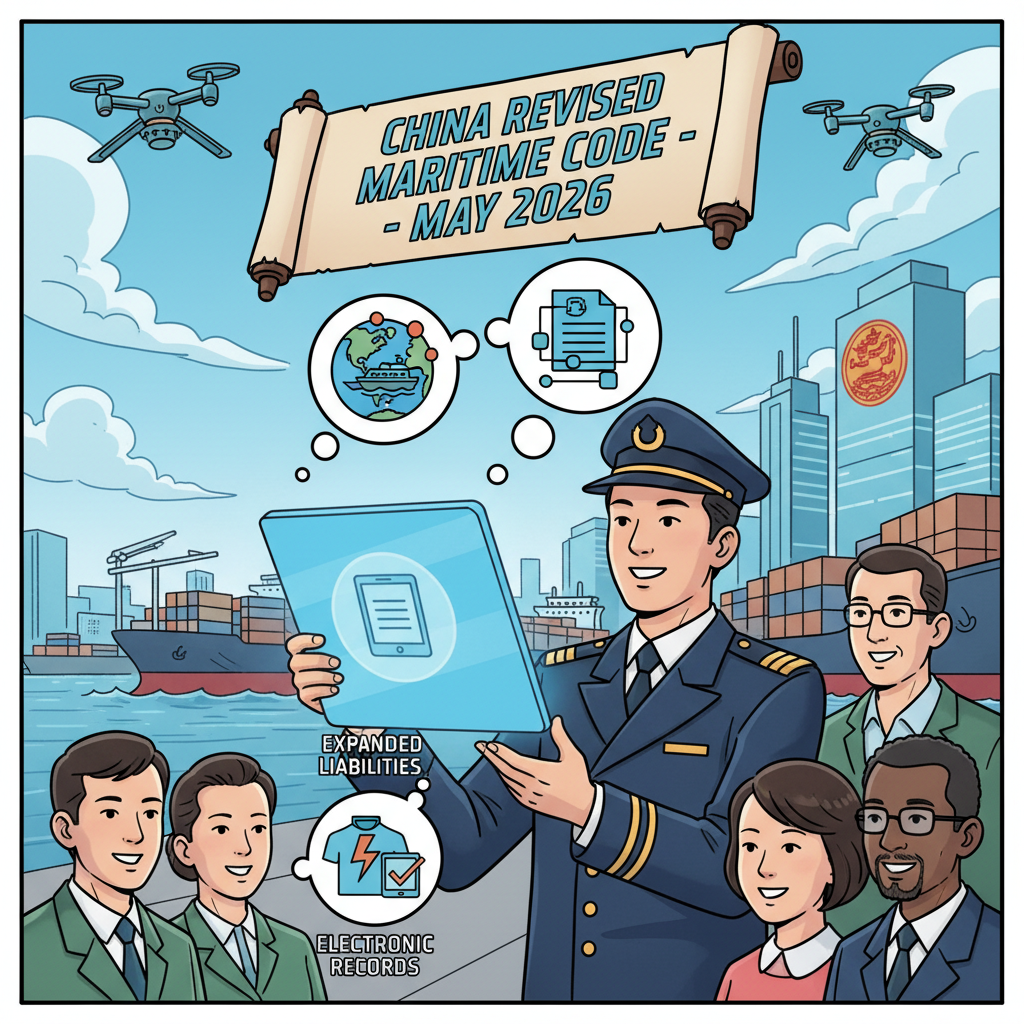
Adopted on October 28, 2025, and slated to take effect on May 1, 2026, the newly formulated China Revised Maritime Code represents a paradigm shift for global logistics and shipping professionals. Comprising 16 chapters and 310 articles, the comprehensive overhaul marks the first major update in over three decades, fundamentally altering the operational landscape for cargo fleets calling at Chinese ports. Industry experts emphasize that the revision primarily focuses on unifying domestic and international maritime rules under a minimal dual-track system, seamlessly aligning local cargo regimes with established global practices.
For forwarders and fleet operators, navigating the China Revised Maritime Code requires immediate strategic adjustments, particularly regarding documentation and environmental liability. Recent industry analyses indicate that the updated code formally grants legal standing to electronic transport records, mandating that digital documentation be complete, accurate, and instantly retrievable for port inspections. Furthermore, the legislation introduces expanded marine ecological protections, including elevated damage limits for oil pollution and stringent discharge control requirements.
- Unified Jurisdictional Application: The scope of maritime transport contracts now comprehensively covers both domestic and international carriage of goods by sea.
- Digital Readiness: Fleet management platforms must adapt to mandatory digital auditing and real-time operational tracking to ensure regulatory compliance.
- Liability Adjustments: Carriers face refined rights and obligations, including crucial modifications from general fire exemptions to specific fire on board exemptions.
As the May 2026 implementation date approaches, shipping operators running fragmented or paper-based systems will face compounding inefficiencies. Adapting to the China Revised Maritime Code demands proactive investment in digital ship management and a thorough review of liability clauses within carriage contracts. Global stakeholders must prioritize compliance to maintain operational continuity in one of the world’s most critical shipping markets.
References
- NorthStandard: Huatai Circular PNI[2025]08 – Revisions of the Maritime Code
- Marine Inspection: Japan Maritime News 2026 – Digitalization Trends
- China Law Vision: Stability and Change under the New Maritime Code