Navigating the Evolving Landscape of Section 301 Maritime Tariffs
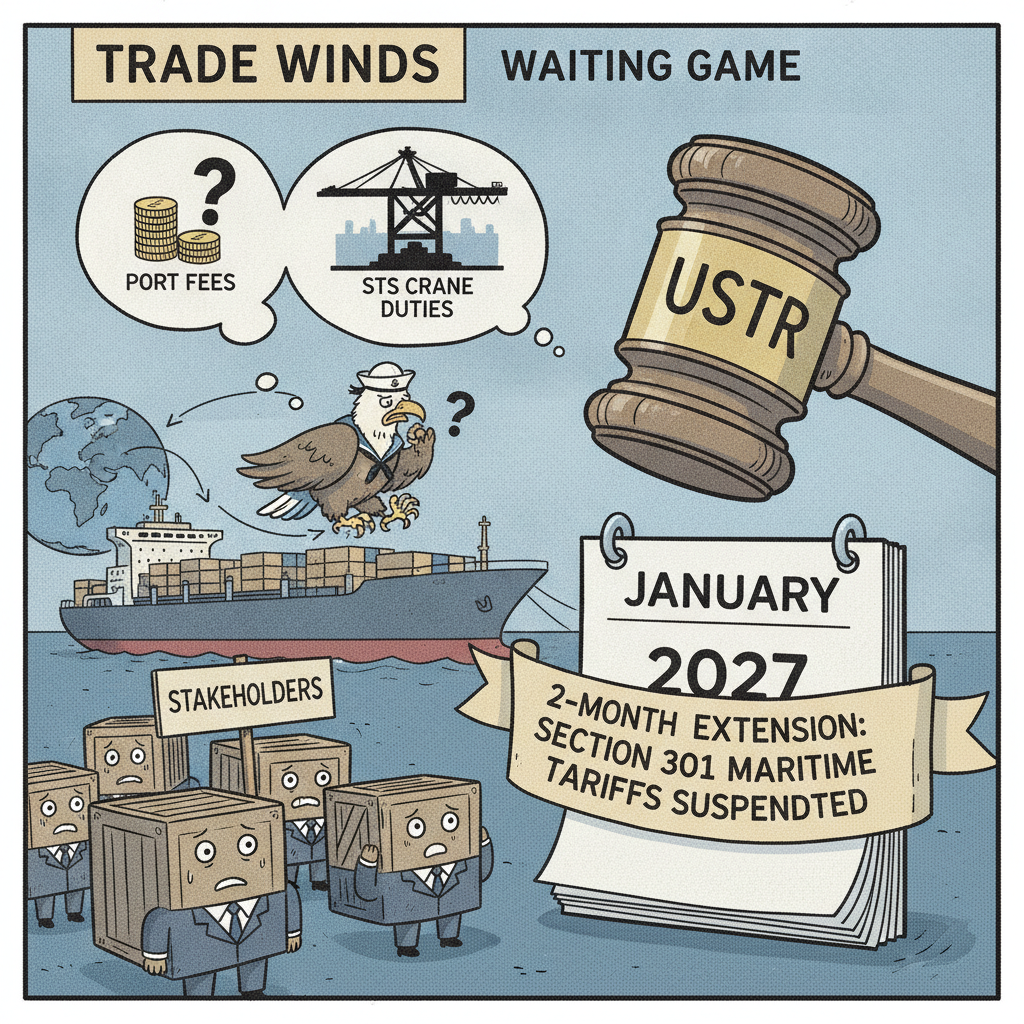
As the November 9, 2026 deadline approaches, the logistics and shipping industry faces renewed uncertainty regarding the reinstatement of Section 301 Maritime Tariffs. The Office of the United States Trade Representative (USTR) recently initiated a process to extend the suspension of these controversial fees for an additional two months, pushing the potential enforcement date to January 9, 2027. This strategic pause aims to facilitate further trade negotiations with China.
Key Operational Impacts for Shipping Experts
Originally slated to take effect in October 2025, the Section 301 actions target China’s dominance in the maritime, logistics, and shipbuilding sectors. If reinstated, the measures will introduce severe financial and operational hurdles for global supply chains. The proposed extension maintains the freeze on several critical penalties:
- Vessel Fees: Suspends port fees of $18 per net ton or $120 per container on Chinese-built or operated vessels.
- Heavy Equipment Duties: Pauses the 100% duty on Chinese-manufactured ship-to-shore (STS) gantry cranes and cargo-handling equipment.
- Intermodal Components: Delays punitive tariffs on Chinese-built intermodal chassis and subassemblies.
Geopolitical Shifts and Market Realignment
Despite the current suspension, the looming threat of Section 301 Maritime Tariffs has already catalyzed structural shifts in global logistics. Strategic port operators and shipping lines are adjusting their risk exposure, evidenced by a notable 10.2% decline in the Hong Kong-registered fleet since early 2025. Meanwhile, hubs like Singapore are absorbing the reflagged tonnage as vessel owners seek safe havens from geopolitical volatility. With the USTR accepting public comments through October 30, 2026, maritime stakeholders must prepare for both extended negotiations and the sudden reactivation of these sweeping tariffs.
References
USTR Proposes 2-Month Extension of Suspension of Section 301 Maritime Actions Against China. Supply Chain Dive: USTR weighs extending pause on China-linked vessel fees to January. USTR Proposes Two-Month Extension of Section 301 Suspension on China Maritime Fees. Jayendu Krishna: From Tariffs to Tonnage. USTR Section 301 Action on China’s Targeting of the Maritime, Logistics, and Shipbuilding Sectors for Dominance. Seatrade Maritime News: US formalises two-month suspension of Chinese vessel fees.