The Surge of Intra-Asia Multimodal Transport
For logistics and shipping experts, mastering Intra-Asia multimodal transport has become critical for maintaining resilient supply chains in 2026. Driven by the relocation of manufacturing hubs to Southeast Asia, robust e-commerce expansion, and tariff reductions under the Regional Comprehensive Economic Partnership (RCEP), cargo volumes are shifting rapidly. As a result, the Asia Pacific multimodal transport market is projected to expand at a steady 7.2% compound annual growth rate from 2025 through 2032.
Intra-Asia Multimodal Transport as a Capacity Solution
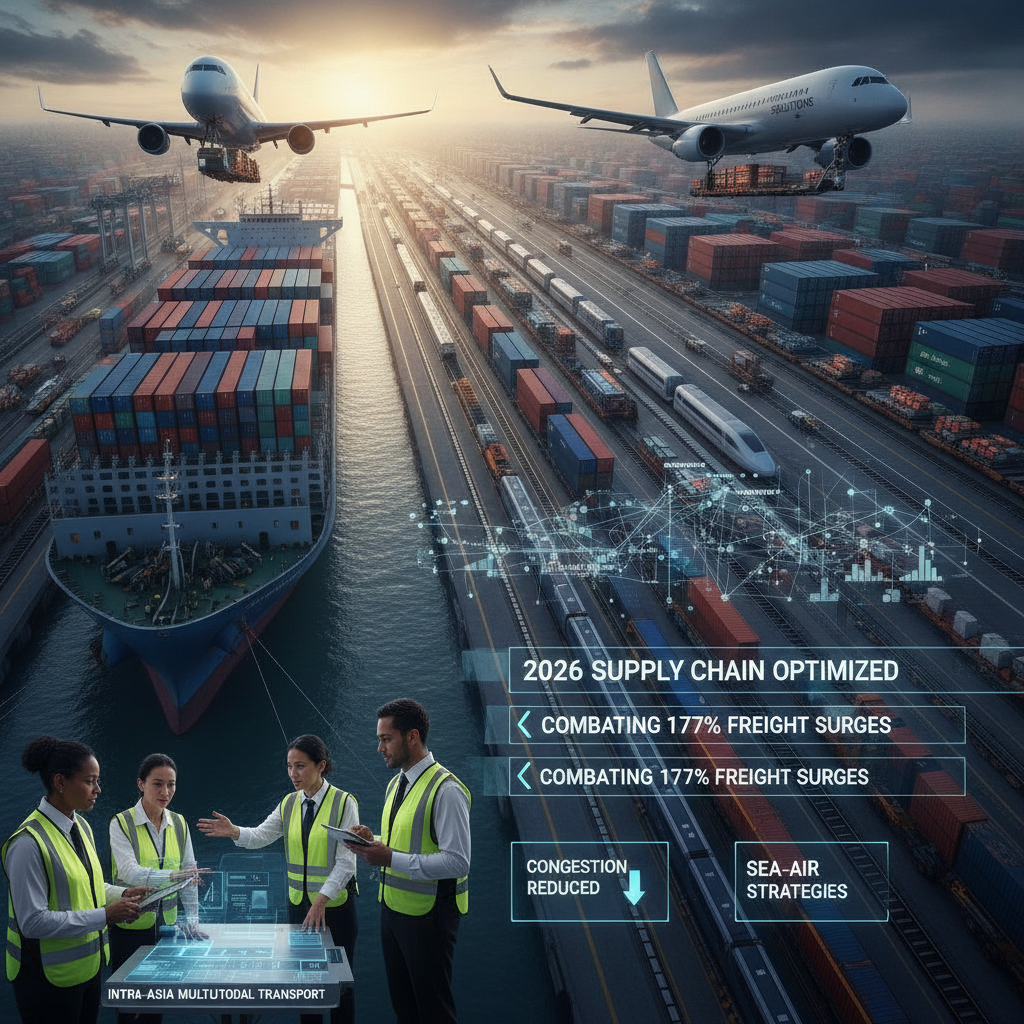
The reliance on single-mode transit is no longer viable. In late 2026, the industry witnessed severe port congestion across major Asian gateways, alongside a stark shortage of feeder vessel capacity. According to recent market data, container freight rates surged by a staggering 177%, reaching post-COVID peaks. To circumvent bottlenecks in hubs like Singapore and Malaysia, operators are increasingly leveraging Intra-Asia multimodal transport configurations, seamlessly integrating sea-rail and sea-air solutions to optimize transit times and ensure schedule reliability.
Digitalizing Intra-Asia Multimodal Transport Strategies
To capitalize on the USD 18.97 billion regional freight forwarding market, top 3PL and 4PL providers are investing heavily in digital visibility and control-tower integrations. A dynamic mode-mix assessment allows shippers to efficiently shift between transport modes when geopolitical tensions or capacity crunches disrupt maritime routes. Embracing these advanced multimodal networks ensures a risk-reduced supply chain and protects bottom-line margins for global operators.
References
- Mordor Intelligence, Intra-Asia Freight Forwarding Market Size & Growth to 2030
- MarketsandMarkets, Asia Pacific Multimodal Transport Market Size, Share, Forecast, Report, 2032
- Vantage Logistics, Intra-Asia Freight Rates Surge 177% Amid Asian Port Congestion, 2026