The Structural Shift in Asian Port Operations
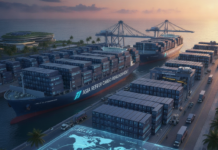
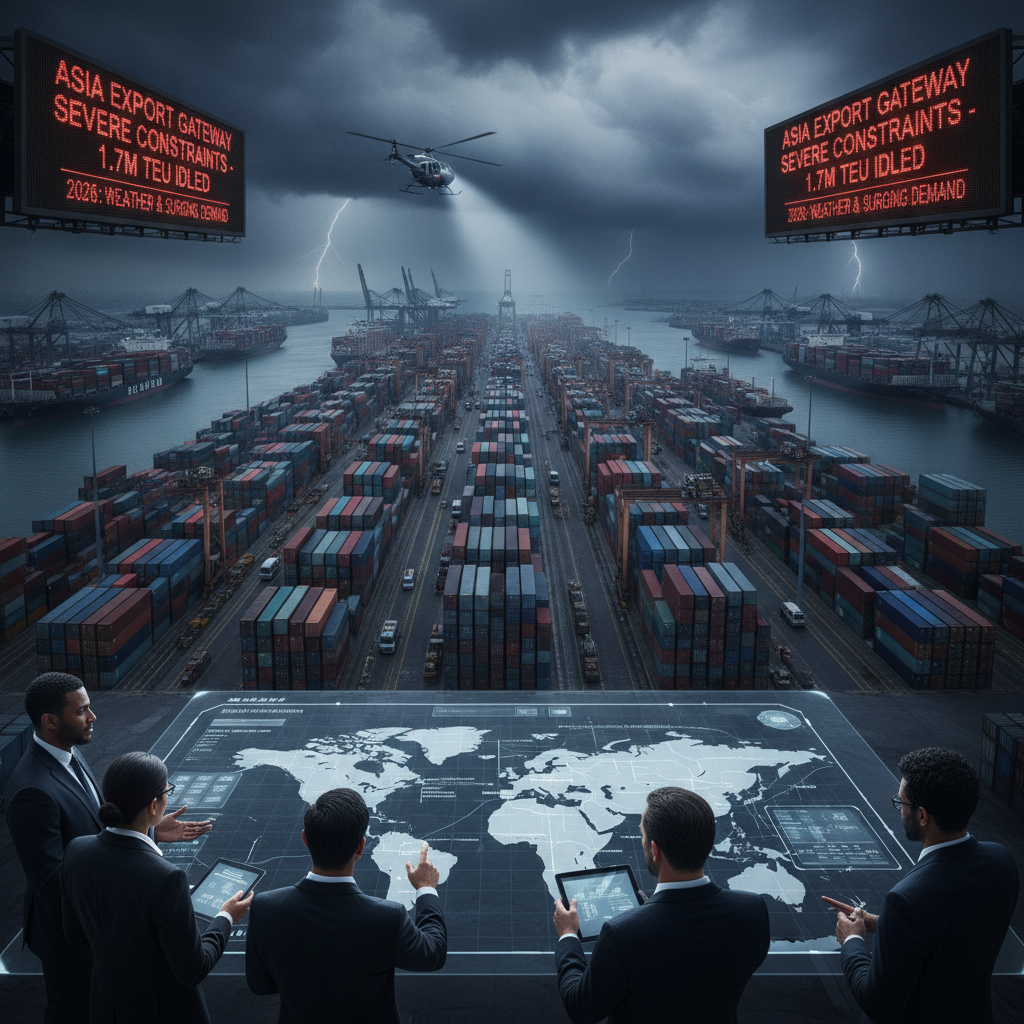
As the 2026 peak shipping season accelerates, severe Asia Export Gateway Constraints are effectively rewriting global logistics strategies. Relentless port congestion is currently idling approximately 1.7 million TEU of containership capacity worldwide—an alarming volume roughly equivalent to the world’s eighth-largest carrier fleet. For logistics and shipping experts, this capacity drain represents a structural shift where shore-side bottlenecks, rather than deployed vessels, are now dictating freight rates.
Weather Disruptions and Surging Export Demand
The situation has been aggressively compounded by recent severe weather events, notably Typhoon Dolphin, which battered eastern China in August 2026. Following the storm, the average vessel waiting time at the Port of Shanghai spiked to 87 hours, while operations in Ningbo and Qingdao faced critical cargo backlogs. Compounding these meteorological setbacks is an unprecedented surge in demand; Far East export volumes have jumped 25% since 2024, vastly outpacing the mere 10% growth in terminal capacity. Shippers advancing cargo ahead of anticipated tariff hikes have only intensified this equipment shortage, leaving up to 2.4 million TEU of containership capacity delayed across North Asia.
Strategic Rerouting and Industry Outlook
Faced with these crippling Asia Export Gateway Constraints, major carriers are taking drastic measures to free up capacity. This includes reverting some service loops back to the Red Sea despite ongoing geopolitical risks. Furthermore, inland logistics networks across Southeast Asia are feeling the ripple effects, struggling with extended truck turnaround times and severe container shortages. To navigate these persistent bottlenecks, industry experts advise importers to prioritize early bookings, leverage predictive supply chain analytics, and map out agile, multi-country sourcing strategies.