
Understanding the Trans-Pacific Frontloading Phenomenon
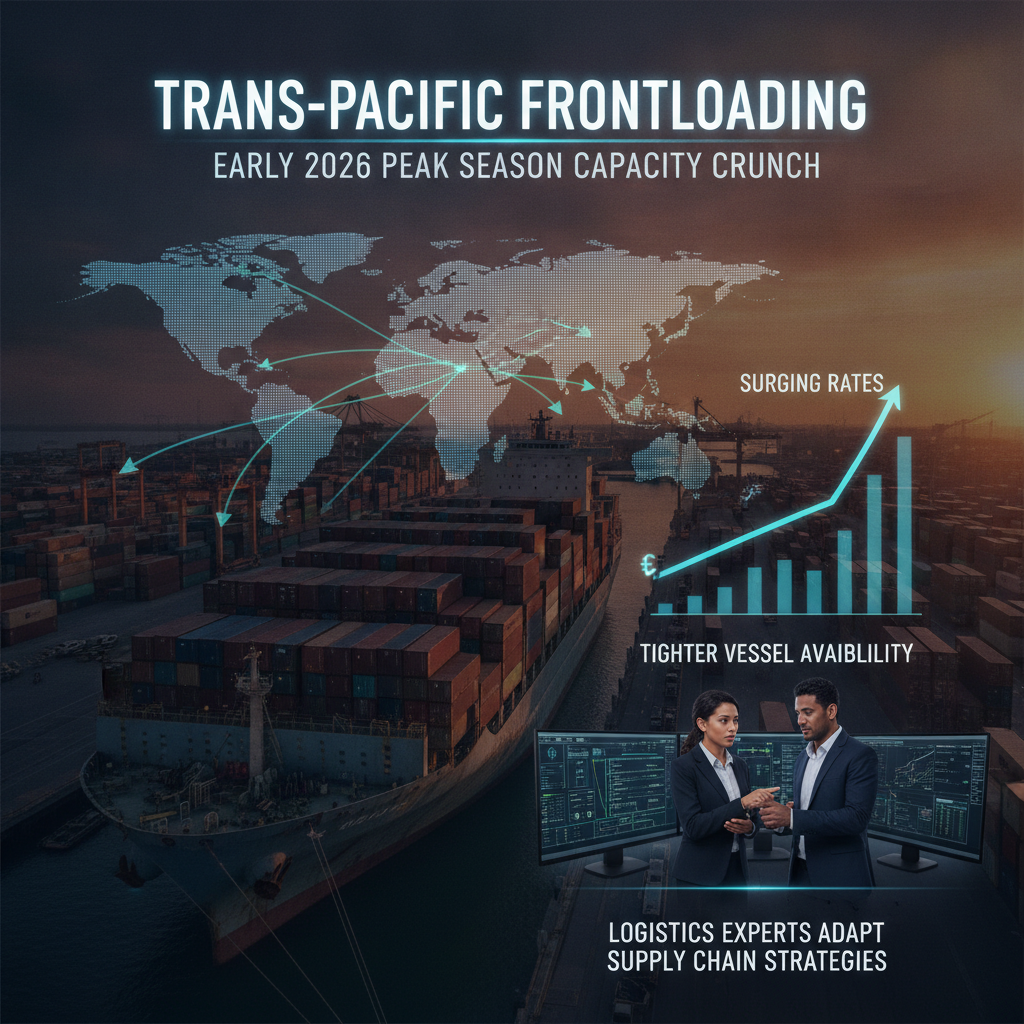
Trans-Pacific Frontloading has drastically accelerated the 2026 peak shipping season, forcing experts to navigate sudden market volatility. U.S. importers are aggressively pulling forward holiday merchandise across the trans-Pacific trade lane. This frontloading strategy is driven by rising transportation costs, anticipated supplier price hikes, and looming U.S. tariff uncertainties on Asian imports.
Trans-Pacific Frontloading Impacts on Rates and Capacity
The rush to secure early inventory has constrained vessel capacity at major Asian gateways, pushing some bookings out by four weeks. Emboldened by this intense demand, ocean carriers levied peak season surcharges of $500 to $1,000 per FEU starting in June 2026. Consequently, ocean freight spot rates have surged, with U.S. West Coast routes jumping over 40%. Forwarders warn that customers must book shipments at least three weeks in advance to avoid delays amid this Trans-Pacific Frontloading rush.
Strategic Moves for Trans-Pacific Frontloading
To navigate this capacity crunch, professionals must prioritize proactive planning. Experts recommend:
- Advance Forecasting: Secure vessel allocations at least four weeks prior to departure.
- Carrier Diversification: Mitigate blank sailings by spreading volume across multiple alliances.
While cargo frontloading protects importers from regulatory risks, it disrupts traditional restocking cycles. This could trigger unexpected volume drops later in the year, making supply chain flexibility a critical advantage for the remainder of 2026.