Why the Arctic Container Service is Surging in 2026
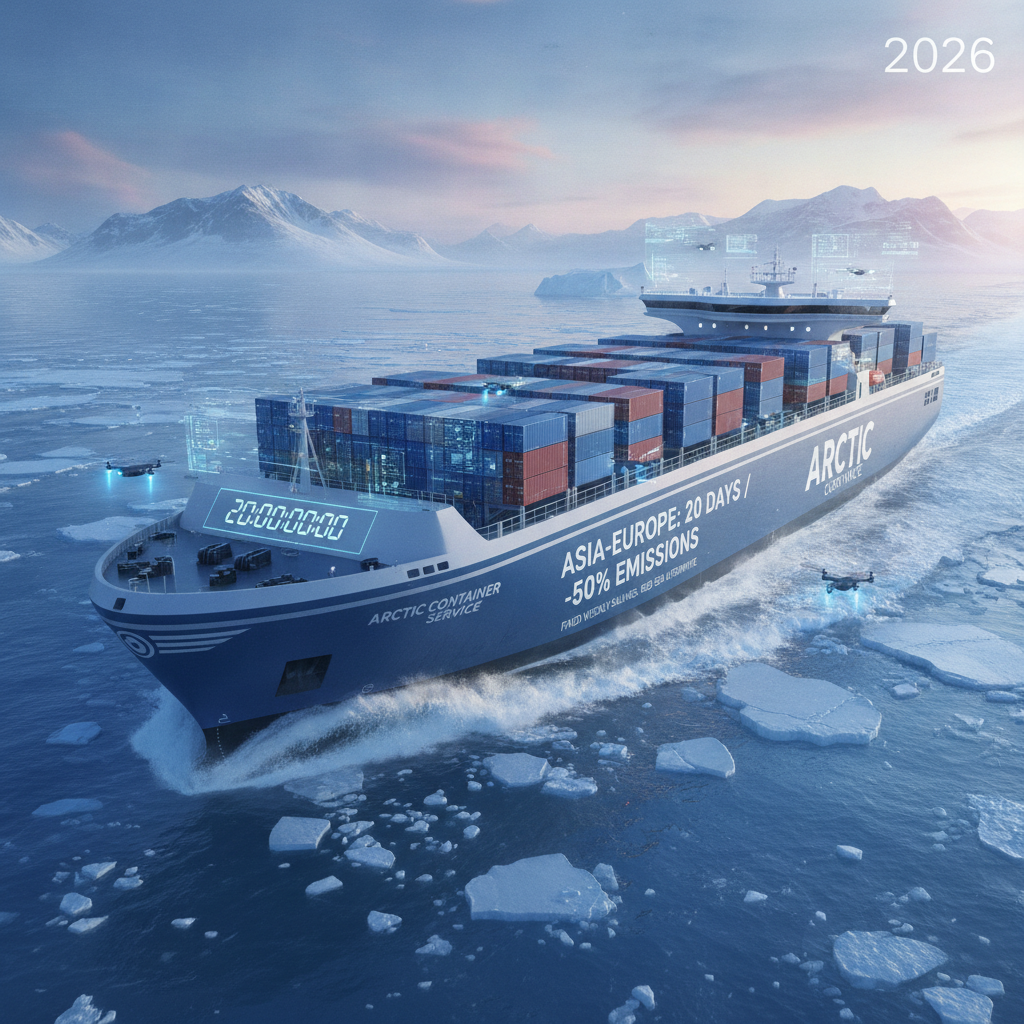
The global shipping landscape is undergoing a seismic shift in 2026 as the Arctic Container Service transitions into a repeatable commercial product. Following successful trials, Sea Legend Shipping launched the first weekly scheduled China-Europe Arctic Express in August 2026. This milestone offers a vital alternative to the geopolitical bottlenecks plaguing traditional Red Sea routes.
Unprecedented Speed for the Arctic Container Service
For time-sensitive cargo, the Northern Sea Route presents a compelling value proposition. Vessels departing from hubs like Ningbo-Zhoushan can reach European destinations in 18 to 22 days, halving conventional transit times. Additionally, traversing this corridor reduces one-way carbon emissions by up to 50%, aligning with industry decarbonization mandates.
Optimizing Arctic Container Service Operations
Commercial viability is expanding beyond Chinese operators. In August 2026, South Korea’s Panstar Line initiated its inaugural commercial trial from Busan, signaling broader confidence in the route’s feasibility. Key advancements facilitating this shift include:
- Implementation of advanced digital ice navigation and risk management protocols.
- Establishment of fixed weekly sailings during the August-October navigation window.
- Diversification of cargo from bulk commodities to new-energy vehicles and e-commerce goods.
As the industry looks ahead, these polar routes offer freight forwarders a critical pressure release valve, provided they can expertly navigate the complex environmental scrutiny and specialized insurance requirements of polar logistics.