
Unpacking the China Supply Chain Security Provisions
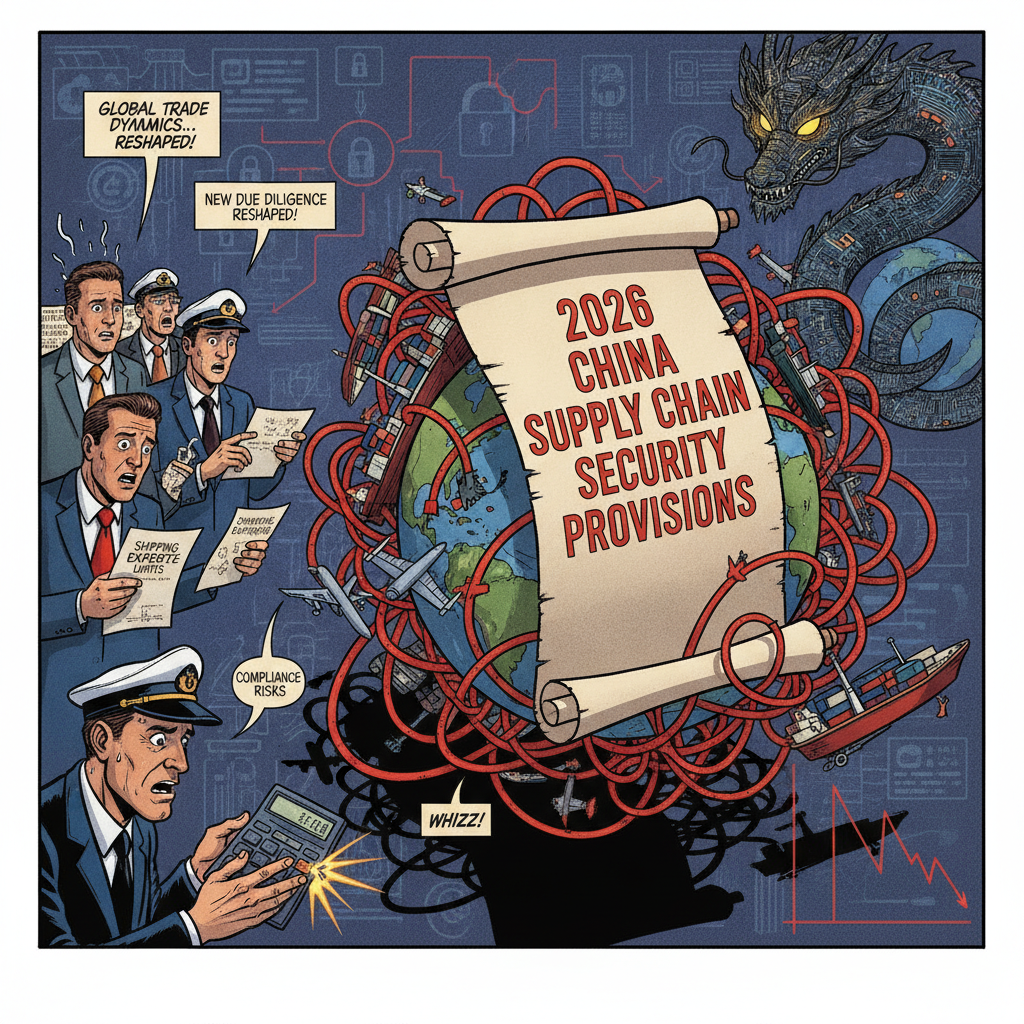
On March 31, 2026, the State Council enacted Order No. 834, officially establishing the China Supply Chain Security Provisions. This landmark decree launched a comprehensive national framework aimed at safeguarding the stability of critical industrial networks. In tandem with the April 2026 Counter-Extraterritoriality Regulation (Decree No. 835), these provisions introduce a profound shift in operational compliance for global logistics and shipping professionals.
Impacts of China Supply Chain Security Provisions
Following the June 24, 2026 announcement by the Ministry of Commerce (MOFCOM) formalizing cross-border investigation protocols, logistics experts must navigate several new operational hurdles:
- Restricted Due Diligence: Article 13 of the framework strictly limits unauthorized investigative or information-gathering activities concerning domestic supply chains. This directly complicates sourcing audits typically required by Western sustainability mandates.
- Countermeasure Risks: The framework empowers Chinese authorities to issue countermeasures, such as Unreliable Entity List (UEL) designations, which surged from 3 in 2024 to 67 in 2025.
- Operational Monitoring: Elevated scrutiny on cross-border logistics data collection requires robust compliance frameworks and enhanced resilience across transport hubs.
Strategic Pathways for Global Trade
For international shipping operators, navigating the China Supply Chain Security Provisions means the traditional model of supply chain transparency is evolving rapidly. Multinational organizations must reassess their exposure and balance these domestic mandates against conflicting global regulatory pressures. Upgrading internal compliance protocols is now a critical defensive strategy for operating securely within the modern East-West trade corridor.