
Ocean Carrier Blank Sailings Strategy: Navigating 2026 Risks
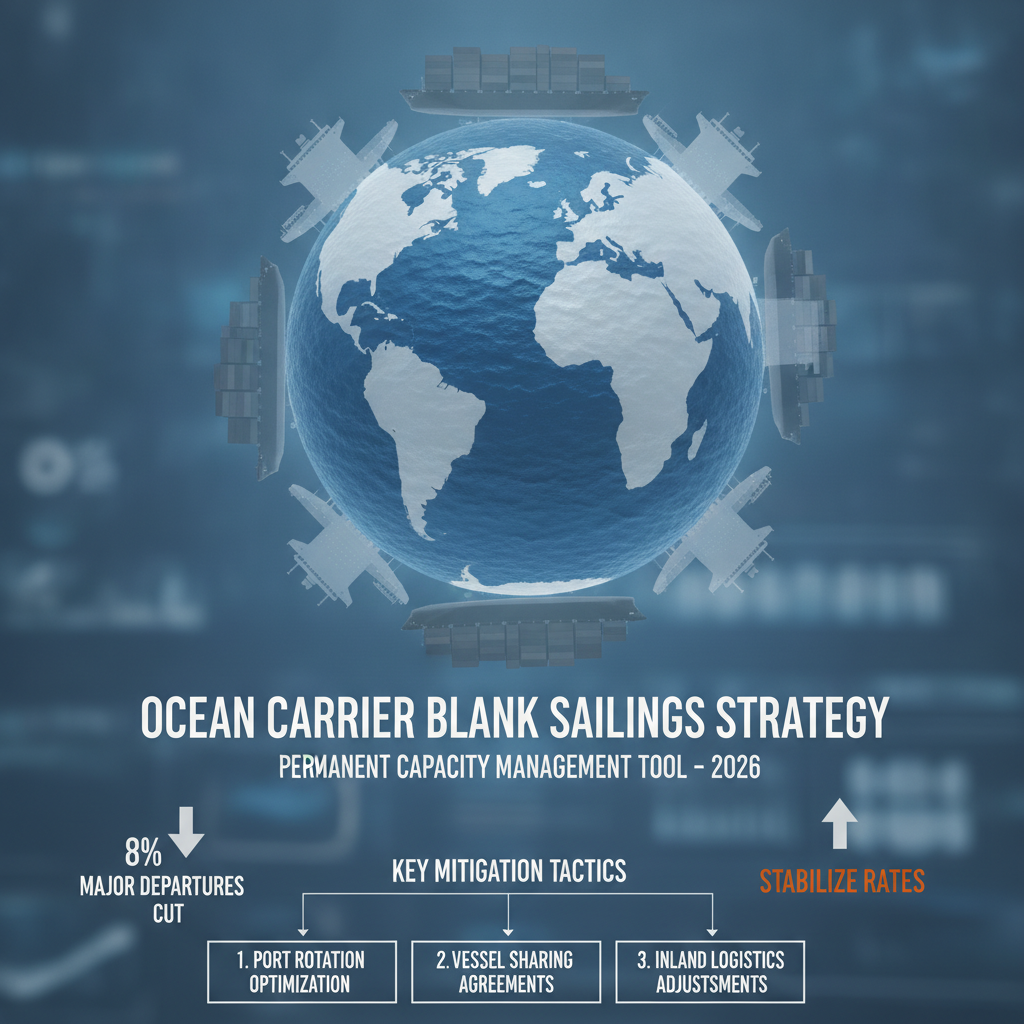
In the maritime logistics sector, the Ocean Carrier Blank Sailings Strategy has evolved into a structural capacity management tool. Throughout 2026, shipping lines have relied on voyage cancellations not just to address weak demand, but to proactively prop up spot rates and maintain market stability.
The Structural Shift in Ocean Carrier Blank Sailings Strategy
According to July 2026 industry data, persistent blank sailings are now structural across major trade lanes [7]. While the global container fleet has grown, carriers are tightly controlling available vessel space. Despite a 46% increase in scheduled capacity on Asia-North America East Coast services since 2019, blanked capacity surged by 215% [4]. This aggressive utilization of the Ocean Carrier Blank Sailings Strategy allows lines to maintain high vessel utilization rather than letting new deliveries create excess supply.
Latest 2026 Data & Capacity Tactics
- Q3 Cancellations: Between August and September 2026, approximately 8% of planned departures across major East-West trades were blanked to stabilize the market [4].
- Reliability Balances: Q2 2026 saw Transpacific blank sailings drop to 10%, temporarily boosting reliability [2]. However, carriers increasingly use proforma padding—adding days to schedules—to manage delays alongside cancellations [2].
Adapting to the Ocean Carrier Blank Sailings Strategy
For Beneficial Cargo Owners (BCOs), the normalization of this approach requires robust contingency planning. Supply chain managers must anticipate higher disruption risks. Diversifying carrier alliances and utilizing digital freight platforms for real-time visibility are essential practices to mitigate artificial capacity constraints.
References
[2] Seatrade Maritime News (Aug 2026) | [4] Metro Global (Aug 2026) | [7] Sea-Intelligence (Jul 2026)