
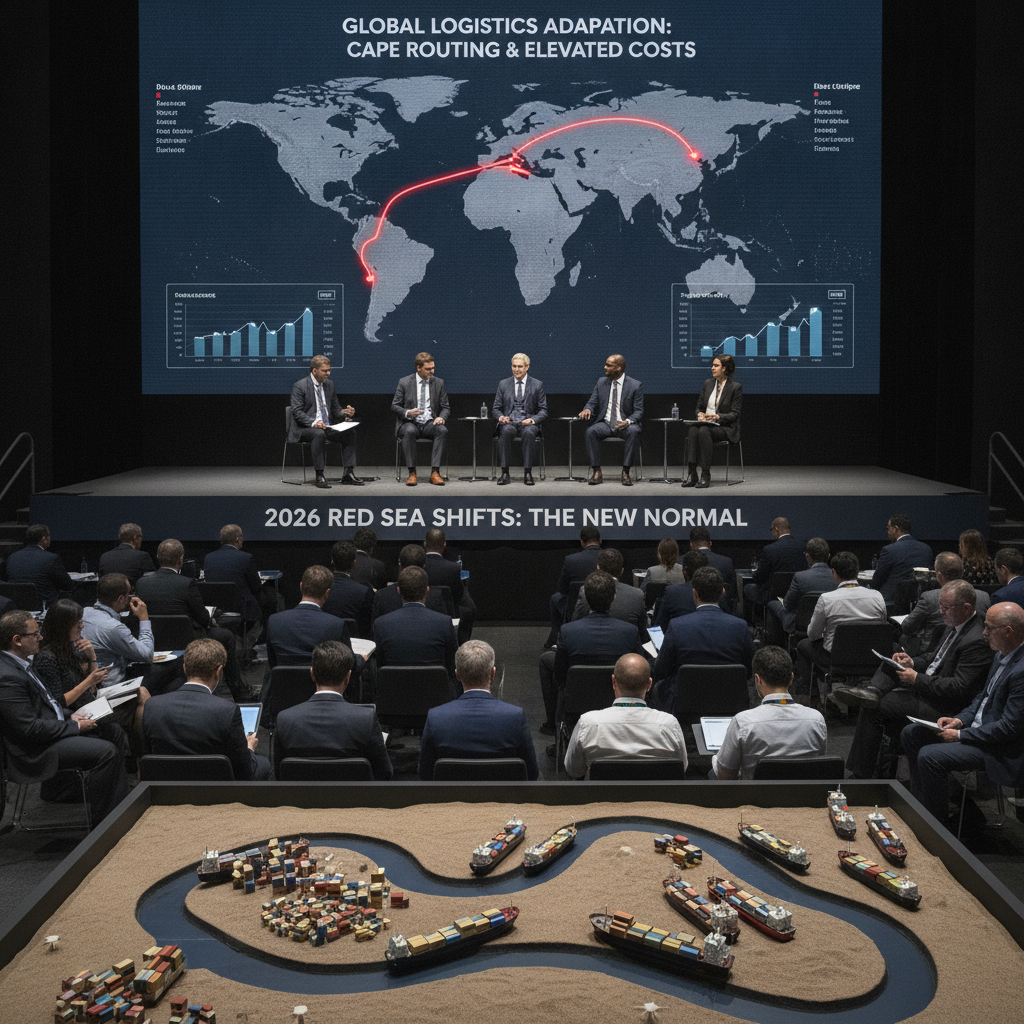
As we move through mid-2026, the Red Sea shipping disruptions have transitioned from a temporary geopolitical crisis into a structural reality for global supply chains. For logistics professionals, understanding these shifts is no longer about crisis management, but rather long-term strategic adaptation. With the Cape of Good Hope routing now serving as the default path for Asia-Europe and Asia-US East Coast services, the industry must brace for extended transit times and elevated operational costs through at least 2027.
The financial toll of avoiding the Bab el-Mandeb strait remains severe. War risk insurance premiums have skyrocketed from 0.05% to 1.25% of vessel value, adding up to $100,000 per transit for those still attempting the Suez route. Furthermore, the additional 3,500 nautical miles around Africa has driven fuel costs up by approximately 40%, while effectively absorbing 15% to 20% of global shipping capacity. Spot rates on Asia-Europe lanes have surged, stabilizing at a plateau significantly higher than pre-crisis baselines, forcing carriers to heavily reset their fleet deployments.
Supply chain leaders are actively abandoning return-to-normal projections, pivoting instead toward robust mitigation tactics. Key strategies include:
- Securing forward contracts to lock in rates three to six months ahead.
- Utilizing multi-modal alternatives, such as India-Middle East rail corridors.
- Accelerating nearshoring initiatives and diversifying supplier geography to reduce maritime dependencies.
Ultimately, agility is the new currency. Mastering these adaptations will separate resilient enterprises from those overwhelmed by permanent market volatility.
References
- Quinaptis. Supply Chain Resilience After the Hormuz Crisis.
- Suaid Global. Red Sea Shipping Crisis 2026: Impact on Your Supply Chain.
- FreightAmigo. How Geopolitical Factors Affect Red Sea Shipping Rates.
- Logistics Business Magazine. The Ripple Effect on Middle East Shipping Disruption.
- Just Style. Red Sea crisis exposes need for greater supply chain resilience.