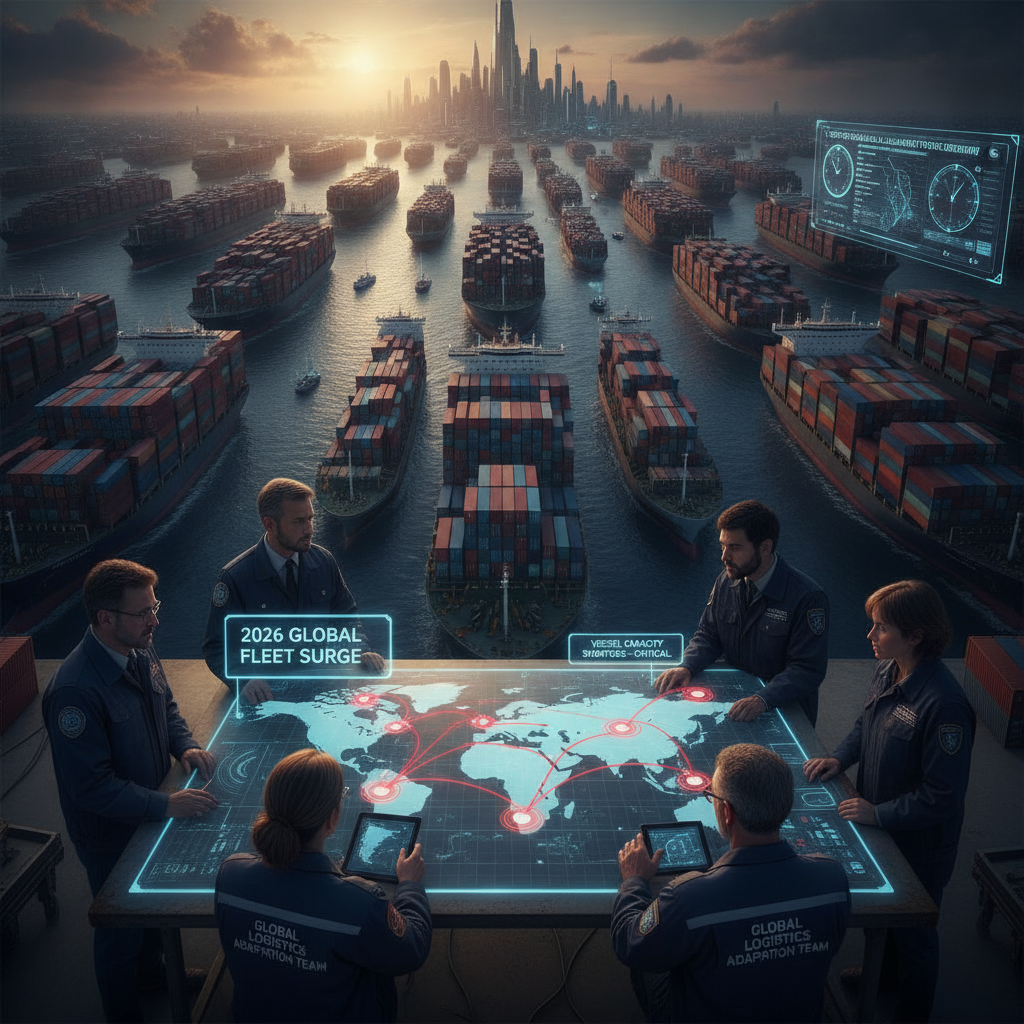
Despite the massive influx of over 7 million TEUs of new fleet capacity between 2024 and 2026, global logistics managers continue to battle localized Vessel Capacity Shortages. While macro-level data indicates a global structural oversupply, shifting trade flows and strategic carrier capacity management have created a highly complex environment for modern shippers.
While the broader supply-demand ratio shows a fleet surplus, real-world availability tells a vastly different story. Shippers are experiencing Vessel Capacity Shortages on specific routes due to several intersecting structural factors:
- Geopolitical Rerouting: Ongoing disruptions, such as extended Red Sea diversions and Suez Canal traffic declines—which dropped 16.7% year-on-year in early 2026—have effectively tied up available tonnage.
- Feeder Vessel Deficits: The delivery of 18,000+ TEU mega-ships has skewed the market, leading to acute Vessel Capacity Shortages for shortsea and smaller regional trades.
- Strategic Blank Sailings: Carriers are aggressively managing their surplus capacity through tactical blank sailings to stabilize freight rates.
Global trade volumes are projected to increase by 2.5% to 3.5% throughout 2026, adding pressure to already strained regional networks. To mitigate the ongoing risks of rolled cargo and spot rate volatility, supply chain experts must rapidly adapt their procurement strategies.
Booking shipments up to eight weeks in advance has become a standard necessity for critical trade lanes. Furthermore, utilizing AI-driven logistics forecasting and diversifying carrier portfolios are proven strategies to outmaneuver sudden Vessel Capacity Shortages and maintain supply chain resilience.
References
Baltic Exchange: https://www.balticexchange.com/
Maritime Gateway: https://www.maritimegateway.com/
AXSMarine: https://public.axsmarine.com/
SEKO Logistics: https://www.sekologistics.com/