
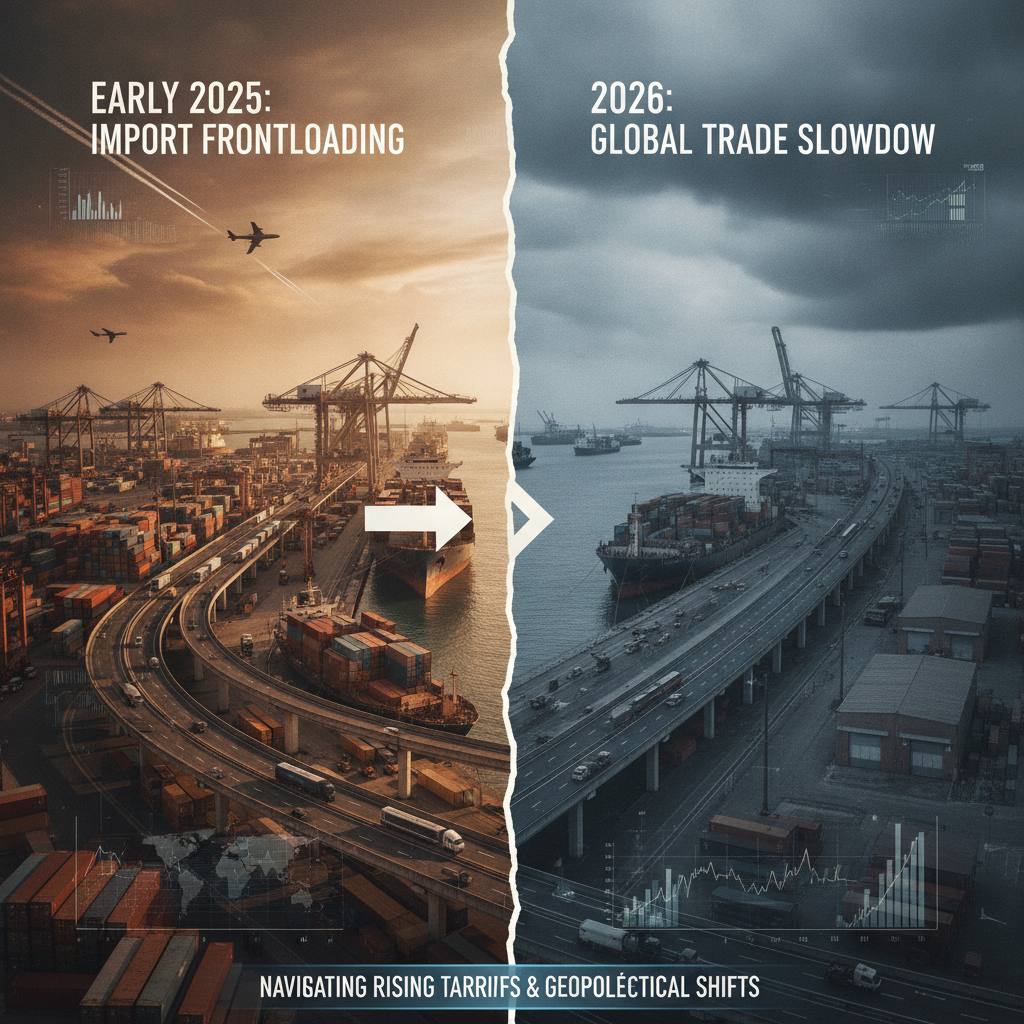
As global trade navigates a volatile geopolitical landscape, Import Frontloading has emerged as a critical strategy for supply chain resilience. In early 2025, North American logistics sectors witnessed a massive surge in cargo volumes as companies raced to import goods ahead of anticipated tariff hikes. According to the World Trade Organization, this aggressive Import Frontloading pushed global merchandise trade volume growth beyond initial expectations in the first half of the year. However, experts are now questioning the long-term sustainability of this rapid inventory buildup.
The rush to secure inventory before trade barriers tightened created significant market distortions across the industry. The Federal Reserve Bank of New York reported that their Global Supply Chain Pressure Index jumped to +0.30 in May 2025, largely driven by tariff volatility and heavy import frontloading on China-US routes. This sudden influx was quickly followed by a sharp contraction. By May 2025, U.S. container import volumes from China saw a noticeable decline, reflecting a cooldown period after the intense April cargo rush.
For logistics and shipping experts, managing the aftermath of Import Frontloading requires strategic agility. While the strategy temporarily shielded companies from immediate tariff impacts, the WTO has significantly lowered its 2026 global trade growth projections, with some estimates dropping to as low as 1.9%. To navigate the upcoming quarters, supply chain leaders must adapt to several emerging trends:
- Inventory Normalization: Excess stockpiles accumulated during the early 2025 frontloading phase will depress new factory orders well into 2026.
- Multimodal Shifts: Extended transit times are accelerating the shift toward integrated overland rail and sea routes.
- Cost Pass-Through: As the buffer of early imported goods depletes, logistics providers will face increased pressure to pass tariff-related costs down the supply chain.
Ultimately, while Import Frontloading provided a vital short-term shield against policy uncertainty, the logistics industry must now prepare for the inevitable demand normalization. Strategic forecasting, real-time cargo visibility, and dynamic routing will be the defining competitive advantages.
References
- WTO Blog: Global Trade in 2026 (March 2026)
- Nomura Connects: Macro and Micro Evidence of the Tariff Impact (May 2025)
- WTO Forecast: Global Trade Growth to Slow to 1.9% in 2026 (March 2026)
- Descartes: May Shows Significant Decrease in U.S. Container Import Volumes (June 2025)
- P&S Intelligence: Multimodal Transport Market Size Report
- ResearchGate: Macroeconomic Role of the EU Emissions Trading System (Nov 2025)