
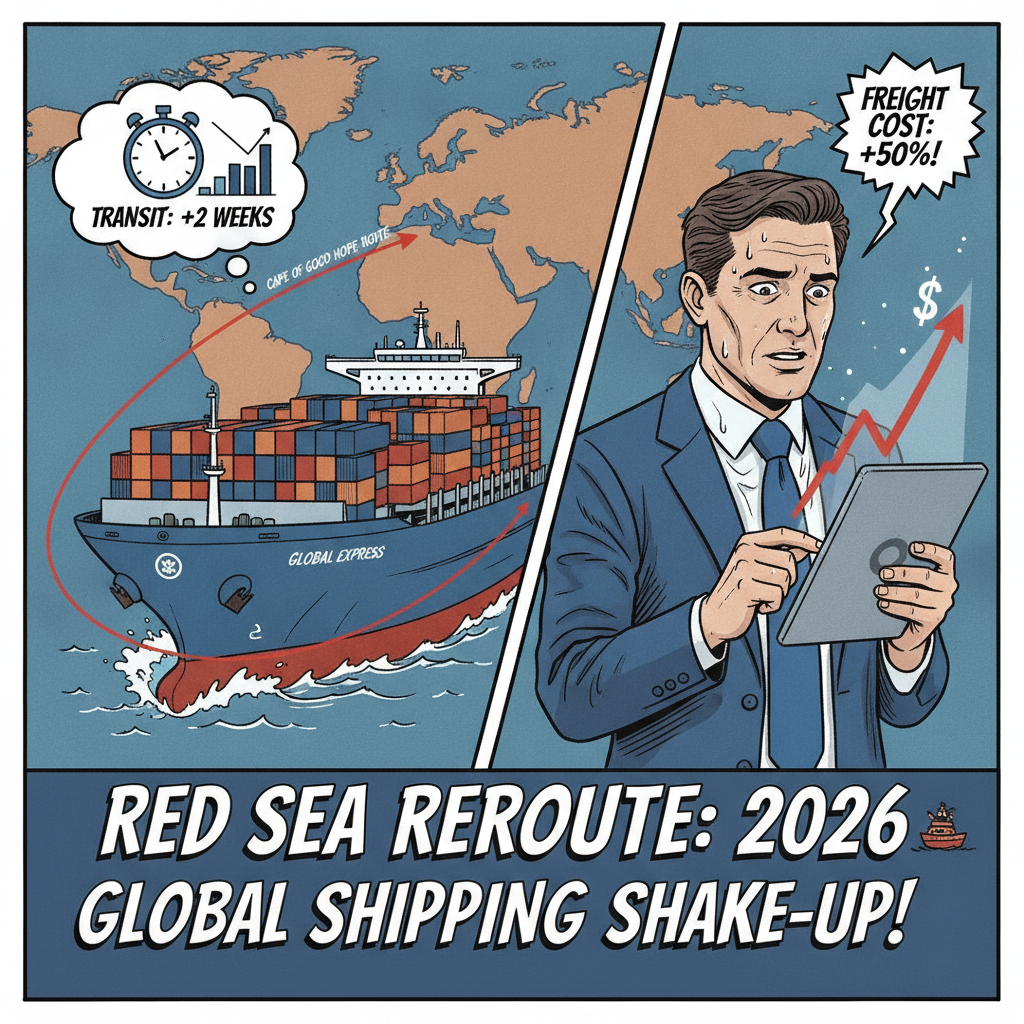
As we navigate 2026, Red Sea rerouting has transitioned from a short-term contingency to a structural reality for global logistics. Major container lines continue bypassing the Suez Canal in favor of the Cape of Good Hope, significantly altering maritime supply chains. This sustained diversion has severely impacted operational performance, with global schedule reliability plunging to just 29% in early 2026.
The operational penalty of avoiding the Bab al-Mandeb Strait is massive. For shipping experts, this structural shift requires entirely new capacity planning models to maintain efficiency.
- Extended Transits: The Cape route adds over 4,000 nautical miles, increasing Asia-Europe transit times by 14 to 20 days.
- Capacity Squeeze: Longer voyages reduce the annual carrying capacity per vessel by roughly 20%, absorbing 6% of the global fleet.
- Port Shifts: Regional trade has heavily recalibrated. Traditional hubs like King Abdullah Port saw volumes drop 83%, while alternative ports like Dammam surged 43%.
The economic ripple effects of continuous Red Sea rerouting are pronounced and widespread. Freight volatility remains a primary challenge, with fuel surcharges reaching up to $3,800 per container. Furthermore, war-risk insurance premiums remain structurally elevated at 0.75%, five times pre-crisis levels. Environmentally, the container shipping sector experienced a staggering spike, adding 18 million tons of CO2 emissions annually due to the extended voyages.
Supply chain leaders must adapt by extending booking lead times by at least 21 days and diversifying carrier alliances. Building hybrid routing resilience is absolutely essential for maintaining continuity amid ongoing Middle East disruptions.
References: Analysis of maritime geopolitics on early 2026; Lloyd’s List – Red Sea rerouting recalibrates Saudi trade; Red Sea Shipping Crisis 2026; GCC – Biggest Challenges Importers Face in 2026; Xeneta Schedule Reliability Scorecard – January 2026; FreightAmigo – Ocean Freight Rates Surge; Red Sea Factor Analysis.