
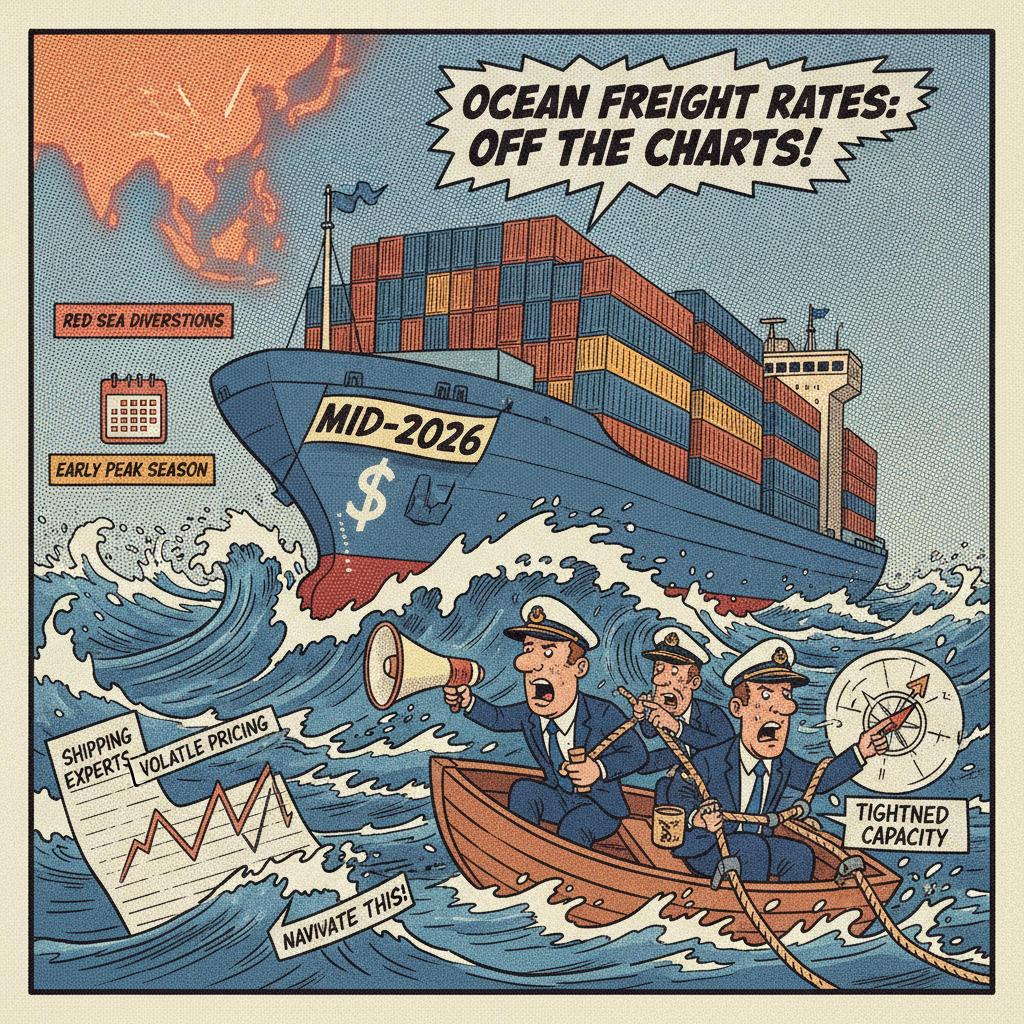
The logistics industry is once again facing unprecedented volatility as ocean freight rate surges redefine global supply chain strategies in mid-2026. The Shanghai Containerized Freight Index (SCFI) experienced a brutal 70% surge between February and late May 2026. Rates for 40-foot containers (FEU) to the U.S. West Coast are rapidly approaching $5,000, while East Coast routes have breached the $6,000 threshold. Understanding the structural drivers behind these ocean freight rate surges is critical for shipping experts mitigating margin compression.
The primary catalyst for these ocean freight rate surges remains the Red Sea crisis and the semi-permanent rerouting of vessels around the Cape of Good Hope. This diversion adds approximately 3,500 nautical miles to Asia-Europe voyages, effectively reducing global fleet capacity by 12% to 15%. Furthermore, major ocean carriers have deployed aggressive capacity control measures. Through strategic blank sailings and vessel reshuffling, alliances have tightened supply to maintain pricing power. In June 2026, carriers like Maersk implemented massive Peak Season Surcharges (PSS), adding up to $2,000 per 40-foot container on popular routes.
Compounding the capacity shortage is a significant behavioral shift among shippers. Fearing tariff uncertainties and potential Q4 congestion, importers have initiated an early peak season front-loading cycle. This premature rush to replenish inventories has exacerbated ocean freight rate surges, creating artificial scarcity across major origin ports. Logistics experts must abandon static routing methods and adopt real-time market data integration to navigate an environment where high volatility is the undisputed new normal.
References
Kisun Shipping: 2026 China Freight Explodes. TD Logistics: Why Are Ocean Freight Rates Rising Again in 2026. Bofeng Logistics: Why are 2026 shipping rates rising. YQN Logistics: China Sea Freight Increase 2026. The Cooperative: Ocean Freight Rates 2026.