
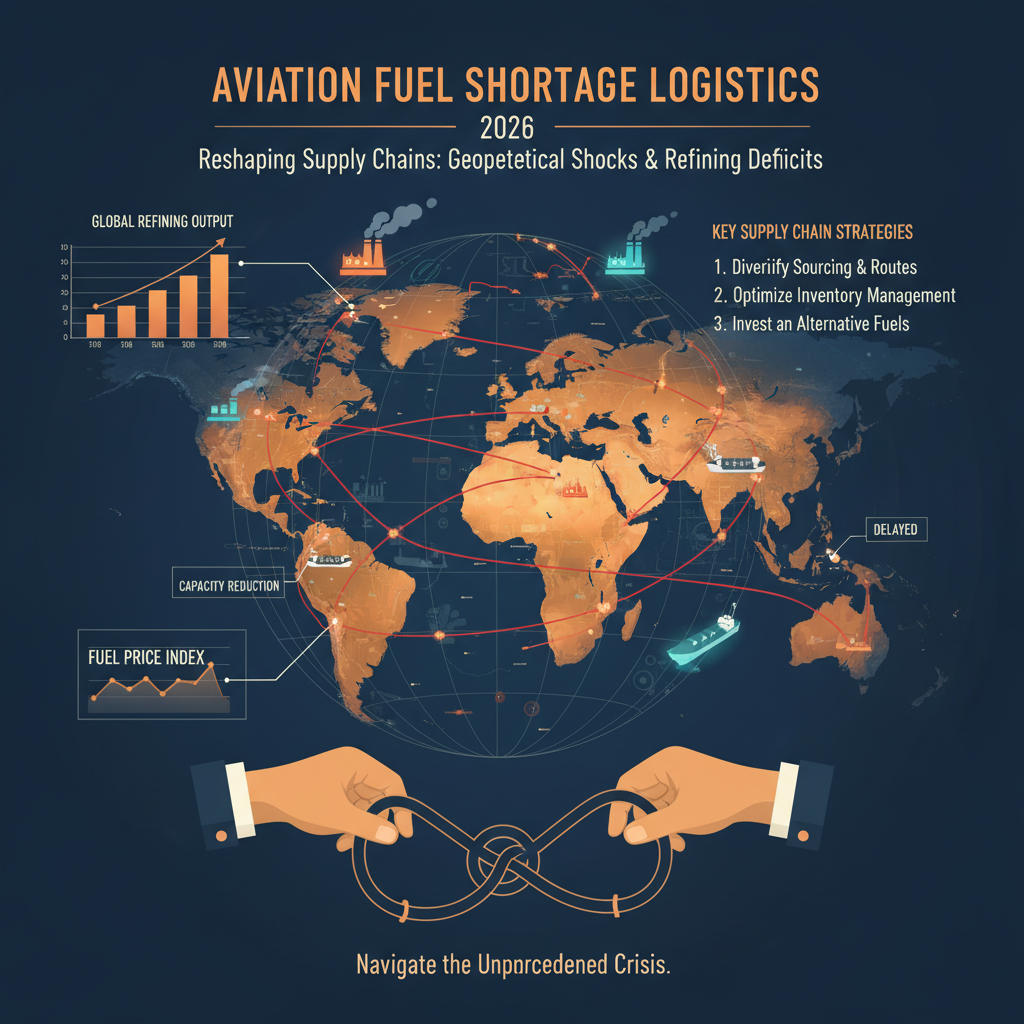
The global aviation industry is currently facing an unprecedented convergence of geopolitical shocks and structural capacity limits in 2025 and 2026. The disruption of key shipping lanes, particularly the Strait of Hormuz, has severely choked the flow of refined aviation kerosene. According to recent market assessments, benchmark jet fuel prices have roughly doubled since early February 2026, reflecting a severe pricing crisis that is radically altering Aviation Fuel Shortage Logistics.
Logistics planners and shipping experts are being forced to navigate critical bottlenecks. The structural deficit is clear:
- Refining Capacity Deficit: Europe has lost more than 1.2 million barrels per day of refining power since 2020, with four major refineries closing in 2025 alone.
- Supply Rerouting Constraints: With Middle East exports collapsing from normal levels to just 70,000 barrels per day in April 2026, the U.S. Gulf Coast has been forced to step in, covering approximately half of the lost volumes to Europe.
- Equipment Bottlenecks: Broader aerospace supply chain challenges, including parts shortages and delayed fleet deliveries, are projected to cost the airline industry over $11 billion.
Navigating these disruptions requires a fundamental shift from just-in-time delivery to robust buffer strategies. Shipping nodes in the Amsterdam-Rotterdam-Antwerp (ARA) hub have witnessed stocks dropping to six-year lows. To build resilience, logistics operators are heavily investing in decentralized fuel storage, multimodal rerouting, and dynamic fuel hedging. With the International Energy Agency previously warning of critically low European fuel reserves, maintaining supply chain agility is no longer optional for shipping experts—it is a critical imperative for operational survival.
References
- https://www.arabnews.com/ (Arab News, 2026)
- https://www.spglobal.com/commodityinsights/ (S&P Global, 2026)
- https://www.iata.org/en/programs/ops-infra/supply-chain/ (IATA, 2025)