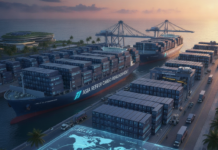
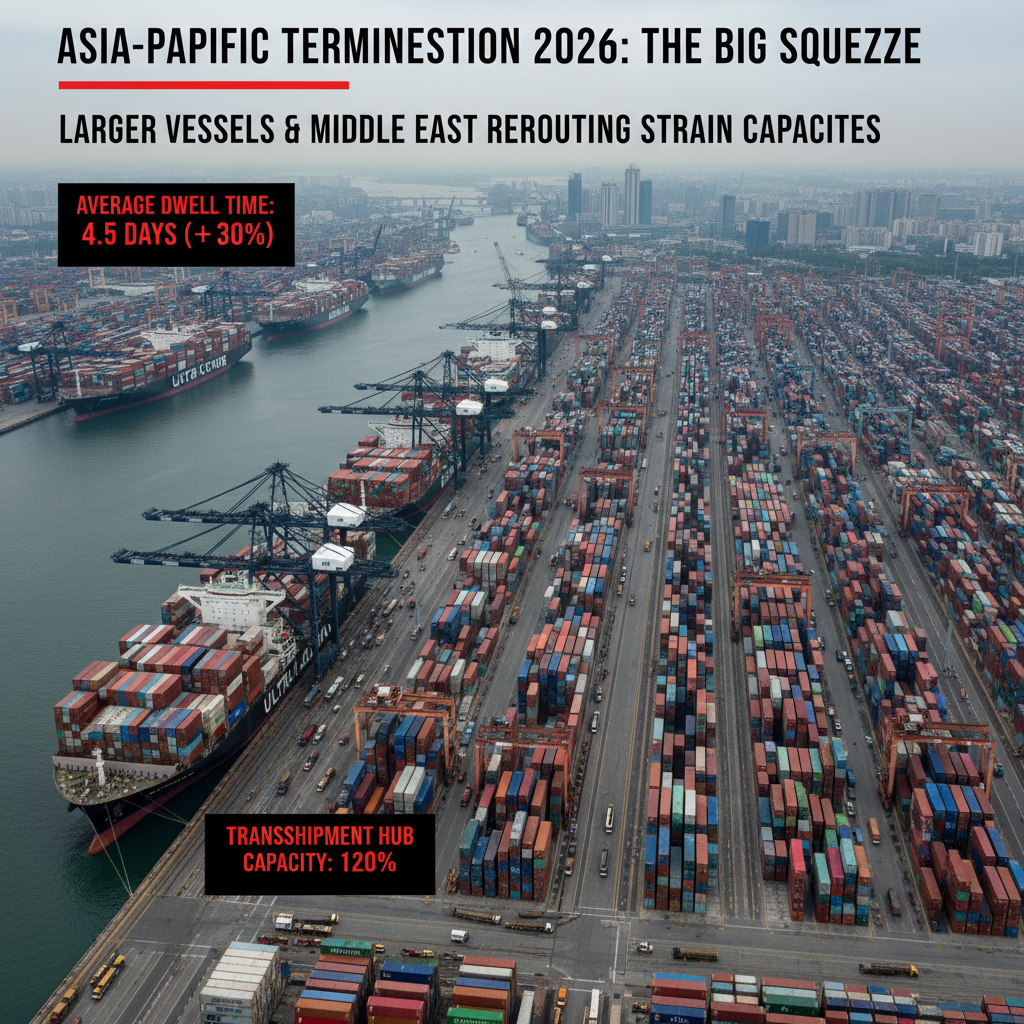
The global maritime landscape is facing an unprecedented stress test in 2026, with Asia-Pacific Terminal Congestion emerging as a critical bottleneck for international supply chains. Recent industry data reveals a stark capacity strain: while average vessel call sizes have climbed year-over-year, functional port productivity has struggled to keep pace. This dynamic means that even a minor disruption can trigger cascading systemic delays across the region’s top hubs.
Current geopolitical tensions are severely exacerbating the logistics crisis. Ongoing closures and vessel rerouting around the Strait of Hormuz have pushed a massive maritime backlog toward Eastern ports. This shift has created severe bottlenecks across several key transshipment gateways, including:
- Singapore and Port Klang
- Tanjung Pelepas
- Port of Busan
These hubs are reporting visible increases in vessel queues at anchorage as merchant ships cluster at alternative routes. This ripple effect rapidly removes functional capacity through time absorption, leaving critical cargo idle and operational revenue stagnant.
Operational statistics for early 2026 highlight a softening in marine and berth productivity across multiple hubs. Transshipment dwell times have spiked, reaching up to 10 days in heavily trafficked terminals, though Shanghai remains a rare standout for year-over-year improvement. For logistics experts, this persistent Asia-Pacific Terminal Congestion indicates that while the global fleet might appear oversupplied, functional network capacity remains incredibly tight.
References
- Q4 2025 Port Congestion Analysis: Bigger Calls, Tighter Margins.
- Middle East Shipping Disruptions Begin to Congest Major Asian Ports – Logfret.