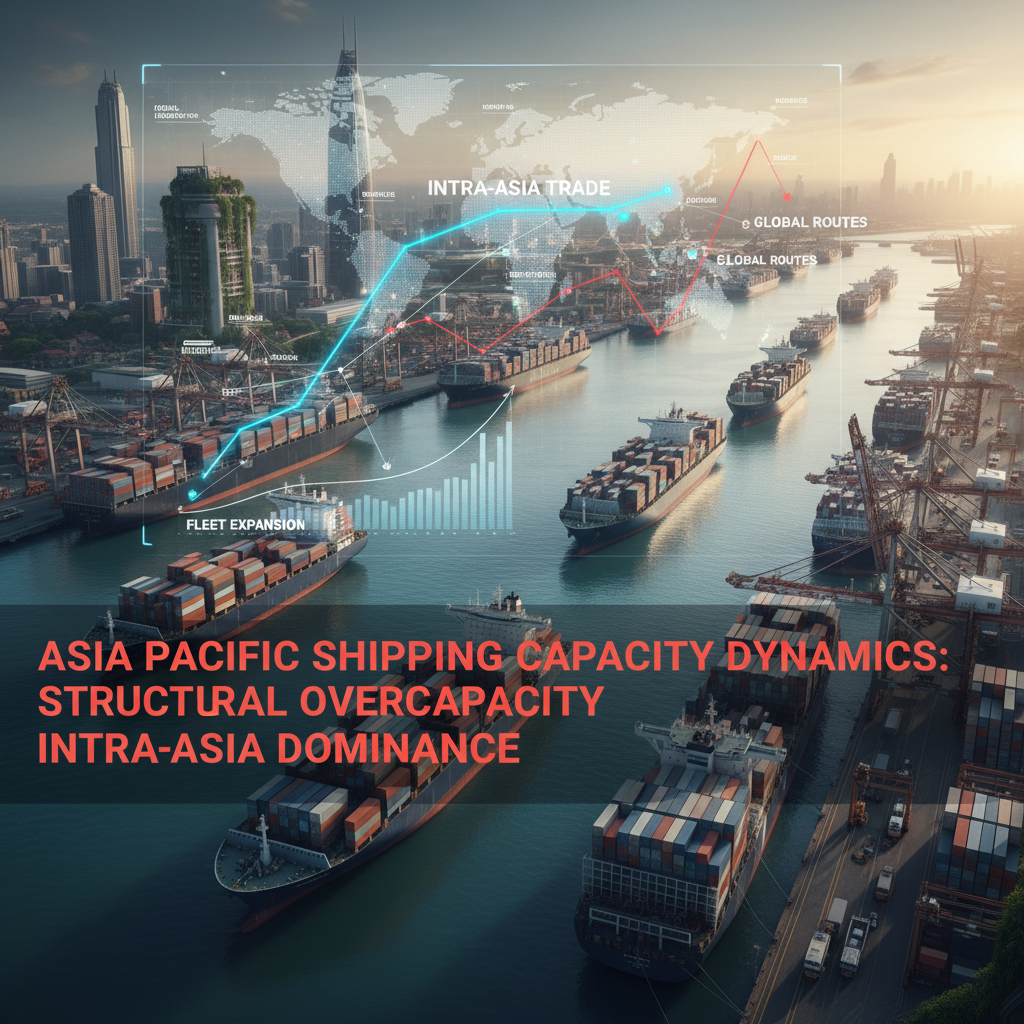
As the logistics sector recalibrates, understanding the shifting Asia Pacific Shipping Capacity Dynamics is critical for supply chain strategists. Entering 2026, the market faces a structural shift where supply expansion outpaces demand. Forecasts anticipate a 3.6% expansion in fleet capacity against 3% demand growth, reshaping the pricing environment.
The shipping market is grappling with structural overcapacity, driven by new vessel deliveries peaking between 2026 and 2028. While Red Sea diversions temporarily absorbed excess tonnage, the supply-demand imbalance remains. To mitigate this surplus, carriers in the Asia-Pacific region rely on aggressive capacity management tactics. These include blank sailings, slow steaming, and strategic idling to defend rate yields against softening market pressures. Meanwhile, major players like COSCO, ONE, and Evergreen continue to dominate the Asia-North America corridors despite slight capacity contractions in early 2026.
Tariff implementations are accelerating a geographical power shift within Asia Pacific Shipping Capacity Dynamics. Traditional patterns are evolving as China redirects export volumes away from tariff-impacted U.S. markets toward Europe, Africa, and Intra-Asia lanes. Intra-Asia trade volumes are gaining significant momentum, buoyed by the relocation of manufacturing hubs to Southeast Asian nations. For logistics professionals, these developments signal a transition toward shipper-favorable conditions, though persistent transshipment congestion demands proactive planning. Navigating this landscape requires agility as the market digests the 2026 capacity influx.
References
- Upply Market Insights, 2026 Container Shipping Scenarios
- Vizion API, Global Container Trade 2026 Forecasts
- Freightos, Rate Outlook 2026
- AlixPartners, 2026 Container Shipping Outlook
- Global Maritime Hub, Asian carriers lead trade
- Maersk Asia Pacific Market Update Q4 2025