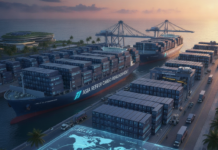


As global supply chains pivot away from Asia, Cross-Border Nearshoring Logistics has become the defining strategy for North American trade in 2026. The shift is no longer theoretical, as manufacturers aggressively relocate production to Mexico to mitigate geopolitical risks. This regional realignment is completely transforming freight operations, customs compliance, and border infrastructure investments.
Recent statistics highlight exactly why logistics experts are prioritizing North American networks. With effective tariffs on Chinese imports exceeding 33%, Mexico has solidified its position as a central manufacturing hub [1]. This transition offers compelling advantages over traditional transpacific routing.
- Transit Speed: Shipping transit from Mexico to major U.S. markets averages just two days, compared to 36 days from China [1].
- USMCA Utilization: Regional trade pact utilization hit nearly 89% in late 2025, heavily incentivizing regional sourcing [1].
- Border Volume: Truck crossings in major hubs like Laredo have surged to nearly 3 million annually, prompting massive infrastructure upgrades [2].
With the critical 2026 USMCA review approaching, supply chain executives must focus on operational agility. Relying purely on macroeconomic trends is insufficient; companies must invest in technological integration to navigate capacity constraints. Preparing for continued volume growth means locking in reliable drayage and cross-docking partners now.
References
[1] Nearshoring to Mexico: The Manufacturer’s Decision Guide for 2026.
[2] Nearshoring & Cross-Border Investments: Why 2025 Is a Game-Changer for Freight.