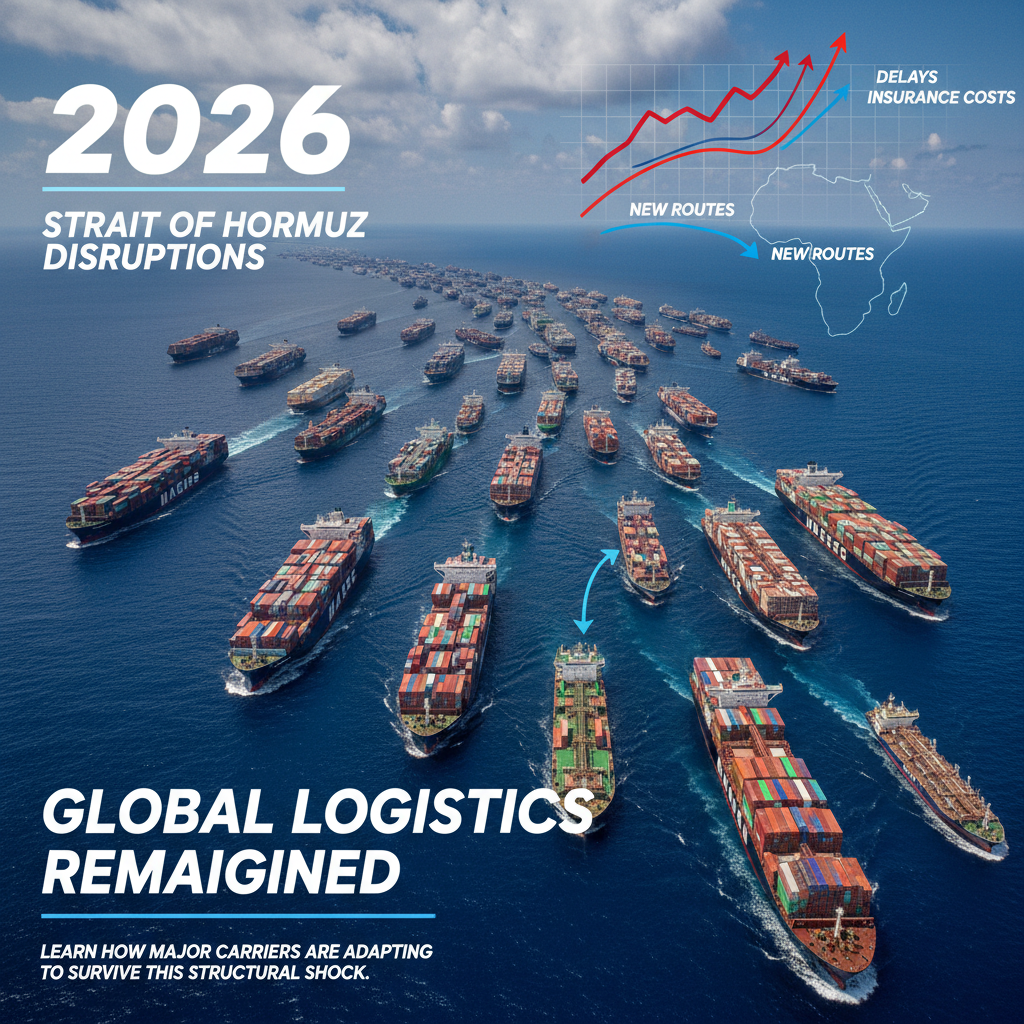
Recent military escalations have transformed Strait of Hormuz Disruptions into structural shocks for global supply chains. Since the February 2026 conflict, this strategic waterway—handling 20% of global seaborne oil—has faced severe blockades. Tanker traffic plummeted by 70%, trapping approximately 1,000 commercial ships. For shipping operators, focus has drastically shifted from cost-efficiency to regional resilience. Major carriers like MSC and Maersk are now actively adjusting timetables, treating these Strait of Hormuz Disruptions as systemic risks rather than short-term anomalies.
The financial fallout across the maritime sector is staggering. Marine war insurance premiums jumped from 0.25% to between 1% and 1.5% of a vessel’s insured value, occasionally hitting 10%.
- Insurance Initiatives: The US proposed a $40 billion reinsurance facility to help stabilize surging premium rates.
- Unconventional Solutions: Iranian authorities introduced a Bitcoin-backed shipping insurance service to bypass standard financial networks.
- Route Adjustments: Maritime traffic is heavily diverting via the Cape of Good Hope, drastically raising fuel costs.
Cascading delays will continue to inflate freight expenses and permanently alter Asia-Middle East trade lanes. Upgrading procurement strategies and utilizing real-time vessel tracking are now vital for global forwarders navigating Strait of Hormuz Disruptions.
References
SeaRates Strategy& SeaVantage Risk Intelligence World Economic Forum The Guardian Wikipedia LA Times The Straits Times