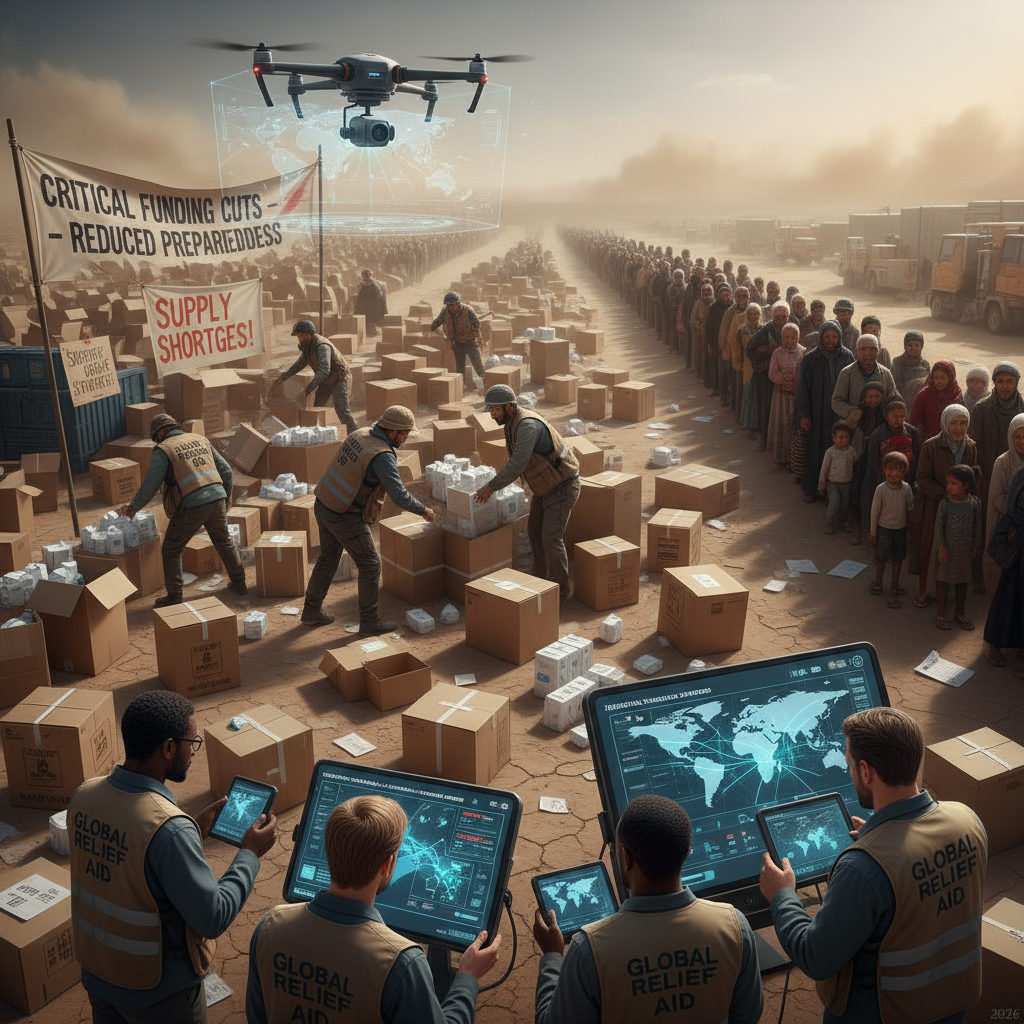
The global logistics sector is facing unprecedented pressure, with Humanitarian Supply Chain Challenges becoming increasingly complex in 2025 and 2026. Despite technological advancements in warehouse and transport management systems, organizations are grappling with severe funding constraints and declining operational readiness. Recent industry analyses reveal a concerning paradox: while supply chain professionals see risks more clearly than ever, crucial mitigation strategies have fallen significantly.
Financial bottlenecks and shifting donor priorities are fundamentally reshaping how disaster relief is managed globally. The 2025 State of Logistics and Supply Chain in the Humanitarian Context report indicates that donor support has contracted sharply, leading to reduced funding for essential training and resource-sharing initiatives. This financial strain has directly impacted on-the-ground readiness. Data from a January 2026 Humanitarian Reset Survey in the Asia-Pacific region reveals that 82% of agencies have reported massive reductions in their emergency preparedness activities. Professionals face several compounding operational hurdles:
- Significant declines in stock prepositioning and critical supplier diversification.
- Severe constraints in front-line storage availability and access in conflict zones.
- Persistent difficulties involving customs clearance, poor demand planning, and limited inter-agency coordination.
To overcome these persistent Humanitarian Supply Chain Challenges, industry leaders are pivoting toward comprehensive digital transformations and specialized infrastructure investments. The rapid integration of robust cold chain tracking systems has emerged as a crucial growth vector for pharmaceutical and vaccine delivery operations in low-resource settings. Furthermore, logistics experts emphasize the necessity of adopting sophisticated tools to automate inventory processes, enable real-time visibility, and optimize storage capacity. Achieving sustainable resilience requires the sector to move beyond fragmented models and embrace holistic strategies that prioritize digital traceability and enhanced local capacity.
References
- The State of Logistics and Supply Chain in the Humanitarian Context 2025 Report.
- OCHA Humanitarian Reset Survey, January 2026.
- Humanitarian Logistics Market Research Report, Dataintelo, April 2026.
- Ukraine Humanitarian Needs and Response Plan 2025.
- Practice and challenges of humanitarian logistics management within the Ethiopian public pharmaceutical supply chain, PMC.