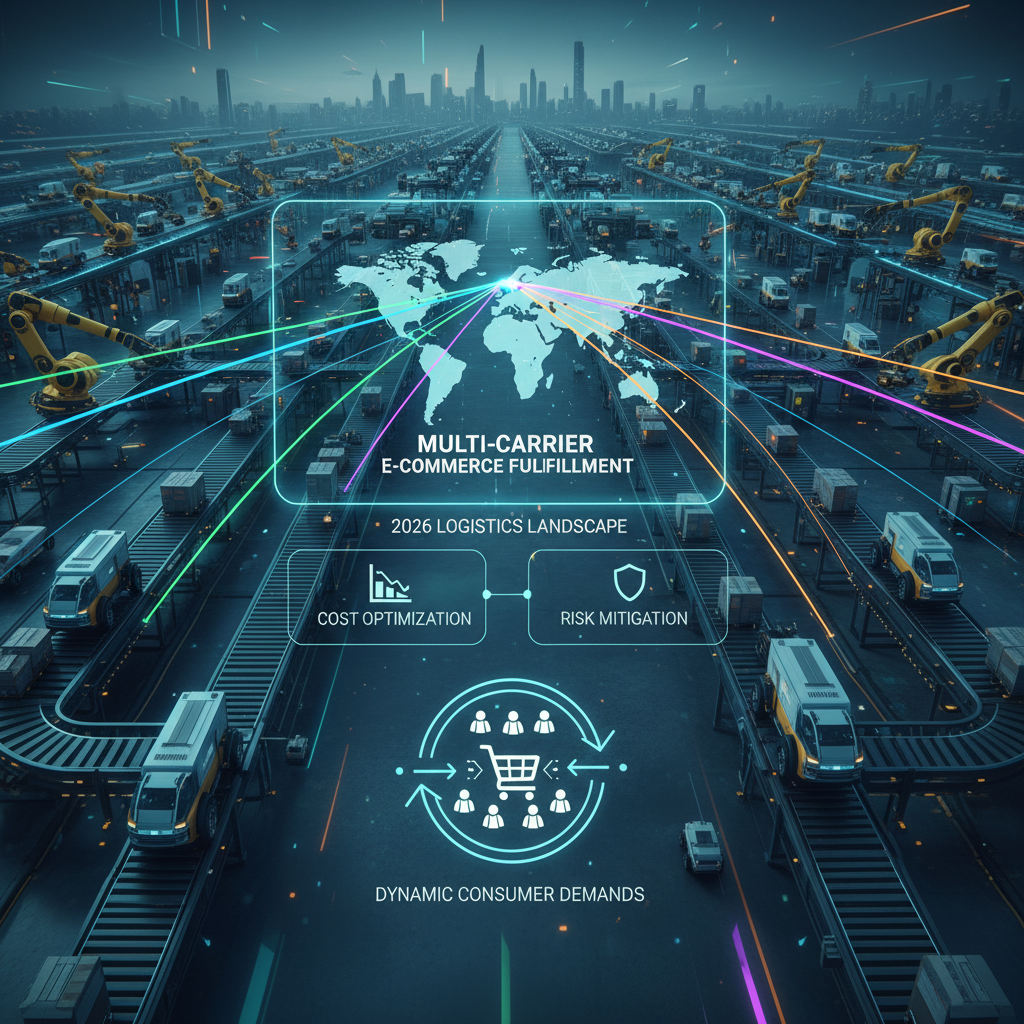
As consumer expectations rapidly evolve, relying on a single-carrier shipping strategy is no longer viable. In 2026, multi-carrier e-commerce fulfillment is a strategic imperative for retailers. Recent data shows that 66.3% of customers abandon carts due to high shipping fees, and 63% of shoppers prioritize multiple delivery options over sheer speed. This shift forces logistics experts to rethink parcel delivery and cost control.
Supply chain volatility demands greater flexibility. Shippers are diversifying networks to mitigate risks and negotiate better rates. According to a late 2025 DHL eCommerce report, 43% of global businesses—and 57% of large enterprises—now partner with three or more logistics providers. Furthermore, 87% regularly review their delivery capabilities to maintain a competitive edge. By leveraging multi-carrier e-commerce fulfillment software, companies can dynamically rate-shop and match shipments with the optimal carrier based on zone and service level.
- Cost Optimization: Dynamic rate-shopping protects margins against sudden fuel surcharges and accessorial fee hikes.
- Risk Mitigation: Distributing parcel volume prevents severe bottlenecks during peak seasons or sudden regional outages.
- Enhanced Customer Experience: With 61% of shoppers stating they would switch retailers after a single failed delivery, spreading carrier risk ensures reliable performance.
With US e-commerce shipments forecast to reach 30 billion parcels annually by 2030, fulfillment complexity will only intensify. Shipping is no longer just a fixed operational cost; it is a critical conversion lever. Embracing a multi-carrier e-commerce fulfillment strategy is the definitive way to secure scalable growth.
References
- Shipium. Complete Guide to Multi Carrier Shipping (Aug 2025)
- Logistics Management. DHL 2025 E-Commerce Trends Report (Nov 2025)
- Sendcloud. Multi-carrier shipping as the new standard (Jan 2026)