
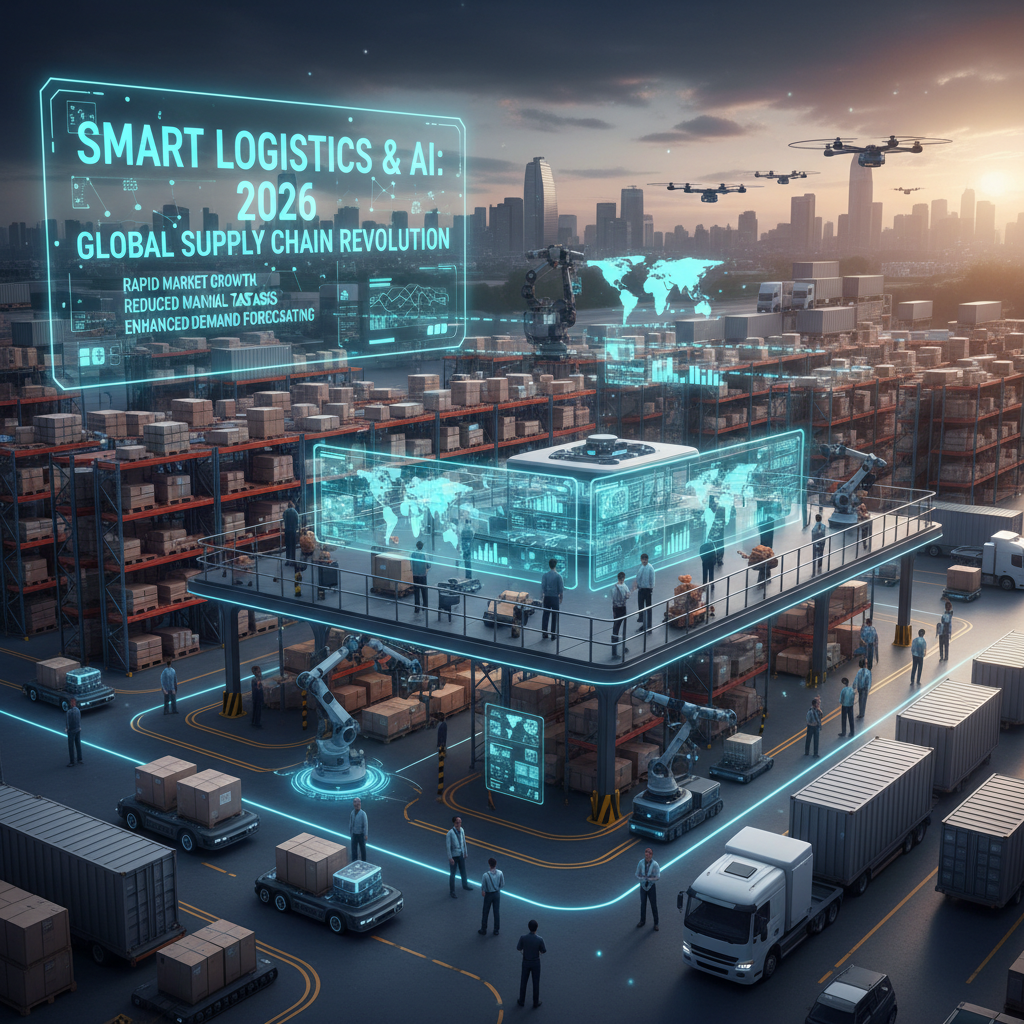
In 2026, the integration of smart logistics and AI is no longer just a competitive advantage; it is an industry mandate. Global supply networks are increasingly complex, demanding real-time intelligence and rapid scalability. Recent industry reports reveal that the AI in logistics market size has surged, expanding from $34.04 billion in 2025 to an estimated $47.92 billion in 2026. As economic disruptions persist, professionals are turning to automation to optimize routes, enhance predictive maintenance, and stabilize operations.
The operational impact of smart logistics and AI is profound across all shipping modalities. Shippers and carriers are deploying machine learning algorithms to process vast datasets, predicting consumer demand with unprecedented accuracy. An IBM study noted that businesses using AI-driven forecasting achieved an 85% improvement in accuracy. Furthermore, automation drastically reduces administrative burdens. Recent surveys indicate that AI implementation has led to a 65% reduction in manual procurement tasks, allowing human operators to focus on strategic network planning.
Looking ahead, the convergence of smart logistics and AI will increasingly feature autonomous systems and cloud-based analytics. By the end of 2026, Gartner projects that 75% of large enterprises will have integrated AI into their supply chain operations. Key developments driving this expansion include:
- Cloud-based supply chain platforms that provide real-time asset tracking.
- Generative AI models automating complex inventory management and order fulfillment.
- Predictive maintenance tools utilizing smart sensors to minimize equipment downtime.
As the sector moves toward hyper-automation, these technologies will continue to be the cornerstone of resilient, cost-effective global trade. References: Thebusinessresearchcompany.com; Smartdev.com; Researchandmarkets.com.