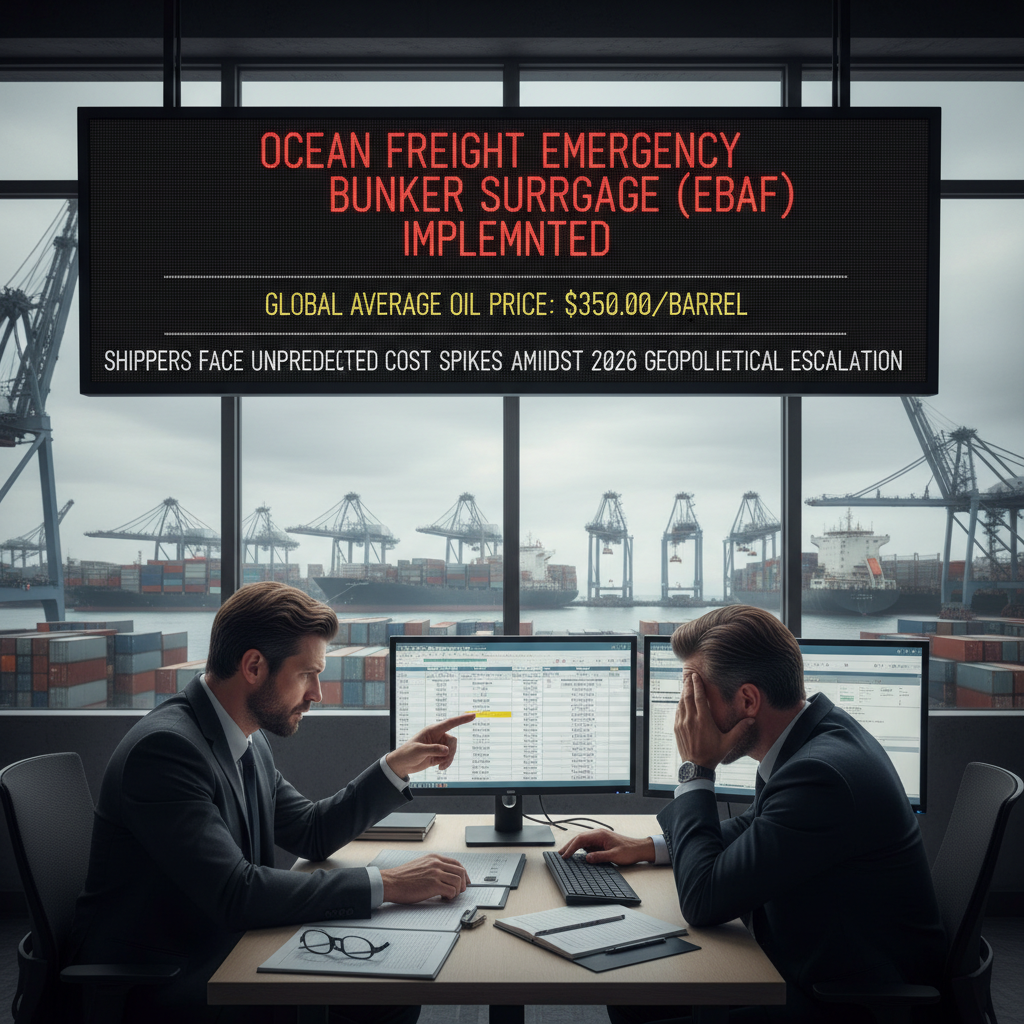
In 2026, the global shipping industry faces unprecedented volatility due to escalating geopolitical tensions. As oil prices experience severe fluctuations, major carriers are implementing the Ocean freight Emergency Bunker Surcharge EBAF to offset uncontrollable operational costs. This surcharge acts as a critical mechanism to absorb massive spikes in bunker fuel prices.
Recent escalations around critical maritime corridors, particularly the Strait of Hormuz where transits dropped by over 90%, have severely impacted supply chains. With Brent crude oil forecasted to reach $115 per barrel in early 2026, the Ocean freight Emergency Bunker Surcharge EBAF has become unavoidable. Carriers are simultaneously dealing with elevated war risk premiums.
- Fuel Consumption Spikes: Extended transit times caused by vessel rerouting drastically increase fuel usage.
- Security Measures: Heightened security protocols and war risk premiums add to expenses.
- Market Disruption: Persistent port congestion creates severe supply chain inefficiencies.
Per Federal Maritime Commission regulations, steamship lines typically provide a 30-day notice before raising surcharges. Logistics professionals must proactively adjust 2026 budgets and evaluate alternative routing to mitigate the financial impact of the Ocean freight Emergency Bunker Surcharge EBAF. Transparency with forwarders remains essential.
References
jas.com – Global Customer Advisory
digitalcommerce360.com – Shipping surcharges surge
anderinger.com – Ocean Freight Destination Charges