
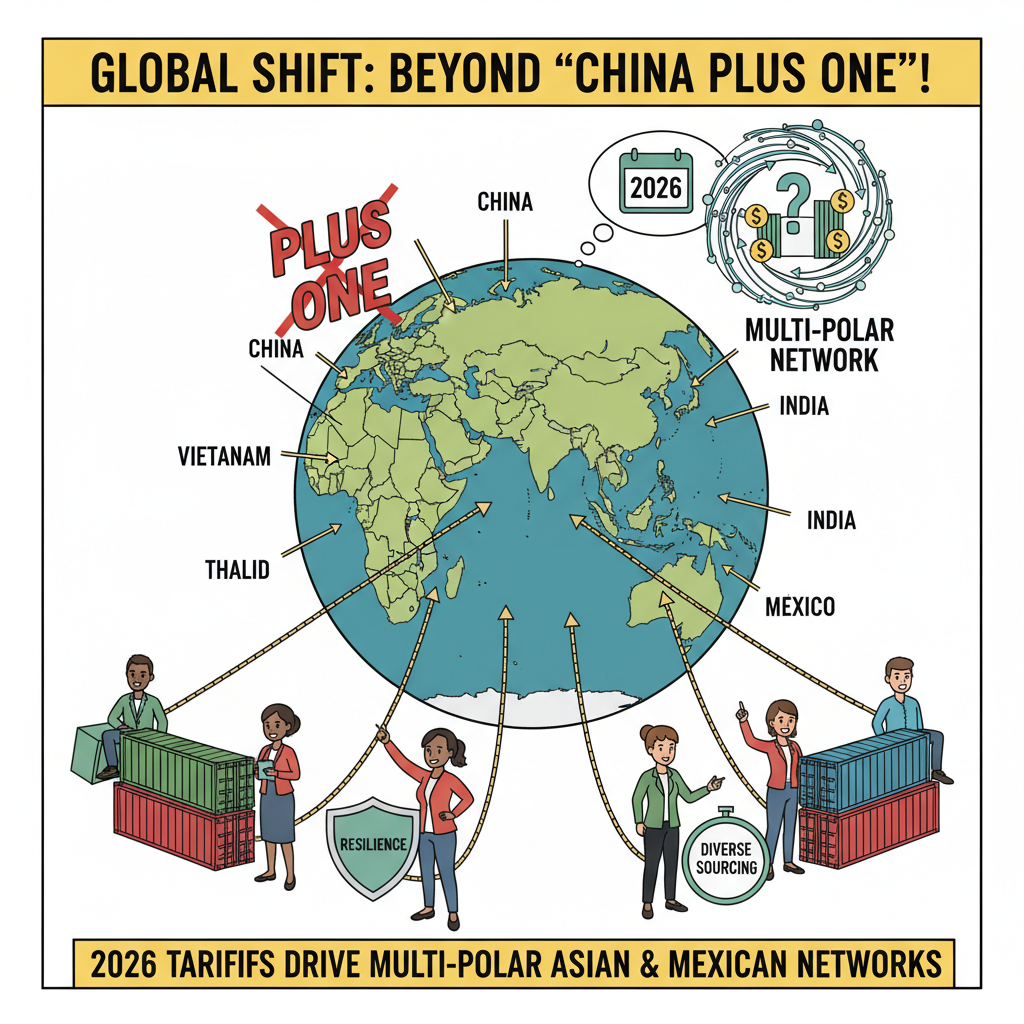
The China Plus One supply chain model has rapidly evolved from a basic risk mitigation tactic into a multi-polar sourcing ecosystem. As the logistics industry navigates 2026, companies are no longer just seeking a single alternative destination; they are actively building robust networks across Southeast Asia, India, and Latin America. Recent data indicates that Asian nations outside of China saw their share of U.S. imports surge from 24% in 2019 to 30% by the end of 2025. This structural pivot reflects a broader transition prioritizing resilience over pure cost efficiency.
Geopolitical volatility and economic uncertainty remain the primary catalysts for supply chain diversification. According to recent surveys targeting logistics real estate executives, economic volatility is the top concern for 2026 (51%), closely followed by tariffs (48%). Consequently, the industry is witnessing significant capital reallocation.
- Vietnam absorbed an impressive $38.42 billion in foreign direct investment in 2025, with manufacturing taking 56.5% of new capital.
- Multinational brands are transitioning to “China Plus Many,” integrating countries like Mexico and India to offset tariff risks.
- Supply chain operators are deploying artificial intelligence and data analytics to optimize routing across these new multi-hub networks.
Despite this diversification, China remains an indispensable global supply chain hub, particularly for high-tech and semiconductor manufacturing. Forward-thinking shippers are currently running structured vetting programs across multiple countries to ensure dual-sourcing reliability. As new shipping alliances launch and transit times face pressure, successfully operating a China Plus One supply chain requires robust technology integrations and proactive capacity planning. Agility is no longer optional—it is a critical business imperative.
References: inasiaadvantage.com, averitt.com, prologis.com, dimerco.com, amtonline.org.