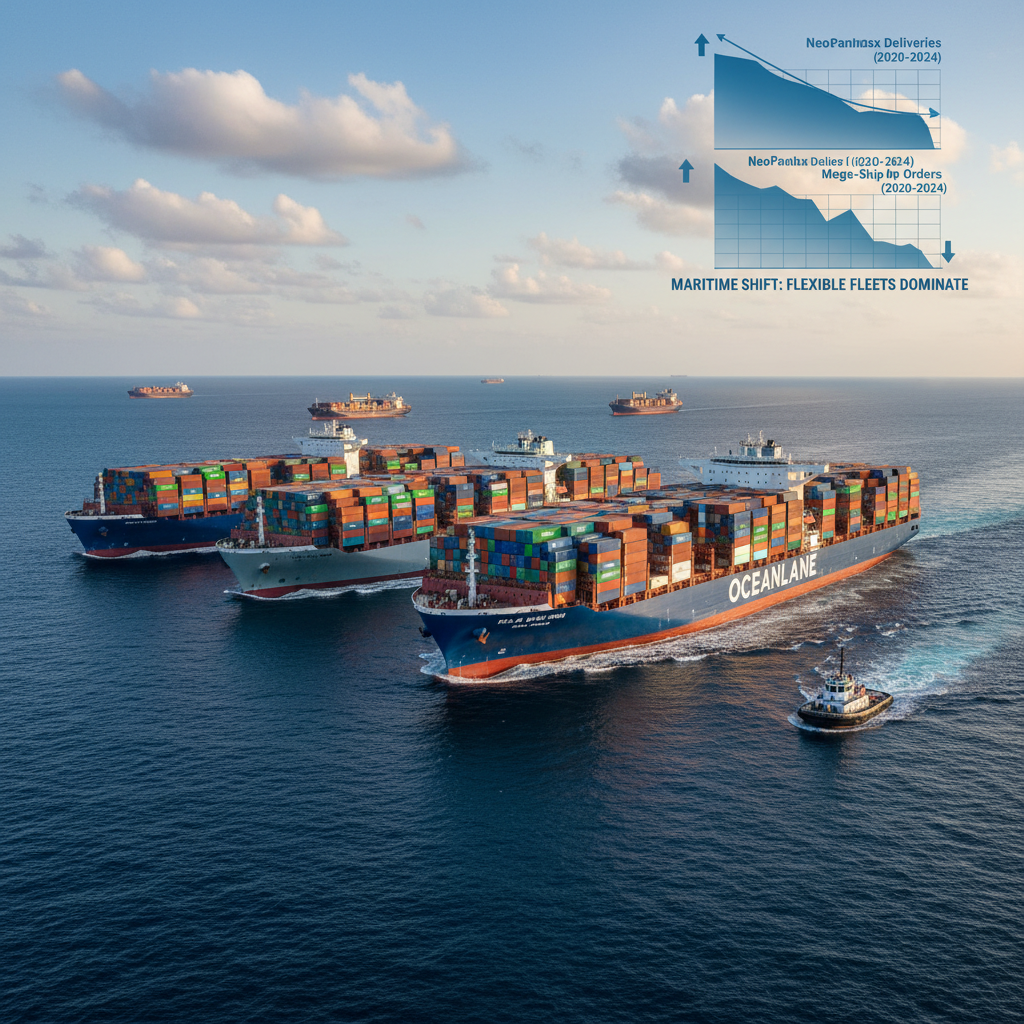
The maritime logistics sector is witnessing a profound transformation driven by the ongoing NeoPanamax vessel delivery surge. As global supply chains face unprecedented geopolitical pressures and shifting trade paradigms in 2026, shipping conglomerates are pivoting away from ultra-large container vessels in favor of the versatile NeoPanamax class. This strategic realignment is primarily fueled by the necessity for operational flexibility. Unlike rigid mega-ships, NeoPanamax vessels, typically ranging from 10,000 to 16,000 TEU, can seamlessly navigate smaller secondary ports and regional infrastructure.
Recent data highlights the magnitude of this operational shift. According to Alphaliner, of the 170 container ships delivered globally in 2025, 69 were explicitly in the NeoPanamax size range. In stark contrast, only eight ships exceeding 23,000 TEU were delivered during the same period. Industry analysts note that mid-to-large vessels currently dominate the global order book, representing the industry’s direct response to growing supply chain complexities. Top ocean carriers are strategically deploying these assets to build resilient networks that can bypass congested primary hubs.
- Supply Chain Adaptability: Carriers are utilizing these vessels to execute near-shoring and friend-shoring strategies efficiently.
- Canal Optimization: The Panama Canal’s introduction of “NetZero Slots” for low-carbon Neopanamax vessels in late 2025 further incentivizes this class.
- Route Diversification: With enduring disruptions in regions like the Red Sea and Strait of Hormuz, the mid-sized fleet offers critical maneuverability across alternative ocean routes.
As 2026 unfolds, the NeoPanamax vessel delivery surge firmly establishes the 10,000-16,000 TEU segment as the definitive backbone of modern maritime trade. By prioritizing agility over sheer scale, logistics operators are ensuring they remain equipped to navigate volatile global markets. References: Seatrade Maritime News, AlixPartners Container Shipping Outlook.