How Are Intra-Asia Ocean Freight Rates Shifting in Late 2026?
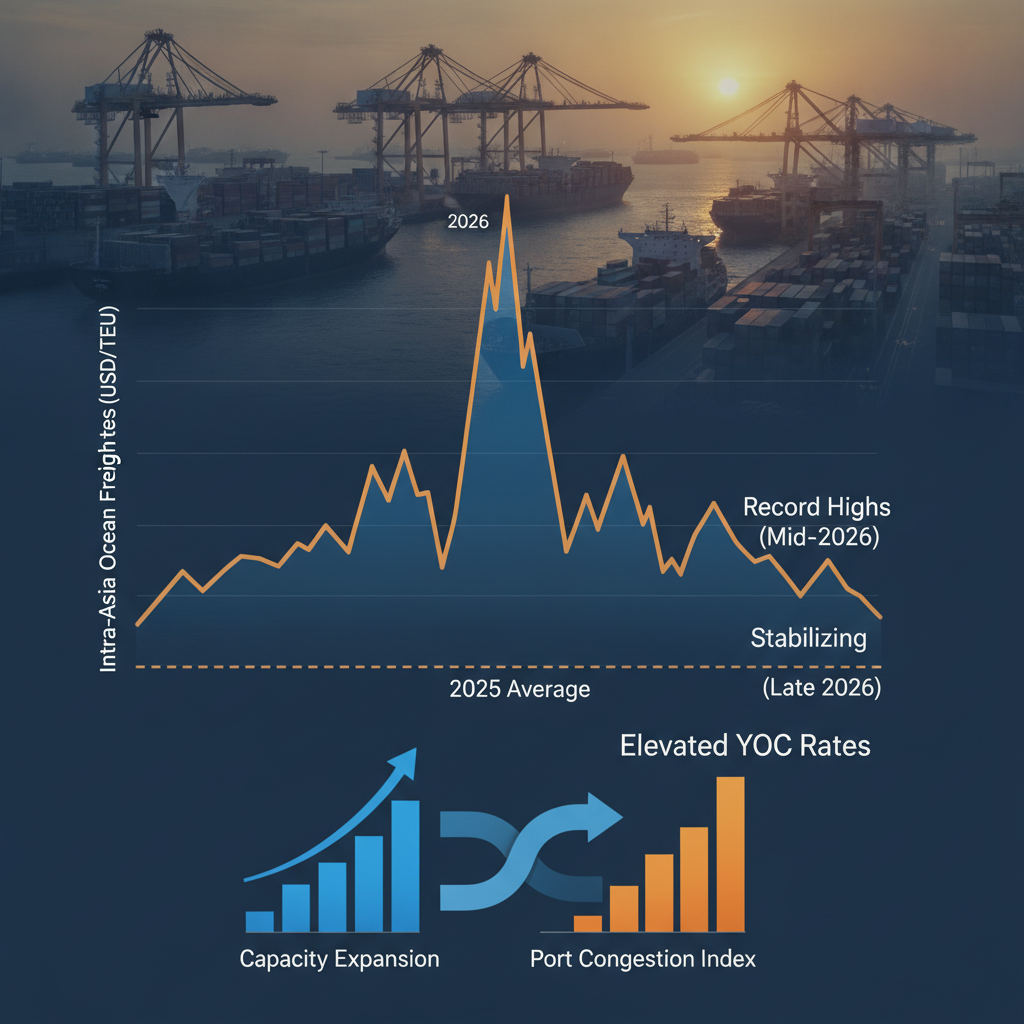
As 2026 nears its close, supply chain experts are closely monitoring severe fluctuations in Intra-Asia Ocean Freight Rates. Following a volatile third quarter marked by intense weather disruptions and port congestion, regional pricing is finally showing signs of correction, though it remains significantly elevated compared to historical averages.
Recent Pricing Trends and Capacity Shifts
In early November 2026, Drewry’s Intra-Asia Container Index (IACI) declined slightly to $1,478 per 40-foot container. While this represents a short-term cooling off from late-summer spikes, rates are still hovering nearly 198% higher year-on-year. The recent softening of Intra-Asia Ocean Freight Rates is primarily driven by an influx of new services and vessel deployments across key regional trade lanes.
Despite expanded capacity, several variables continue to pressure the market:
- Port Congestion: Severe weather and seasonal demand surges recently pushed vessel waiting times in major hubs like Shanghai to 78 hours.
- Carrier Adjustments: To stabilize yields amidst fluctuating demand, carriers have actively implemented blanked sailings, with regional blank sailing rates reaching approximately 6% in October 2026.
- Holiday Pre-booking: Tight space and equipment availability are accelerating as shippers front-load cargo ahead of the upcoming Lunar New Year rush.
Strategic Outlook for Shippers
Navigating the current Intra-Asia Ocean Freight Rates requires maximum operational agility. Logistics professionals are advised to diversify port pairings and secure space well in advance to avoid regional bottlenecks. Leveraging flexible, index-linked contracts will be essential for maintaining margins into 2027.
References
- Asia ocean freight remains fragile in early 2026 amid capacity shifts
- Drewry: Service Expertise – Intra Asia Container Index – 05 Nov 2026
- Shippio Trade News: October 19, 2026
- U-Freight: Intra-Asia container rates ease
- Logistics Great: Intra-Asia Freight Rate Fluctuations: What Drives the 2026 Surge?