Navigating US-China Trade Tariff Logistics in 2026
The global shipping landscape has faced unprecedented volatility throughout 2025 and 2026. The escalation of US-China Trade Tariff Logistics has forced supply chain experts to fundamentally rewrite their operational playbooks. Following sudden tariff fluctuations, where average US tariffs on Chinese imports temporarily spiked to over 125% in early 2025, logistics networks are now dealing with permanent structural changes. By late 2026, reciprocal tariff relief lists covering approximately $30 billion in trade have emerged, signaling a pivot toward complex network economics rather than mere country-level sourcing.
The Impact of Section 321 De Minimis Elimination
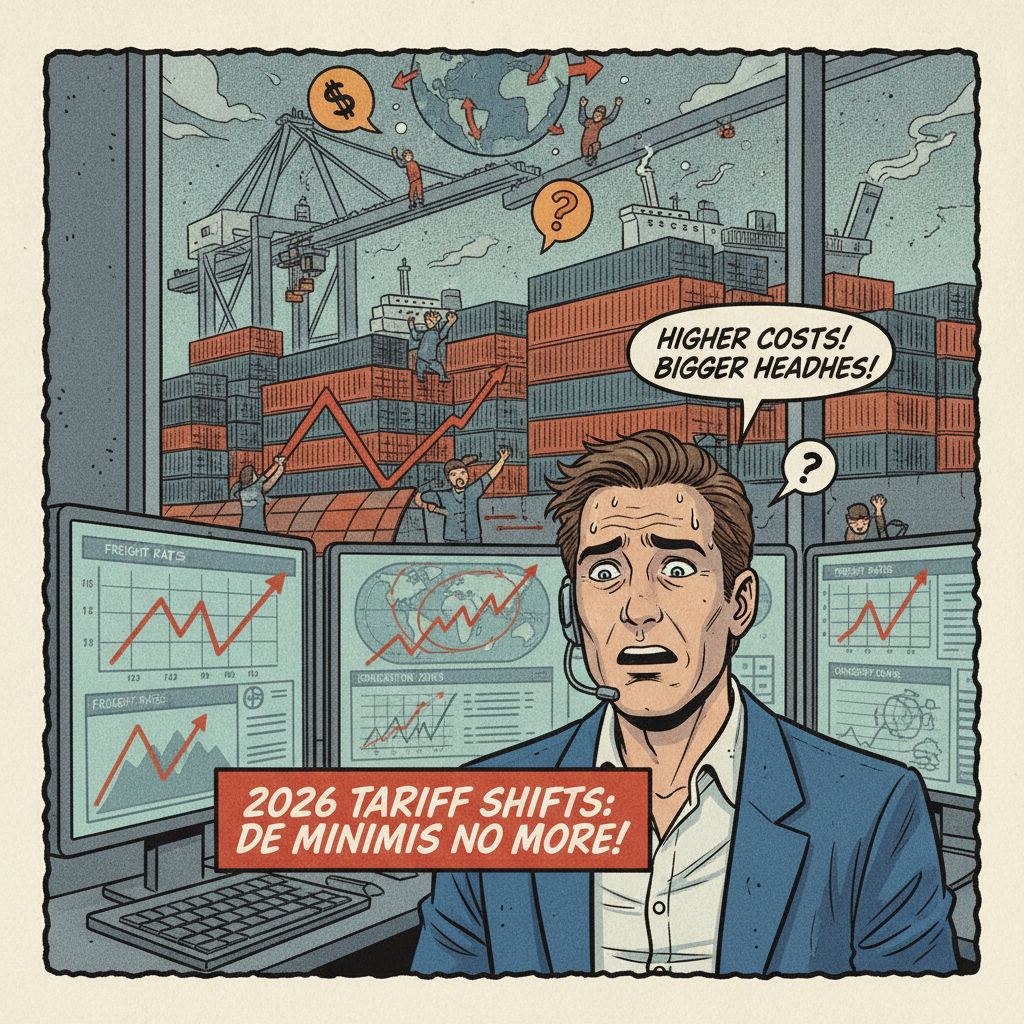
One of the most consequential disruptions to US-China Trade Tariff Logistics has been the elimination of the de minimis exemption (Section 321). Low-value imports under $800 are now subject to strict customs scrutiny and duties, drastically altering e-commerce fulfillment. Freight forwarders have reported transpacific air freight rate increases of 20% to 30% as shippers scramble to meet new compliance standards. Key operational shifts include:
- Surging Port Congestion: Cargo rebounds following tariff adjustments have caused an 18.9% surge in US traffic, disproportionately bottlenecking West Coast ports.
- Supply Chain Diversification: To mitigate risks, manufacturers are rapidly adopting a China+1 strategy, expanding routing corridors through Vietnam, India, and Mexico.
- Elevated Compliance Costs: Upgraded HS code mandates and origin-tracing protocols require heightened documentation to prevent delays.
Looking Ahead: Strategic Sourcing in US-China Trade Tariff Logistics
For shipping experts, the end of 2026 demands agile inventory management. Managing these evolving frameworks requires advanced data analytics for routing optimization and regional distribution networks over single-channel sourcing. Companies must continually monitor customs updates to avoid the heavy financial penalties of tariff evasion crackdowns.
References
- The Evans International Law Firms (2026). U.S.-China Trade War Tariffs.
- FreightAmigo (2025). Navigating US-China Trade Relations.
- PIIE (2026). US-China Tariff Relief Changes the Logistics Math.
- PIIE (2026). Diverging US-China trade data point to tariff evasion.
- Complexity Science Hub (2025). Impact of US-China Tariffs on Maritime Transport.
- DCL Logistics (2026). The Impact of US-China Tariffs on Ecommerce.