Navigating Panama Canal Cargo Diversions in 2026
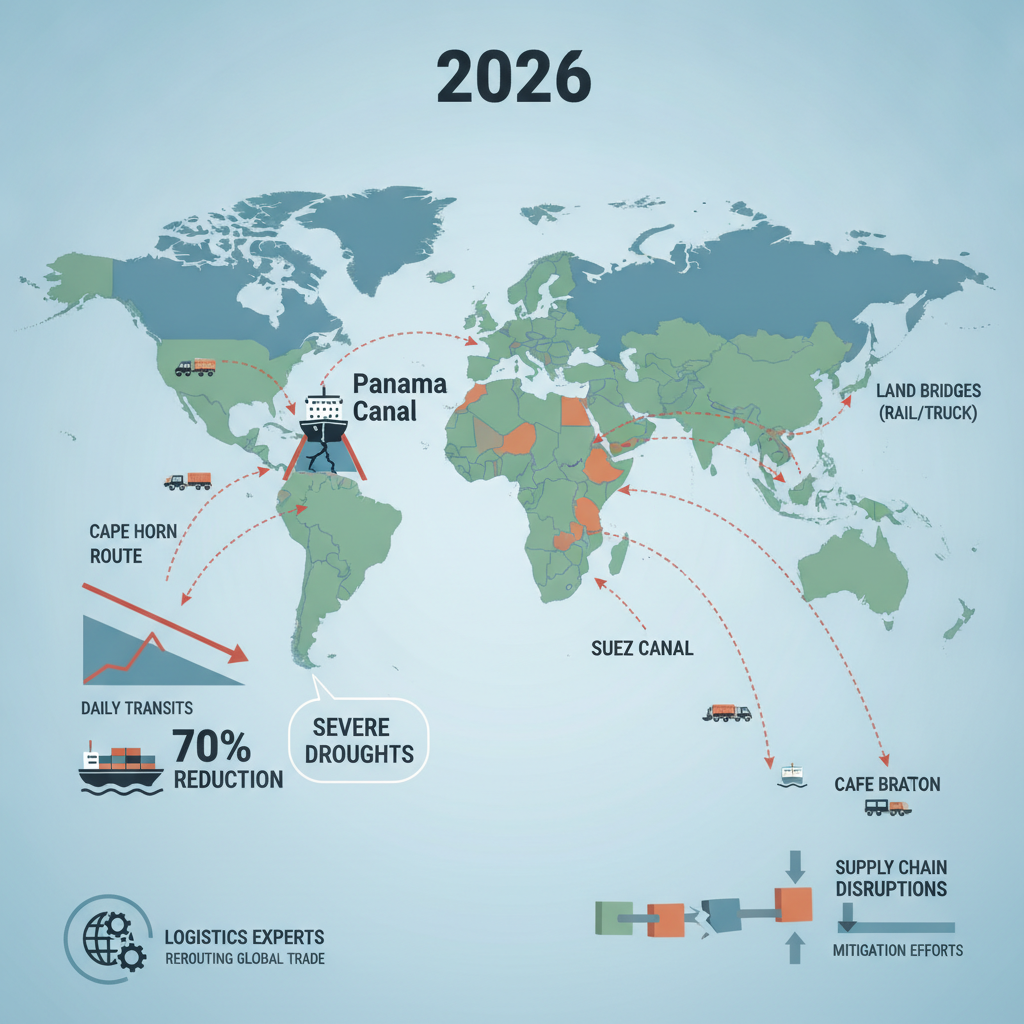
The global shipping industry is facing renewed volatility as severe El Niño-driven droughts have triggered new Panama Canal Cargo Diversions. Following a brief operational recovery earlier in the year, the Panama Canal Authority (ACP) announced in September 2026 that daily vessel transits would drop from 36 to 32, with further cuts to 29.5 anticipated by October. This has forced logistics experts to aggressively alter established supply chain routes.
Impact on Shipping Routes and Panama Canal Cargo Diversions
With rainfall in the canal watershed running 34% below the long-term average, Panama Canal Cargo Diversions are reshaping international trade. Shipping lines are deploying transloading strategies and alternative oceanic routes to bypass bottlenecks. Key supply chain shifts include:
- Rerouting Asia-to-US East Coast cargo through the Suez Canal, adding 10 to 12 days to transit times.
- Shifting freight to US West Coast ports like Los Angeles and Long Beach, coupled with transcontinental rail networks.
- Utilizing Mexican ports like Manzanillo for alternative transloading operations.
Future Outlook for Logistics Experts
The acceleration of Panama Canal Cargo Diversions requires shippers to adopt dynamic forecasting. Vessel draft reductions and priority slot auctions are severely impacting capacity and significantly inflating operating costs. As the dry season approaches between December 2026 and April 2027, industry leaders must diversify routing portfolios to mitigate prolonged delays and volatile freight markets.
References
Industrial Info Resources, September 2026. SBS News, September 2026. FreightAmigo, July 2025. Ballast Markets, October 2024.