The Persistent Reality of Middle East Shipping Rerouting
The prolonged security crisis in the Red Sea has fundamentally altered global maritime trade, cementing Cape of Good Hope detours as the new operational standard for logistics experts. What began as a temporary measure has evolved into a persistent challenge, with Middle East Shipping Rerouting exerting sustained pressure on vessel availability and supply chain schedules throughout 2025 and 2026.
Middle East Shipping Rerouting and Freight Costs
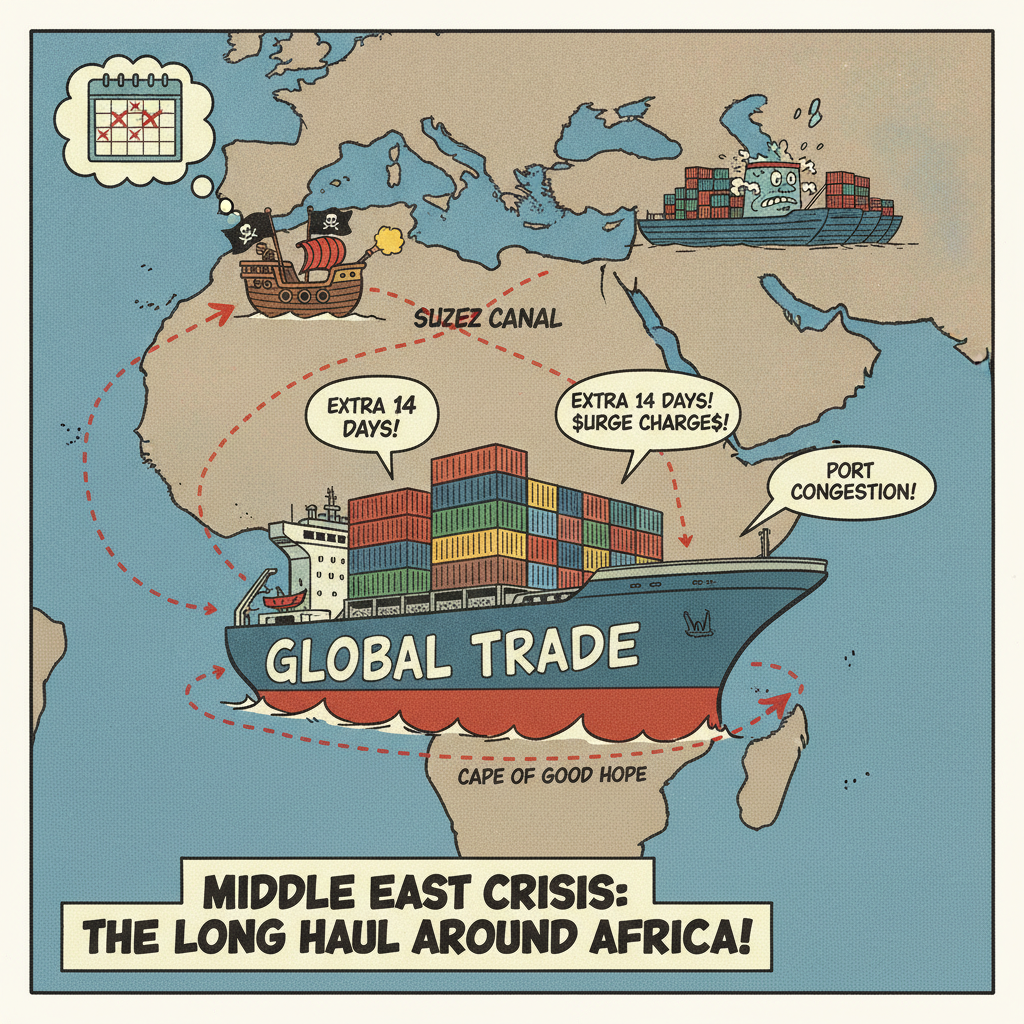
Diverting away from the Suez Canal adds approximately 3,500 to 4,000 nautical miles to the vital Asia-Europe corridor. This widespread shift introduces severe logistical and economic pressures:
- Voyage times are extended by 10 to 14 days across major lanes.
- Global container ship demand has artificially inflated by 12 percent due to longer routes.
- Carriers absorb an estimated $200 to $400 in additional operational costs per TEU.
With tonnages through the Suez Canal remaining depressed at 70 percent below pre-crisis averages, these elevated freight baselines have become ingrained in long-term contract negotiations.
The Ripple Effect of Middle East Shipping Rerouting
The ongoing diversion is also amplifying strain on secondary maritime corridors. As vessels bypass the Red Sea, alternative chokepoints like the Panama Canal and the Malacca Strait face increased network congestion. Furthermore, emerging geopolitical tensions around the Strait of Hormuz in early 2026 threaten to compound these logistics bottlenecks. To build resilient supply chains, forwarders must urgently invest in predictive analytics and decentralized routing strategies.
References
- Blooming Trade Data (2026). Cape of Good Hope Rerouting: Why Global Shipping Costs Rise.
- DocShipper (2026). Red Sea Crisis Update: Route Alternatives and Cost Impacts on Global Shipping.
- Safeguarding Global Trade Through Resilient Maritime Corridors (2026).