
In 2026, the global logistics sector is facing an intense Asia Air Cargo Capacity Squeeze. A combination of structural demand engines and geopolitical disruptions has fundamentally altered the global freight landscape.
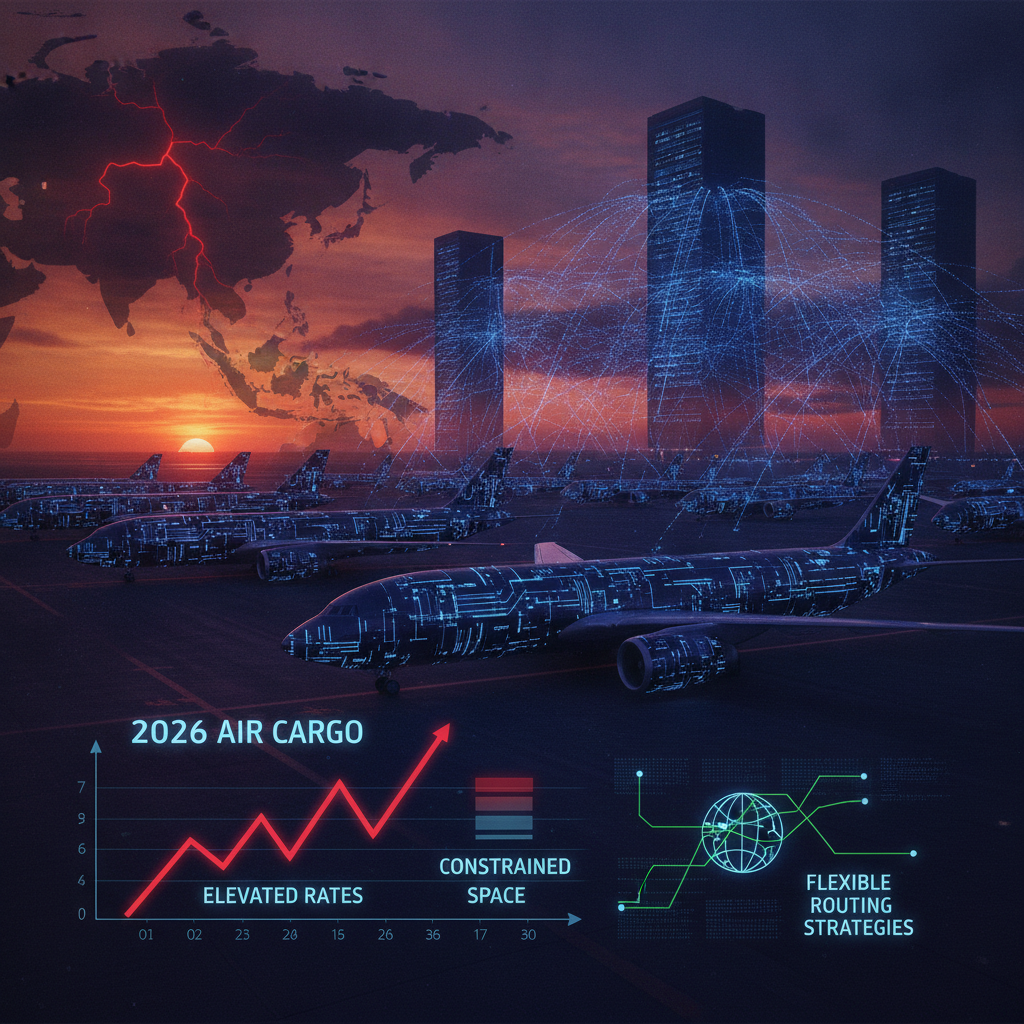
Global air cargo demand jumped by 6% in August 2026, yet available capacity only grew by around 1% during the first half of the year. This critical imbalance has kept freight rates elevated, with China-to-US spot rates surging past $7 per kilogram.
Key Drivers of the Asia Air Cargo Capacity Squeeze
- AI Infrastructure Boom: The rapid global expansion of data centers has surged demand for AI-related semiconductors and hardware, which now account for roughly 10% of global air freight volumes.
- Geopolitical Rerouting: Escalating Middle East conflicts in early 2026 removed approximately 12% of global air cargo capacity almost overnight, heavily impacting Asia-Europe transit hubs.
- Resilient E-Commerce: Despite the European Union removing its €150 duty-free threshold in July 2026—initially dropping China-Europe e-commerce exports by 25%—cross-border platform volumes remain a structural baseline.
Navigating the Asia Air Cargo Capacity Squeeze
Shippers must adapt to this volatile new normal by prioritizing operational resilience over simple transport costs. Forwarders are increasingly relying on alternative routings and multimodal solutions to secure space in highly constrained tech corridors. As capacity remains tight through late 2026, supply chain flexibility will be essential for survival.
References
- STAT Times: https://www.stattimes.com/
- Metro Global: https://metroglobal.com/
- Bertling Group: https://www.bertling.com/
- BSI Global Logistics: https://bsigloballogistics.com/