
Unveiling the Next Era of ASEAN Renewable Energy Logistics
As global supply chains brace for a new wave of decarbonization, ASEAN Renewable Energy Logistics is rapidly emerging as a critical growth engine for 2026 and beyond. In the face of fluctuating global fuel prices and shifting geopolitical trade lanes, Southeast Asia is aggressively modernizing its industrial zones and port infrastructures to support green freight and clean energy transit. Experts predict that regional clean energy investments, which already surpassed the USD 100 billion mark in 2025, will continue to catalyze sustainable logistics frameworks.
Key Drivers Shaping ASEAN Renewable Energy Logistics
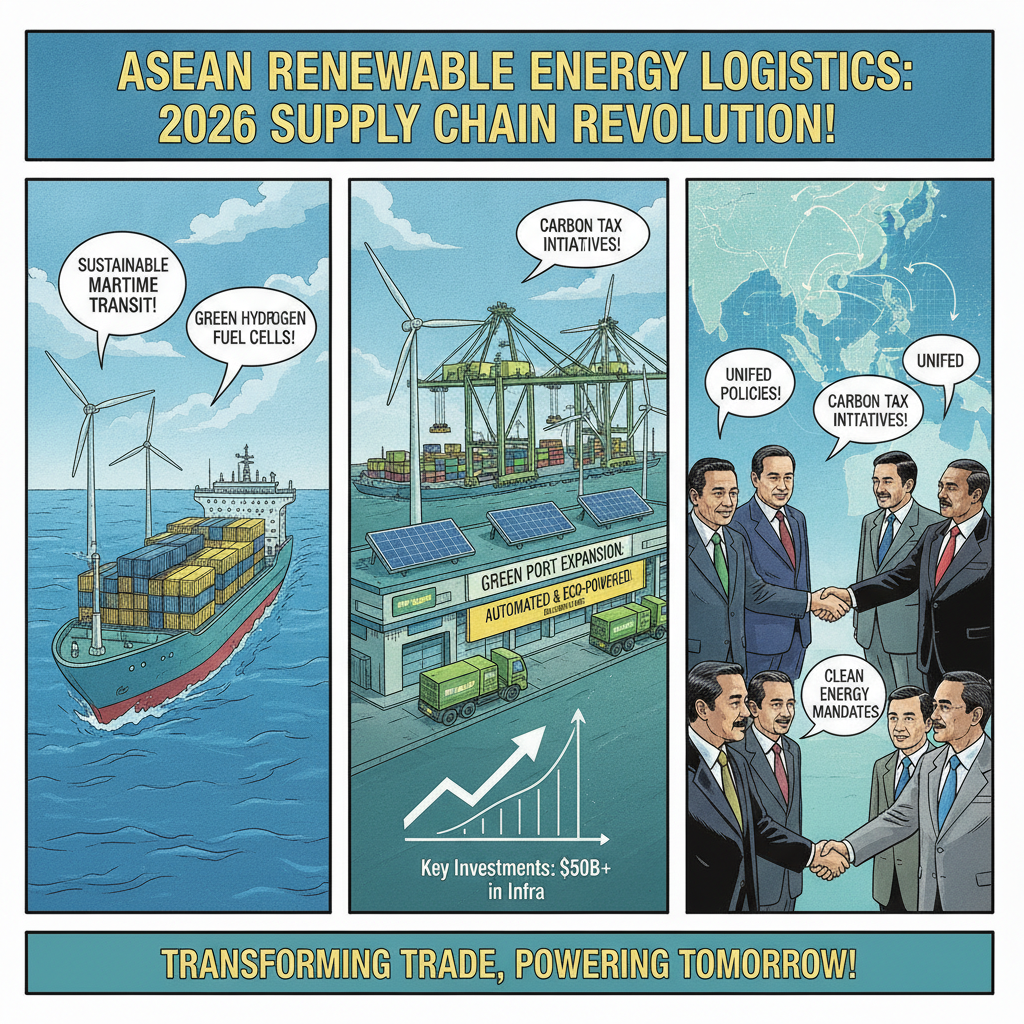
The transition toward eco-friendly supply chain operations is guided by the newly formulated ASEAN Transport Sectoral Plan 2026-2030. This strategic blueprint emphasizes smart mobility, reduced emissions, and resilient maritime connectivity. For logistics and shipping experts, several crucial developments highlight the rapid evolution of this sector:
- Green Port Expansions: Upgraded port-land interfaces and specialized terminals are accommodating an influx of solar photovoltaic panels and wind turbine components, a sector projected to represent a USD 20 billion regional opportunity by 2030.
- Cross-Border Integration: Initiatives like the ASEAN Power Grid, requiring an estimated USD 27 billion in infrastructure investments, are spurring new demands for specialized heavy-lift logistics.
- Alternative Fuels: The drive for intra-regional biofuel trade and commercial fleet electrification is reshaping inland and maritime freight strategies.
Navigating the Future of ASEAN Renewable Energy Logistics
Despite this optimistic trajectory, logistics professionals must navigate external volatility. Rising global logistics costs driven by recent Middle Eastern conflicts have underscored the urgent need for ASEAN nations to secure local, renewable-powered supply chains. Moving forward, robust investments in digitalization, zero-emission marine fuels, and unified regional policies will be essential to fully leverage the promise of ASEAN Renewable Energy Logistics.
References
- Singapore EDB, ASEAN set to play key role in global solar supply chain.
- International Energy Agency, Southeast Asia Energy Outlook 2026.
- Journal of Economics, Finance And Management Studies, May 2026.
- Source of Asia, ASEAN Role in Global Supply Chain Rebalancing 2026.
- ASEAN Centre for Energy, ASEAN Renewable Energy Long-term Roadmap.
- ASEAN Secretariat, ASEAN Transport Sectoral Plan 2026-2030.