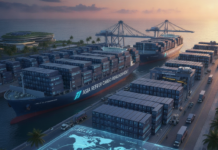


The ASEAN Cross-Border Cold Chain market is experiencing unprecedented expansion, driven by accelerating agricultural exports and advanced infrastructure integration. Recent market analyses project the ASEAN cold chain logistics market to grow from USD 18.81 billion in 2025 to USD 19.98 billion in 2026, reaching USD 24.43 billion by 2031 at a CAGR of 4.94%. This robust growth highlights a fundamental shift toward resilient, high-capacity temperature-controlled networks across Southeast Asia.
Infrastructure Advancements and Smart Corridors
Cross-border connectivity has dramatically improved transit times for perishable goods. Initiatives like the ASEAN Cross-Border Cold-Chain Fruit Train have streamlined direct exports from Vietnam and Thailand into the Chinese market. Logistics experts note that utilizing smart customs and single-window systems, temperature-sensitive shipments can now travel from Hanoi to Nanning in merely 16 hours, and from Bangkok in 36 hours. Furthermore, the upcoming Pinglu Canal, slated for operation in September 2026, is expected to reduce regional transportation costs by up to 30%, revolutionizing maritime and inland freight integration.
The Rise of Elastic Logistics
To combat persistent trade volatility, 2026 has marked the widespread adoption of elastic logistics and AI-driven decision-making within the ASEAN Cross-Border Cold Chain. Businesses are actively moving away from rigid planning cycles.
- Real-time adaptation: AI co-pilots analyze port congestion and weather to instantly reroute temperature-sensitive shipments.
- Multimodal flexibility: Providers seamlessly shift between cross-border trucking and rail to bypass airfreight capacity limits and port delays.
As consumer demand for premium perishables continues to surge, mastering the ASEAN Cross-Border Cold Chain remains the definitive competitive advantage for regional trade in 2026 and beyond.