

Navigating Grade A Logistics Real Estate Shifts in 2026
The global landscape for Grade A Logistics Real Estate has officially transitioned from an era of rapid expansion to a period of strategic stabilization. In major markets like China, the aggressive oversupply of previous years has been actively absorbed. By the first quarter of 2026, mainland China’s Grade A warehousing stock reached 139 million square meters, with vacancy rates slightly decreasing to 18.1 percent. European markets are similarly experiencing structural stabilization, projecting a moderate 1.9 percent average annual rent increase through 2030.
New Drivers in Grade A Logistics Real Estate Demand
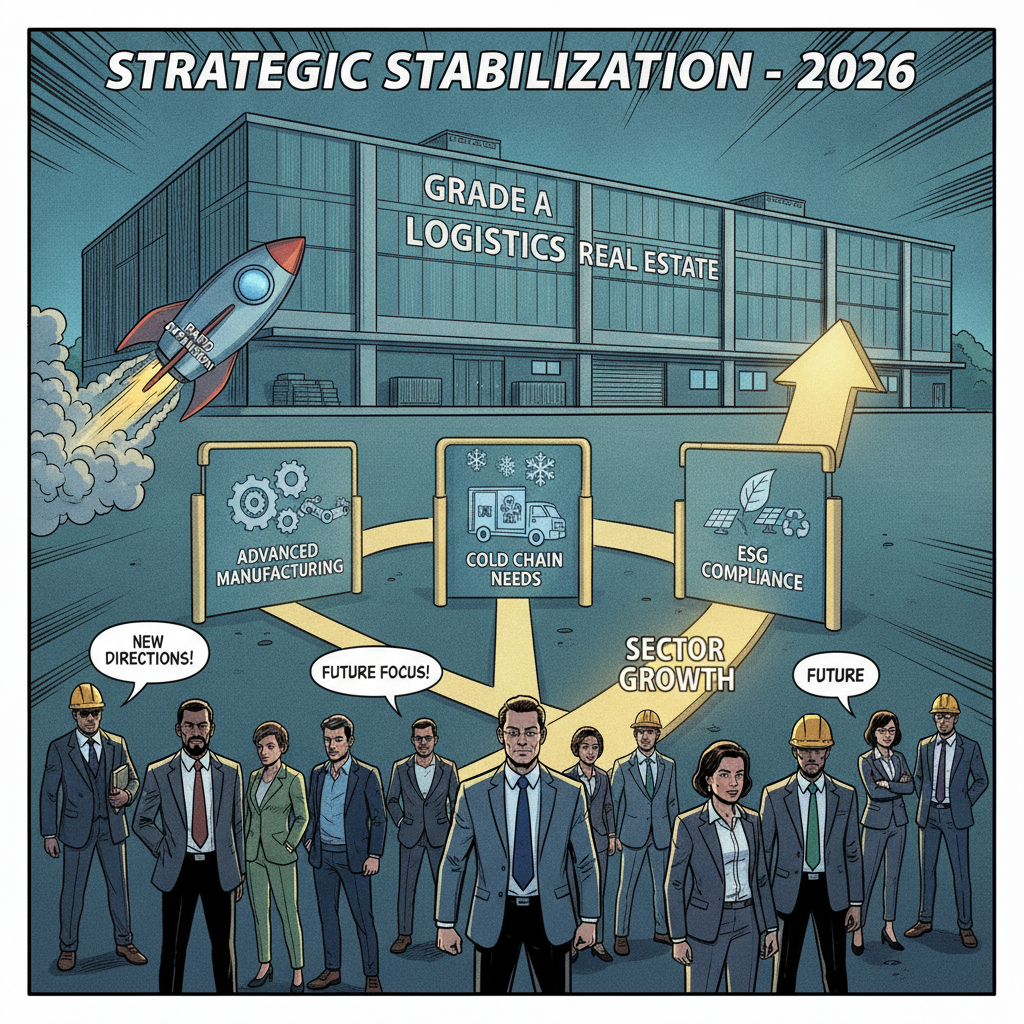
Despite broader economic consolidation, specialized sub-sectors within Grade A Logistics Real Estate are recording robust growth worldwide. Modern tenants require sophisticated infrastructure to support advanced supply chain needs.
- Advanced Manufacturing and ESG: Warehouses with high-flatness flooring and LEED certifications are in peak demand to support automated guided vehicles and sustainability goals.
- Cold Chain Expansion: Temperature-controlled facilities are surging, highlighted by major 2026 facility constructions in Saudi Arabia.
- Cross-Border E-commerce: Leading third-party logistics providers continue to expand their footprints in core regional hubs.
The Future of Grade A Logistics Real Estate Investments
Entering late 2026, market competitiveness has pivoted from mere portfolio scaling to precise asset management. To navigate short-term rental headwinds, landlords must adopt flexible leasing strategies. Upgrading facilities with AI-ready infrastructure and ESG compliance will be the ultimate differentiator for investors seeking long-term yield in the Grade A Logistics Real Estate sector.