
Navigating Red Sea Disruptions in 2026: Cost Impacts & Strategies
As we progress through 2026, Red Sea Disruptions continue to fundamentally alter the global maritime trade landscape. What initially began as a regional security concern has transformed into a persistent operational hurdle for logistics and shipping experts worldwide. Major ocean carriers largely maintain their diversions around the Cape of Good Hope, structurally reshaping capacity and pricing models across major trade lanes.
The True Cost of Cape Routing
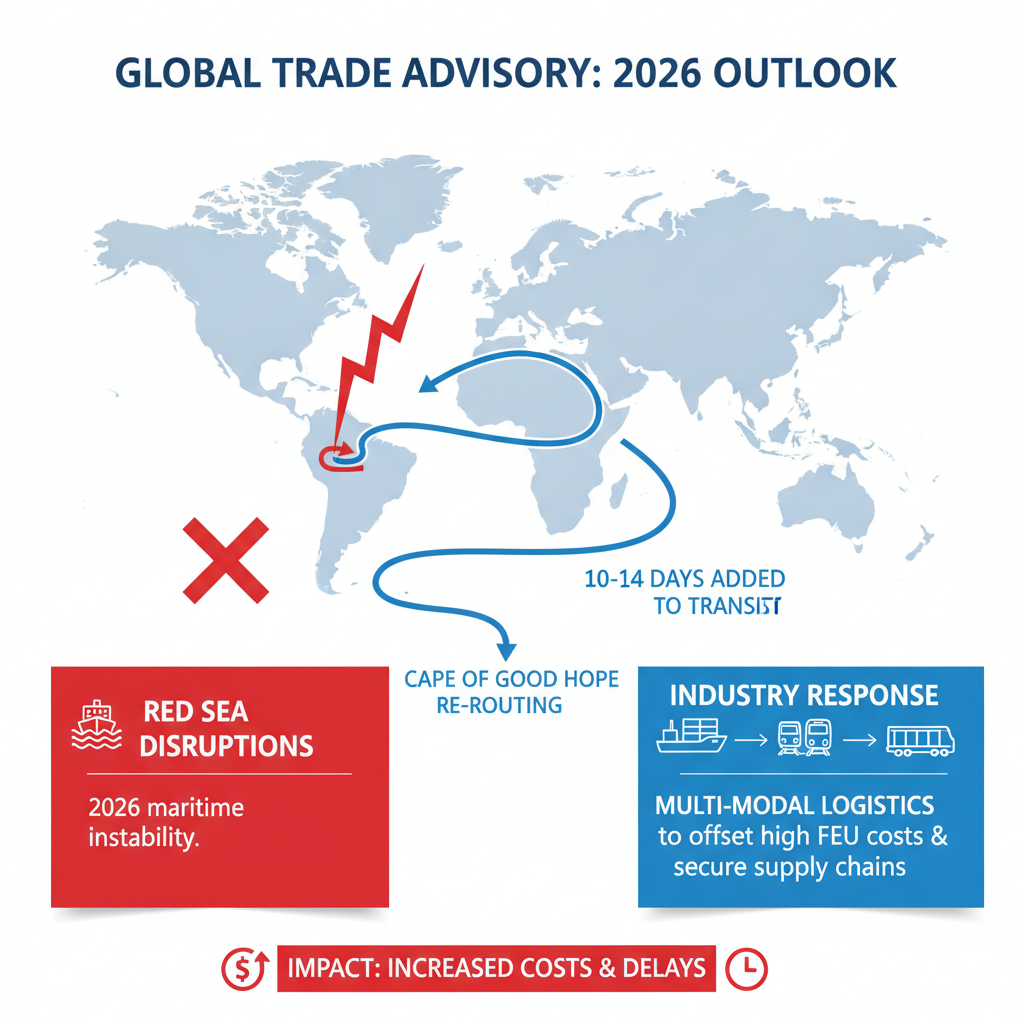
The prolonged Red Sea Disruptions are soaking up approximately 5-7% of global container capacity, effectively removing 1.3 to 1.8 million TEU from the active market. This capacity squeeze heavily impacts transit schedules, adding 10 to 14 days to journeys from Asia to Europe and the US East Coast. Consequently, logistics managers are battling elevated freight costs. In early 2026, Asia-to-US East Coast rates climbed to between $3,500 and $6,000 per FEU, carrying a Cape of Good Hope premium of $800 to $2,000 per container. Furthermore, sustained war risk insurance and peak season surcharges continue to strain established logistics budgets.
Strategic Adaptations for Logistics Experts
To mitigate the compounding impacts of the Red Sea Disruptions, industry leaders are shifting from reactive to proactive supply chain management. Key operational strategies include:
- Multi-modal Diversification: Leveraging air freight and sea-air hybrid solutions for high-value cargo to bypass ocean bottlenecks.
- Inventory Buffering: Adjusting safety stock levels to successfully absorb the persistent 10 to 14-day transit delays.
- Advanced Risk Management: Implementing real-time visibility tools to monitor early signs of structural rate increases.
With market forecasts indicating these maritime constraints may extend into 2027, maintaining operational agility and diversifying transport modes remains the primary defense for protecting supply chain margins.