Navigating the Shift: Containership Registry Reflagging Trends in 2026
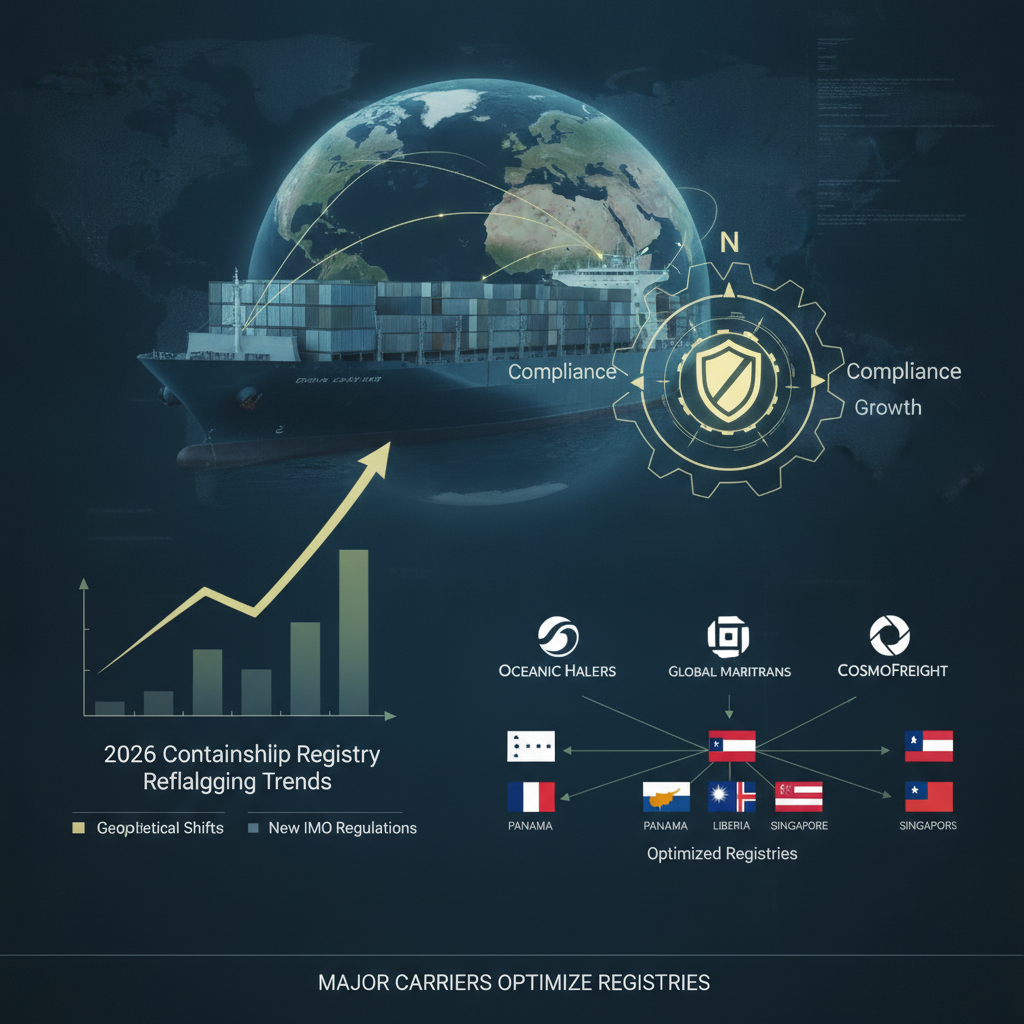
The shipping sector is undergoing intense geopolitical transformation, making Containership Registry Reflagging Trends a focal point for logistics experts in 2026. With the global containership orderbook nearing 13 million TEU, operators are strategically assessing their flag states. This evaluation goes beyond tax avoidance; it is deeply tied to market access, environmental compliance, and security. As global supply chain disruptions persist, registry selection has become a critical mechanism for risk management.
Emerging Markets and Containership Registry Reflagging Trends
A major development in Containership Registry Reflagging Trends is the shift toward emerging maritime powers. In early 2026, top carriers including Hapag-Lloyd signed agreements to reflag multiple containerships under the Indian registry. This move aims to strengthen local relationships and secure favorable port access. Concurrently, traditional flags of convenience like Panama face heightened geopolitical pressures. In 2026, a surge of detentions by China targeted Panama-flagged vessels, complicating operations and increasing operational risks for standard open registries.
Regulatory Pressures Shaping Containership Registry Reflagging Trends
Environmental and compliance mandates are also driving Containership Registry Reflagging Trends. Following 2026 International Maritime Organization (IMO) emission rules, shipowners are gravitating toward Green Flags offering fee incentives for high decarbonization metrics. Furthermore, maritime intelligence shows a rapid increase in flag hopping among sanctioned fleets, with the average time to a first flag change dropping from 85 days in 2024 to 45 days in 2025. These accelerating shifts demand predictive risk scoring from compliance professionals to ensure global fleet transparency.