
The Rise of Hyper-Local Distribution
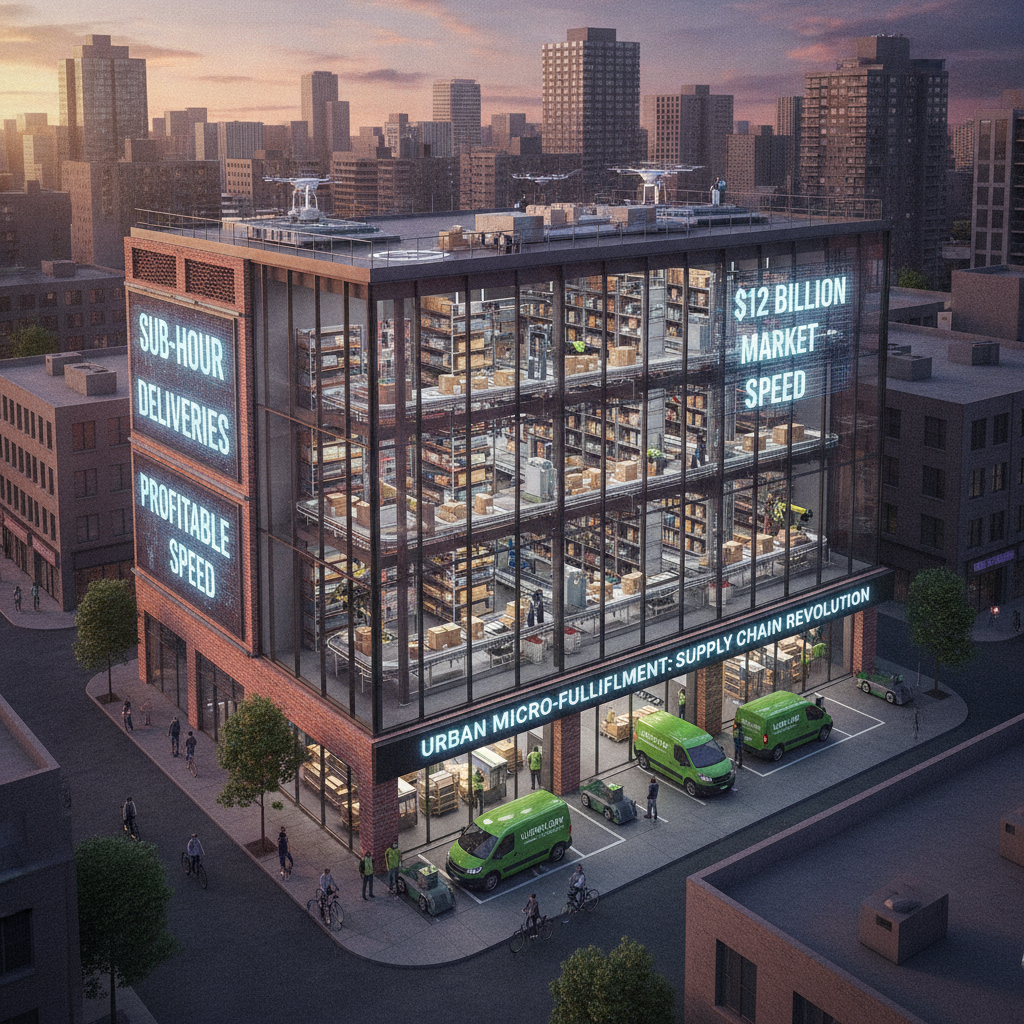
As e-commerce expectations shift toward sub-two-hour delivery windows, Urban Micro-Fulfillment Logistics has become a critical focal point for industry leaders. In 2025, the global urban micro-fulfillment hub market reached a valuation of $12.0 billion and is projected to expand at a 16.4% CAGR to $46.8 billion by 2034. This explosive growth is largely a response to last-mile delivery costs surging by 18%, pushing retailers to transition from traditional peripheral warehouses to hyper-local, automated nodes embedded in dense metropolitan grids.
Key Drivers for Urban Micro-Fulfillment Logistics
To combat labor shortages and real estate premiums, third-party logistics providers are rapidly deploying advanced technological solutions. By planting inventory within one to three miles of the consumer, operations now achieve pick-and-pack cycle times of under four minutes per order. The expansion of Urban Micro-Fulfillment Logistics relies heavily on several core innovations:
- Robotics Integration: Implementation of Autonomous Mobile Robots (AMRs) and automated piece-picking systems to maximize cubic volume utilization in compact footprints.
- Sustainability: Deployment of electric delivery fleets and carbon-efficient operations to meet stringent 2026 environmental standards while shortening last-mile routes.
- AI-Powered Forecasting: Advanced predictive analytics to ensure optimal inventory placement and prevent stockouts in high-demand urban sectors.
Urban Micro-Fulfillment Logistics Outlook
Major retail players are already embedding compact systems inside city limits. For example, Amazon launched a 10,000-square-foot automated micro-fulfillment center inside a Pennsylvania Whole Foods in 2025, setting a new benchmark for fulfillment speed. As 2026 progresses, Urban Micro-Fulfillment Logistics will transition from a competitive advantage to a foundational requirement for any profitable omnichannel retail strategy.