
Is Your Supply Chain Ready for CPSC e-Filing Customs Compliance?
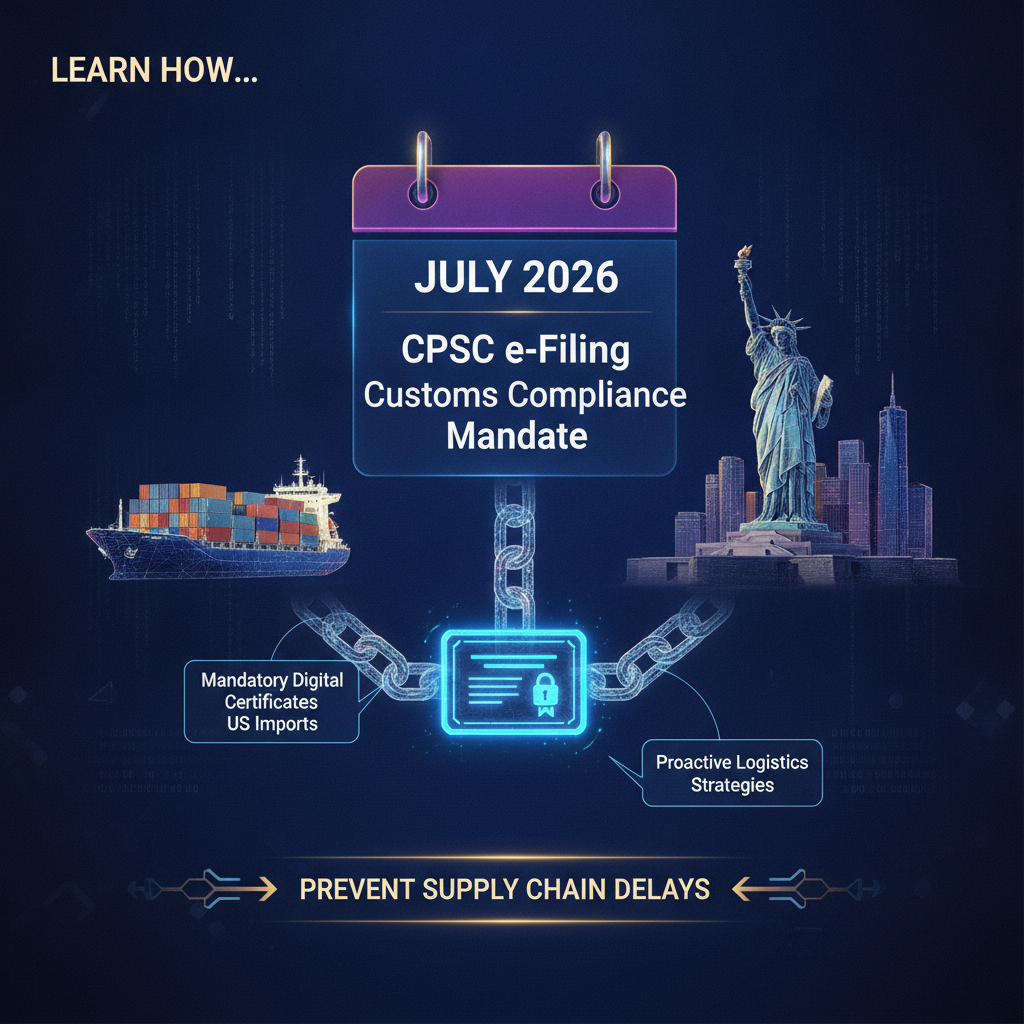
The landscape of U.S. imports is undergoing a massive digital transformation, making CPSC e-Filing Customs Compliance a top priority for logistics professionals. By July 8, 2026, the Consumer Product Safety Commission (CPSC) will enforce mandatory electronic filing for all regulated finished consumer products entering the United States. This transition from paper to pixel demands immediate action from importers to avoid critical supply chain disruptions.
The Core Mandates of CPSC e-Filing Customs Compliance
The upcoming regulations aim to streamline clearance processes and eliminate unsafe imports before they reach American ports. Shippers and importers must proactively upload compliance certificates into the CPSC platform. This mandatory data submission includes:
- Specific product identifiers and Harmonized Tariff Schedule (HTS) codes.
- Comprehensive testing and certification records.
- Applicable consumer safety standards met by the imported goods.
- Detailed manufacturer and importer identification information.
Failing to establish proper data integration could trigger severe logistical bottlenecks. Non-compliance risks include elevated customs risk scores, unexpected port delays, monetary penalties, and potential product seizures.
Mastering CPSC e-Filing Customs Compliance Ahead of 2026
Industry experts emphasize that early preparation is the only way to safeguard your cargo operations. Forward-thinking logistics firms are currently testing the CPSC Product Registry through invitation-based business accounts. This registry enables seamless digital collaboration between customs brokers, overseas suppliers, and testing laboratories.
With global freight expanding rapidly and U.S. customs intensifying duty evasion crackdowns, investing in automated compliance platforms is no longer optional. Secure your strategic integration today to ensure uninterrupted, high-velocity international trade.