
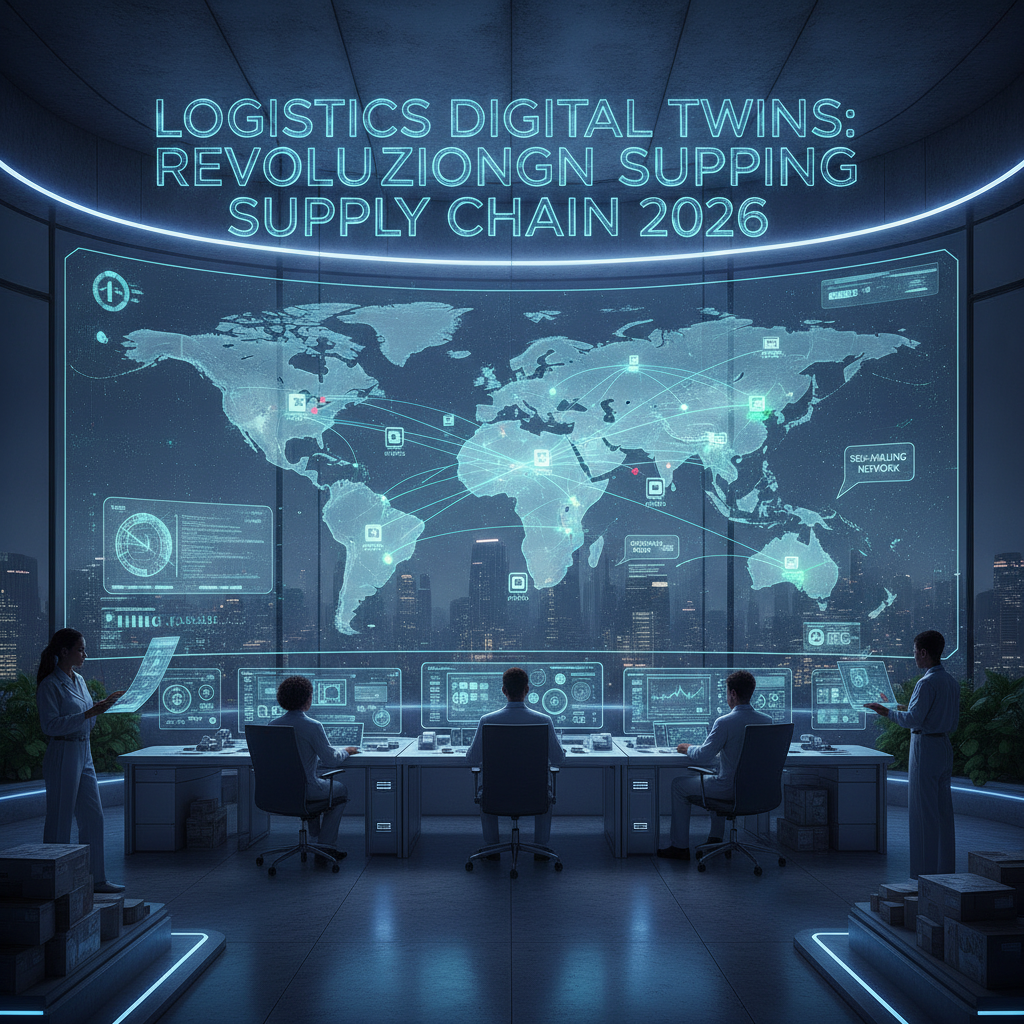
The global supply chain is experiencing a paradigm shift as organizations rapidly adopt advanced virtualization. Logistics Digital Twins—dynamic virtual replicas of physical assets, transport networks, and warehouse ecosystems—are no longer just industry buzzwords. According to recent market estimates, the digital twin in logistics market reached an estimated US$3.34 billion in 2025 and is projected to surge to US$6.95 billion by 2029. This aggressive expansion underscores a critical industry transition toward predictive analytics, automation, and real-time scenario simulation.
In 2026, the application of Logistics Digital Twins extends far beyond basic 3D modeling. Modern platforms integrate seamlessly with supply chain control towers to offer self-healing capabilities. By fusing IoT sensor data with artificial intelligence, these virtual models can autonomously detect disruptions like port strikes or weather anomalies, evaluate their impact, and execute optimized rerouting strategies instantly. Furthermore, implementing these digital platforms has been shown to optimize fleet operations significantly, with some regional deployments achieving up to a 28% reduction in fuel consumption.
The transition from isolated pilot projects to end-to-end connected logistics applications is accelerating rapidly. Analysts project the broader digital twin market could hit US$240.3 billion by 2035, driven heavily by supply chain integration. However, experts note that widespread implementation still faces hurdles regarding cross-actor data exchange and interoperability. Moving forward, successful deployment will require standardized interfaces and robust contractual frameworks for data sharing. As the industry matures, Logistics Digital Twins will remain a foundational pillar for building resilient, sustainable, and highly efficient global supply networks.
References
FLOX Blog: Digital Twins in Logistics and Supply Chain. FreightAmigo: Digital Platforms Transforming Logistics 2025. FLOX Blog: Self-Healing Supply Chains. ResearchGate: Digital Twins in Logistics – Opportunities and barriers.