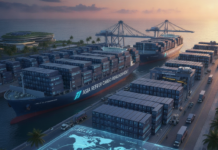
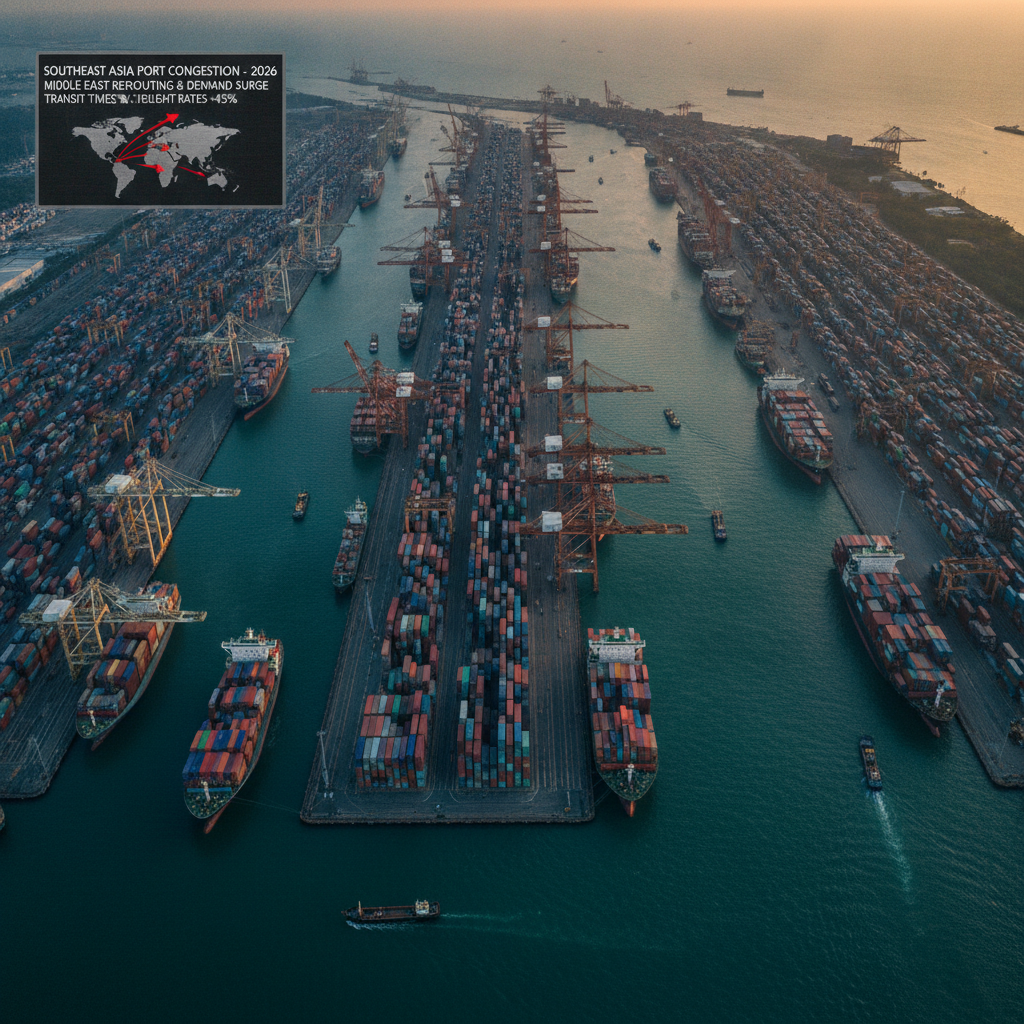
The global logistics landscape is facing severe strain as Southeast Asia Port Congestion reaches critical levels in 2026. Transshipment hubs, particularly Singapore and Malaysia’s Port Klang, are experiencing unprecedented vessel backlogs. This bottleneck is primarily driven by the ongoing Gulf crisis, which has forced carriers to reroute Middle East-bound cargo to alternative regional relay ports.
Data from early 2026 indicates that vessel waiting times in Singapore extended to four to six days, with approximately 260 vessels utilizing slow-steaming strategies to manage berth availability. This operational pressure is exacerbating Southeast Asia Port Congestion, leading to severe delays across regional feeder schedules. Furthermore, capacity shortages and transshipment inefficiencies have triggered a massive spike in logistics costs. Spot freight rates from Asia to the U.S. West Coast surged by roughly 37%, reflecting the direct financial impact of these localized bottlenecks.
Industry experts warn that resolving the current maritime gridlock will require more than a temporary geopolitical de-escalation. With shipping lines struggling to reposition disrupted cargo, logistics professionals must adapt rapidly. Stakeholders are advised to allocate buffer times of 14 to 21 days for time-sensitive shipments. As major carriers implement emergency freight and bunker surcharges, supply chain managers must proactively diversify routing strategies to mitigate the ongoing impacts of port delays.
References
Glotrans Logistics Market Report April 2026. The Straits Times Shipping Disruption. Shipping Delays in Singapore and Port Klang Advisory.