
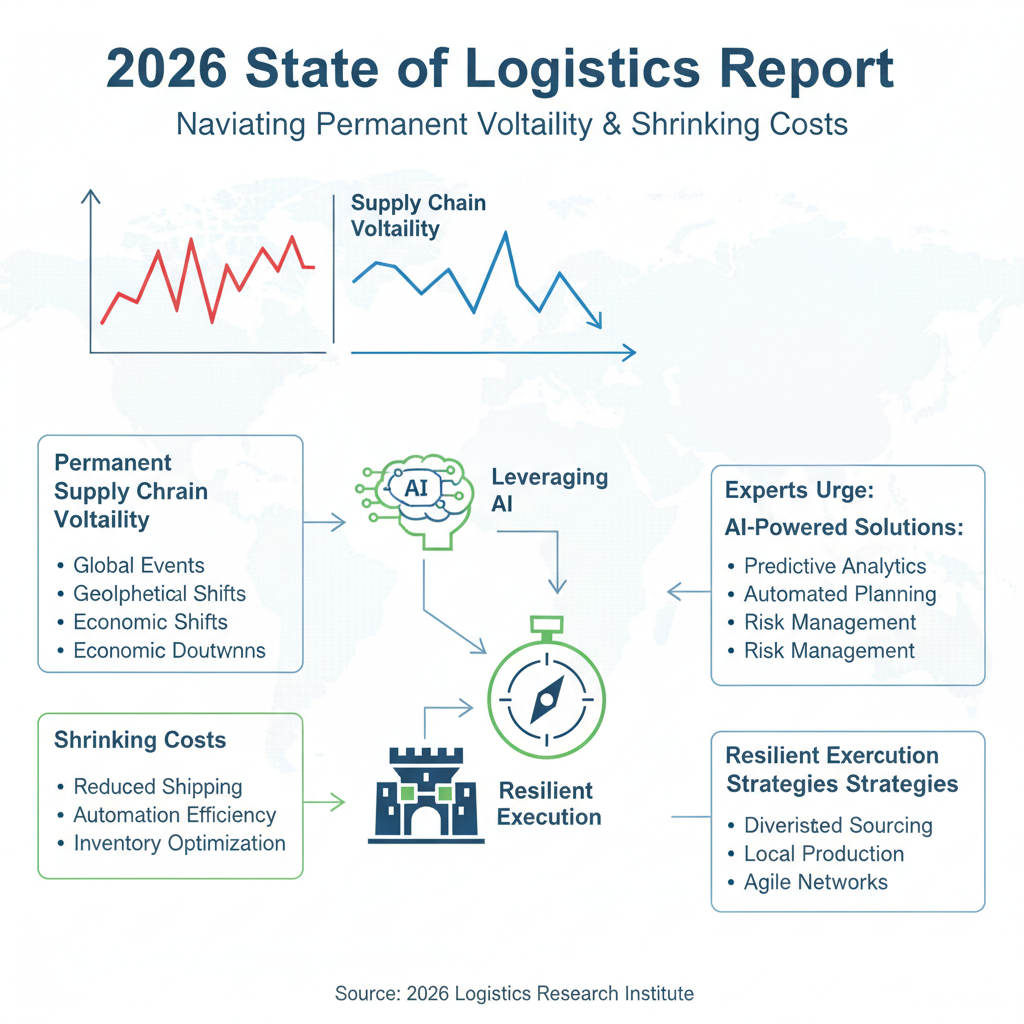
The recently released 2026 State of Logistics Report confirms that supply chain volatility is no longer a temporary hurdle but a permanent operational baseline. Authored by Kearney and presented by Penske Logistics for the CSCMP, the report reveals that U.S. business logistics costs dropped to $2.4 trillion, representing 7.8% of the national GDP. This marks a notable decline from the previous year’s $2.6 trillion and 8.7% GDP share. Industry leaders must now prioritize resilience and disciplined execution over traditional scale-based strategies to protect profit margins in an increasingly unpredictable macro environment.
The extensive analysis identifies five structural forces currently reshaping global markets: asymmetrical economic growth, tightening financial conditions, geoeconomic realignment, labor constraints, and energy price volatility. Furthermore, the trucking sector is experiencing significant shifts. Research indicates that 89,000 carriers have exited the market since 2022, effectively reducing excess capacity and tightening supply dynamics. As a result, carrier pricing power is gradually recovering despite mixed overall freight demand.
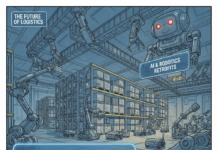
To combat enduring labor shortages and operational bottlenecks, the industry is witnessing a definitive transition in technological adoption. The report highlights that artificial intelligence, robotics, and autonomous trucking have rapidly progressed from experimental pilots to scaled commercial deployments. However, technology adoption remains uneven across the sector, creating a distinct competitive advantage for firms fully integrating AI into their core operational workflows.
References
- FreightWaves: 2026 State of Logistics Report: Volatility is the new normal
- TheTrucker: 2026 State of Logistics Report: Volatility is the new normal
- Truck News: Report: Disruption a permanent feature of global supply chain
- PR Newswire: State of Logistics Report Finds Volatility is the New Normal