
The maritime transport sector is confronting a severe workforce crisis, necessitating an urgent overhaul of Global Seafarer Retention Strategies. Driven by geopolitical instability and deteriorating welfare conditions, operators struggle to keep qualified mariners at sea.
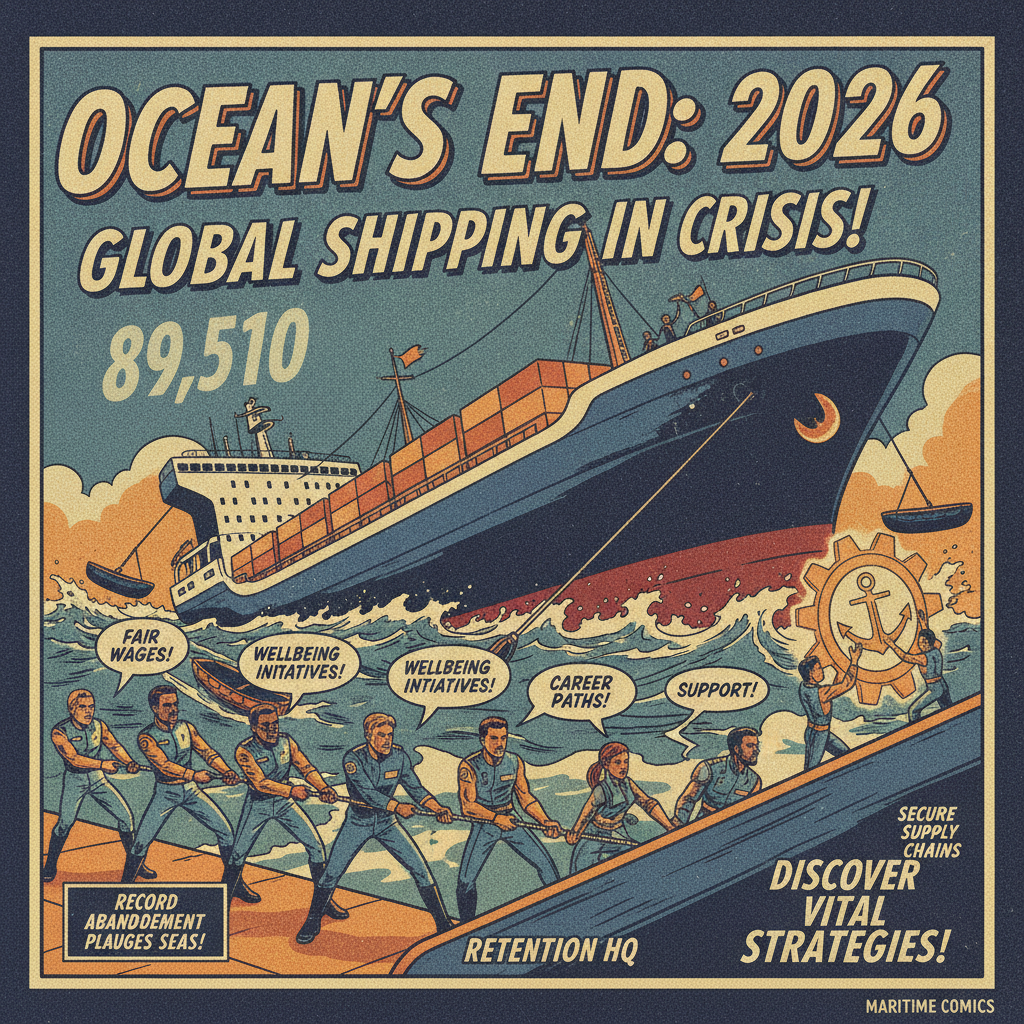
Recent data illustrates a declining labor pool. The International Transport Workers’ Federation revealed that 2025 was the worst year on record for crew abandonment, with 6,223 seafarers abandoned across 410 vessels, a 31% increase from 2024. Concurrently, industry projections point to a critical shortfall of 89,510 licensed officers by 2026. Unpaid wages, exceeding $25.8 million in 2025, actively drive professionals away.
To avert an operational standstill, logistics experts must prioritize specific Global Seafarer Retention Strategies:
- Enforcing Welfare Rights: Adhering strictly to the Maritime Labour Convention 2025 Amendments to guarantee shore leave and mental health support.
- Advanced Training: Providing structured education for Maritime Autonomous Surface Ships (MASS) to prepare crews for digitalization.
- Strict Accountability: Blacklisting unscrupulous vessel owners to protect crews from repeated abandonment.
Shipping remains a human-centric system nearing a breaking point. Modernized retention protocols are critical risk-management tools. Restoring trust through better living conditions, transparent contracts, and zero-tolerance policies is essential for international logistics.
References
- Nautilus International: ITF warns seafarer abandonment has reached record levels (2026)
- Shipping Australia: Serious potential officer shortage in view (2026)
- BIMCO: BIMCO strengthens focus on seafarers (2026)
- Blue Economy Journal: Global Seafarer Shortage in the Age of Automation (2025)
- Cyprus Mail: Global shipping faces hidden crisis (2026)