

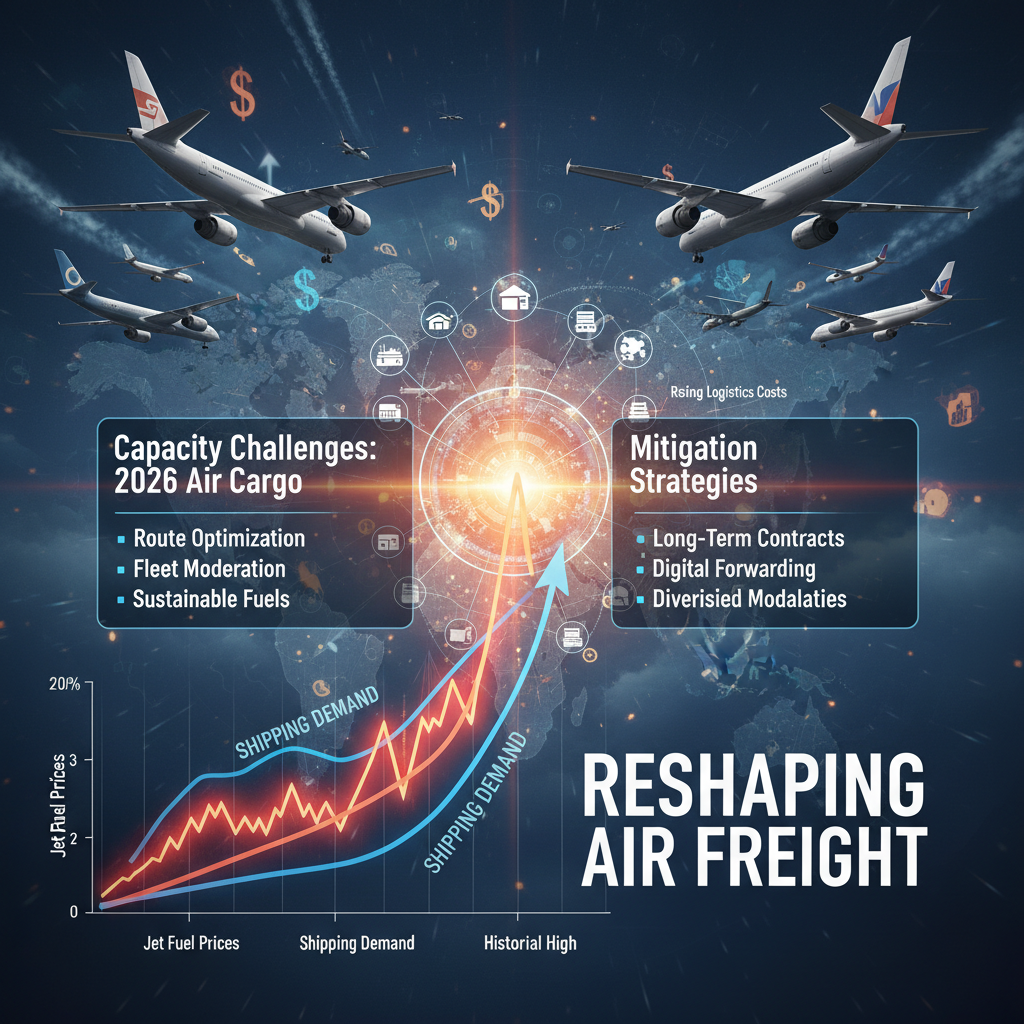
As global trade navigates volatile logistics, understanding the Aviation fuel cost impacts on air cargo capacity has become critical for shipping experts. In late 2025 and early 2026, the air freight sector witnessed record demand alongside fluctuating operating economics. Surging jet fuel prices and widening crack spreads are forcing carriers to rethink capacity deployment and fleet utilization across major international trade lanes.
Despite an expansion in global cargo space, with Available Cargo Tonne-Kilometers (ACTK) rising 4.7% year-over-year in late 2025, fuel expenses continue to apply upward pressure on freight rates. By May 2026, global average air cargo rates climbed to $3.29 per kilogram, leaving prices 37% higher than a year earlier. These elevated costs are directly linked to robust e-commerce demand and fluctuating jet fuel prices, which surged by 5.9% year-over-year in November 2025. As fuel crack spreads widen, airlines are strategically deploying passenger belly-hold capacity on high-yield routes to mitigate operational costs.
Logistics providers and airfreight operators are employing dynamic strategies to counterbalance these financial pressures. Key industry adjustments include:
- Optimizing belly-hold cargo space on commercial passenger flights to offset dedicated freighter fuel expenses.
- Transitioning select high-volume shipments to sea-air combined routes to manage escalating overhead.
- Accelerating investments in Sustainable Aviation Fuel (SAF) despite current premium pricing.
While cargo demand grew 5.5% year-over-year heading into 2026, navigating these cost impacts will require sustained agility. Logistics professionals must proactively secure block space agreements and monitor fuel surcharge adjustments to maintain profitable operations.
References
- IATA Air Cargo Market Analysis (November 2025)
- Global Air Cargo Volumes and Freight Rates (May 2026)
- Air Freight Market Trends (2025)