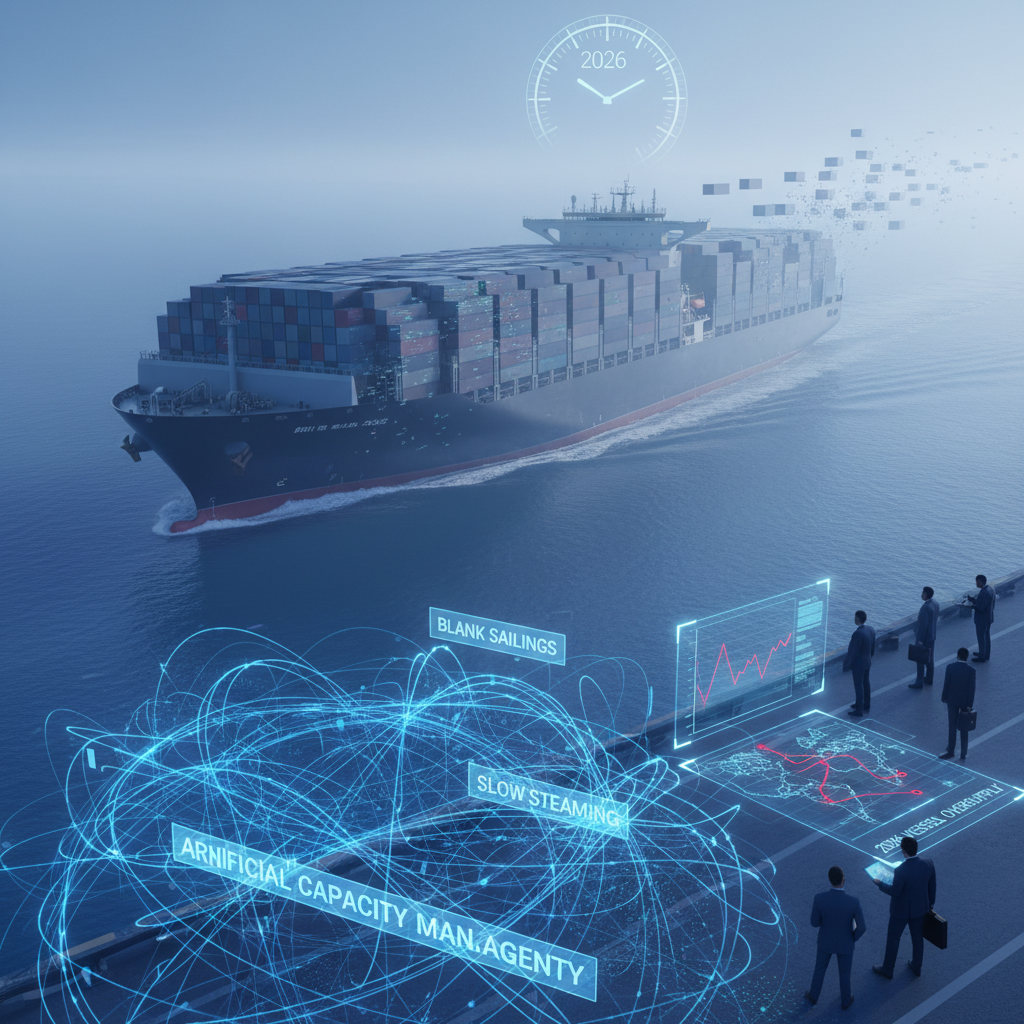
As the shipping industry faces an unprecedented wave of new vessel capacity in 2025 and 2026, carriers are aggressively leveraging ocean freight artificial capacity management to prevent freight rates from collapsing. Despite an estimated 10 million TEU of container ship capacity entering the market, shipping lines are successfully offsetting this structural oversupply. By strategically removing tonnage from key trade lanes, major alliances are prioritizing yield and network stability over sheer volume. This deliberate manipulation of vessel supply marks a permanent structural shift from reactive crisis measures to a disciplined, everyday operating model.
To implement effective ocean freight artificial capacity management, carriers are deploying a sophisticated mix of tactical levers. Recent 2025 and 2026 data shows that these supply-side maneuvers are primarily executed through:
- Blank Sailings: Cancellations soared throughout 2025, with China-to-US West Coast lanes seeing a 46% year-over-year jump in blank sailings as a primary tool to artificially tighten space.
- Slow Steaming: Extending voyage times to absorb surplus capacity while simultaneously meeting stricter European environmental regulations.
- Fleet Idling and Reshuffling: Temporarily withdrawing vessels or shifting them to secondary routes to keep primary East-West trades artificially constrained.
While ocean freight artificial capacity management bolsters carrier bottom lines and supports General Rate Increases (GRIs), it creates immense friction for shippers. The deliberate creation of scarcity has introduced severe schedule unreliability, resulting in rolled cargo and transit delays extending up to 14 days. Forwarders and shippers can no longer rely on traditional seasonal capacity injections. Looking deeper into 2026, logistics professionals must pivot toward data-driven forecasting, secure flexible contracts, and maintain robust contingency plans to survive in a market defined by manufactured constraints.
References
1. PGS Logistics (2025). The Return of Blank Sailings. URL: pgs-log.com
2. Project44 (2025). U.S. tariffs: Blank sailings soar. URL: project44.com
3. Freightos (2026). Container Shipping Overcapacity Outlook. URL: freightos.com
4. Adnavem (2025). How Capacity Management Will Define 2025. URL: adnavem.com