
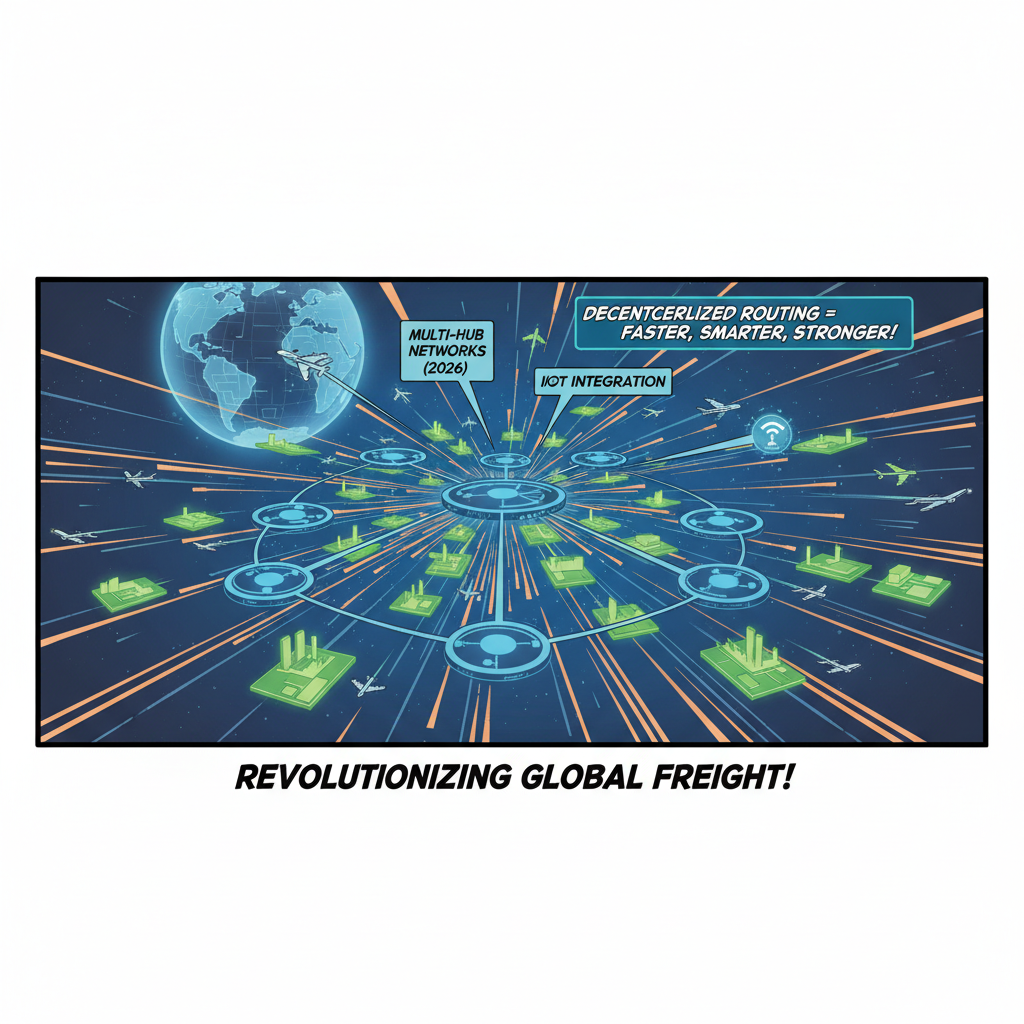
In 2025 and 2026, the logistics sector is witnessing a profound transformation from traditional centralized gateways to dynamic Multi-hub air cargo networks. As e-commerce and on-demand delivery expectations surge, global trade volume demands greater flexibility. Industry data from early 2025 indicates that major mega-hubs are facing congestion, prompting airlines and logistics providers to decentralize their routing strategies. By distributing freight across multiple regional and secondary airports, operators are mitigating delays and bypassing operational bottlenecks.
The evolution of air freight architecture introduces unprecedented resilience. Adopting a multi-hub strategy yields several strategic advantages for global freight forwarders:
- Reduced Transit Times: Routing cargo through secondary nodes bypasses congested mega-hubs, ensuring faster turnaround.
- Cost Efficiency: Strategic regional hubs situated closer to manufacturing centers significantly lower inland transportation expenses.
- Network Resilience: A distributed approach ensures alternative routing options during geopolitical or weather-related disruptions.
Integrating these complex architectures requires advanced technological frameworks. According to the International Air Transport Association’s 2025 Vision, Multi-hub air cargo networks rely heavily on IoT sensors, predictive analytics, and AI-driven operational optimization. Digitalization ensures real-time tracking visibility across decentralized nodes, harmonizing operations between global integrators and regional cargo airports. As the industry advances through 2026, this hybrid logistical model will dominate, blending high-volume intercontinental routes with nimble regional distribution hubs.
References: https://sunriseaircargo.com, https://spire.com, https://thecooperativelogisticsnetwork.com, https://iata.org